On This Page
Sleep Apnea Headaches


Our editorial process includes extensive measures to verify accuracy, provide clarity on complex topics, and present factual information. Read more
Key Takeaways
- People with sleep apnea may experience morning headaches that are directly or indirectly related to sleep apnea.
- Sleep apnea headaches are thought to arise due to sleep disruption or changes in blood oxygen and carbon dioxide levels.
- Where headaches are due to sleep apnea, treating sleep apnea may help the headache go away.
Can Sleep Apnea Cause Headaches?
Morning headaches commonly appear in both central sleep apnea (CSA) and obstructive sleep apnea (OSA). However, sleep apnea headaches aren’t well understood, and we still don’t know for sure what causes them. While some studies have found that people with sleep apnea are more likely to experience headaches, other research has failed to find a connection.
Many people find that morning headaches clear up after they seek treatment for sleep apnea. Thus, the sleep apnea may have been exacerbating already-existing headaches, or it may have been causing headaches in and of itself.
Sleep apnea headaches are listed as a headache category in the International Classification of Headache Disorders, although they aren’t included as an official sleep apnea symptom in the International Classification of Sleep Disorders.
Causes of Sleep Apnea Headaches
Research has found conflicting results on whether sleep apnea headaches are due to sleep disturbance, excessive carbon dioxide, low oxygen levels, or other factors.
- Sleep disruption: When breathing pauses during sleep, people with sleep apnea awaken slightly to catch their breath. Some studies have found that changes in sleep metrics, such as sleep efficiency or the time spent in certain sleep stages, have an impact on morning headaches. Sleep disruption can also affect brain activity, which makes people more susceptible to pain and may trigger headaches.
- Carbon dioxide and oxygen levels: Sleep apnea leads to dips in blood oxygen levels and spikes in carbon dioxide, which may be partly responsible for headaches. The International Classification of Headache Disorders classifies sleep apnea headaches in the oxygen-carbon dioxide section, together with scuba diving and altitude-induced headaches. However, research doesn’t support the idea that oxygen and carbon dioxide levels can fully explain sleep apnea headaches.
- Pressure in the brain: Sleep apnea disrupts blood flow to the brain and causes fluctuations in pressure, which may contribute to headaches.
- Snoring: Some researchers have suggested that physical vibrations from snoring could play a role in sleep apnea headaches.
Risk Factors for Sleep Apnea Headaches
Not everyone with sleep apnea experiences sleep apnea headaches. Although more research is needed, it seems that many of the risk factors for sleep apnea headaches are the same risk factors that make a person more likely to experience headaches in general. These include:
- Female sex: Morning headaches as a sleep apnea symptom show up more commonly in women and those assigned female at birth.
- Sleep apnea severity: It’s unclear whether sleep apnea severity is directly linked to headache severity, but most studies find that headaches are more common in people whose sleep apnea is moderate to severe.
- Chronic migraines: Sleep apnea and migraines appear to influence each other. You may be more likely to develop chronic migraines from sleep apnea if you already experience migraines occasionally.
- High BMI: A higher BMI is a risk factor for OSA as well as cluster headaches and migraines.
- Substance Use: Alcohol, caffeine, and tobacco are risk factors for both headaches and OSA.
- Stress: Stress may worsen sleep and trigger headaches.
- Insomnia: People with both OSA and insomnia may be more likely to experience headaches.
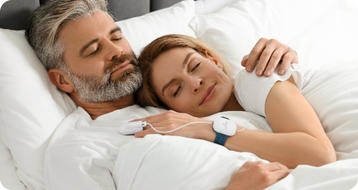
Don’t Just Test Your Sleep. Understand It.
Measure key sleep metrics and review your results with a licensed sleep-care provider. Discuss sleep issues and options to make restless nights a thing of the past.


What Does a Sleep Apnea Headache Feel Like?
The International Classification of Headache Disorders defines sleep apnea headaches as morning headaches that last fewer than 4 hours and tend to cause pain on both sides of the head, similar to a tension headache. These headaches usually cause a feeling of pressure or dull pain that is mild to moderate.
Increasingly, experts argue that the headaches that occur in people with sleep apnea don’t necessarily follow a unique set of symptoms. Rather, sleep apnea may increase the chances of experiencing certain types of headaches including migraines, tension headaches, and cluster headaches, with tension headaches being the most common.
Sleep Apnea and Migraines
Both snoring and obstructive sleep apnea (but not central sleep apnea) have been linked to worse migraines. These conditions may influence each other, or they may be influenced by a third factor. Sleep apnea causes sleep disruptions, which may act as a migraine trigger or increase sensitivity to pain. Treating sleep apnea may prevent occasional migraines from becoming chronic migraines.
Sleep Apnea and Tension Headaches
Tension headaches are the most common type of headache reported by people with OSA. The symptoms of tension headaches are similar to the symptoms of sleep apnea headaches as defined by the International Classification of Headache Disorders.
Sleep Apnea and Cluster Headaches
Both central and obstructive sleep apnea may also be related to cluster headaches. Cluster headaches involve sudden intense pain on one side of the head near the eye that often wakes people up in the middle of the night and can last up to three hours.
Cluster headaches often occur daily in a “cluster” over several weeks and then disappear, only to reappear months later. These headaches are linked to low oxygen levels, which often occur in people with obstructive sleep apnea due to the repeated pauses in breathing.
Is Your Morning Headache From Sleep Apnea?
Sleep apnea may be contributing to your morning headaches if the headaches are accompanied by telltale signs of sleep apnea, such as:
- Excessive daytime sleepiness
- Loud, chronic snoring
- Gasping for air or choking while asleep
- Insomnia or restless sleep
- Feelings of anxiety or depression
However, sleep apnea is only one of many conditions that can contribute to headaches. For example, headaches may also be caused or exacerbated by:
- Genetics
- Sore muscles
- Stress
- Poor posture
- Alcohol
- Dehydration
Schedule an appointment with your doctor to determine the cause of your morning headaches, and seek immediate medical help if you think your headache may be related to a stroke or a brain injury.
How Do You Get Rid of Sleep Apnea Headaches?
The best way to address sleep apnea headaches is to treat sleep apnea itself. If you haven’t been diagnosed yet but are experiencing symptoms of sleep apnea, talk to your doctor.
If you’ve already been diagnosed with sleep apnea, make sure to keep up with your doctor appointments and treatment. Managing your symptoms according to your treatment plan is the best way to minimize sleep apnea headaches.
If you also have another sleep disorder, such as insomnia, talk to your doctor about formulating a treatment plan that takes both disorders into account. You may find the headaches don’t go away until you treat both disorders. Talk to your doctor before taking pain medication for morning headaches, since medication may negatively influence sleep.
Lifestyle Changes
Adjustments to your daily life and sleep habits can make a difference to morning headaches and other OSA symptoms. Some lifestyle changes that are easy to implement include avoiding back sleeping, following sleep hygiene rules, and staying away from substances that impact sleep, such as alcohol and sedatives.
Though not always easy, losing weight is also very helpful for treating OSA symptoms. People with overweight or obesity may see a decrease in OSA symptoms after losing at least 15% of their body weight. Regular exercise also helps, regardless of whether it leads to weight loss.
Positive Airway Pressure (PAP) Therapy
CPAP therapy is considered the gold-standard treatment for most adults with sleep apnea. This treatment involves a machine that provides a steady stream of air pressure into your nose or mouth, helping keep the airway open. Studies show that people who use CPAP therapy for obstructive sleep apnea experience significant improvements in sleep apnea headaches.
Oral Appliances
Oral appliances are devices worn in the mouth to improve breathing during sleep by pulling the lower jaw or the tongue forward. There’s less research on whether oral appliances for sleep apnea also help improve headaches, but preliminary studies suggest that they may help reduce headaches for some people with mild to moderate sleep apnea, especially in people in whom oral appliances effectively reduce sleep apnea symptoms.
Surgery
Your doctor may suggest sleep apnea surgery if you have a clear anatomical obstruction that interferes with breathing during sleep. Common surgical treatments for sleep apnea aim to reshape the soft palate, address nasal obstructions such as polyps or a deviated septum, or implant devices to stimulate the muscles of the throat. Surgery for sleep apnea has been shown to help with morning headaches.
When to See a Doctor
Sleep apnea requires professional medical treatment, not only to prevent headaches but also to reduce the risk of long-term health problems. Ask your doctor to refer you for a sleep study if you have symptoms of sleep apnea, including frequent morning headaches.
Females with OSA are more likely to experience morning headaches, even in the absence of better-known symptoms like daytime sleepiness. So, if you’re female and you’re experiencing symptoms like depression, insomnia, nightmares, or waking up frequently during the night, even if you don’t have other “typical” symptoms of OSA, it’s a good idea to ask your doctor for a sleep study.
You should also seek medical advice if you have recurring headaches for any reason. Having constant headaches can be a sign of serious underlying health issues besides sleep apnea.
References

The Sleep Doctor Forum
Real Experiences, Real Connections
Continue the discussion on the Sleep Doctor Forum. Connect with experts and fellow forum members on CPAP, sleep apnea, and all things sleep. A priceless resource that’s free to join.