Many people snore on occasion, whether they know it or not. Research shows that among adults aged 30 to 60, about 44% of men and 28% of women snore on a regular basis. Although snoring in and of itself isn’t considered a serious health problem, it may be a sign of an underlying sleep disorder, like sleep apnea.
Regardless of whether you’re aware of your snoring, it can be helpful to learn about what causes snoring, how to treat it, and when to speak with your doctor.
What Causes Snoring?
Snoring happens when air can't flow smoothly through your nose and throat during sleep. As you sleep, the muscles in your throat, mouth, and tongue relax. When you breathe, air squeezes past these relaxed tissues, causing them to vibrate. This vibration creates the rumbling, whistling, or choking sounds we recognize as snoring.
Snoring occurs when something physically obstructs or narrows the airway. These obstructions can be caused by temporary conditions, permanent anatomical features, or a sleep disorder, such as:
- Deviated nasal septum: If the wall of bone and cartilage between your nostrils is bent or crooked, it can partially block the nasal passage.
- Large tongue: A tongue that’s wide at the base or large in proportion to your mouth can obstruct the airway during sleep.
- Nasal polyps: These soft, sac-like, non-cancerous growths on the lining of the nose or sinuses can block nasal passages.
- Temporary illness: Sinus infections, allergies, or colds cause congestion that may block airflow.
- Swelling in your mouth: Swelling of the soft palate (the roof of your mouth) or on the uvula (the piece of tissue that hangs at the back) can narrow the airway.
- Swollen adenoids and tonsils: Tonsils and adenoids (the lymph tissues in your upper airway) may swell because of infection or other reasons and block airways. This is especially common in children.
- Weak muscle tone: Muscles in the throat may be overly relaxed due to aging or from taking sleeping pills, antihistamines, or alcohol before bedtime.
- Sleep apnea: Snoring is one of several symptoms of this breathing disorder, which involves repeated airway obstruction during sleep.
Does Snoring Mean Sleep Apnea?
If your snoring is affecting your ability to get restful sleep, it could be a sign of sleep apnea, a sleep-related breathing disorder in which airflow is restricted enough to make breathing temporarily pause during sleep.
Snoring is a common symptom of sleep apnea, but not everyone who snores has the condition. Other signs and symptoms of sleep apnea can include choking, snorting, or gasping for air, as well as high blood pressure and restless sleep.
There are a few types of sleep apnea. Obstructive sleep apnea (OSA) is the most common and occurs when breathing stops because the upper airway repeatedly collapses or becomes blocked. Central sleep apnea (CSA) is less common and is caused by a disruption in signals from the brain that tell muscles to breathe during sleep and may also cause snoring.
Don’t Just Test Your Sleep. Understand It.
Measure key sleep metrics and review your results with a licensed sleep-care provider. Discuss sleep issues and options to make restless nights a thing of the past.


Symptoms of Snoring
When a person snores, they emit a snorting, raspy noise that can be heard by others. Some people snore softly, but others may snore so loudly that people in another room can hear it. The noise often disturbs the person’s bed partner. Snoring sounds can include:
- Harsh breathing
- Snorting
- Rumbling
- Whistling
When a doctor evaluates a person who snores, it’s typically to look for other signs of the airway becoming narrowed or blocked during sleep. In addition to snoring, other symptoms of a restricted airway include:
- Choking or gasping for air at night
- Morning headaches
- Frequent sore throats
- Mouth breathing
- Frequent awakenings
- Daytime sleepiness
Risk Factors for Snoring
While anyone can snore occasionally, certain characteristics and lifestyle factors make some people more likely to snore regularly, including:
- Older age
- Being male or assigned male at birth
- Being post-menopausal
- Pregnancy, especially in the final months
- Having overweight or obesity
- Smoking cigarettes
- Having a family history of snoring or sleep apnea
- Chronic nasal congestion or blockage
- Anatomical features such as large tonsils, a deviated septum or any other structural abnormality that blocks the airway
How Is Snoring Diagnosed?
If snoring causes disturbances at night or daytime fatigue, a doctor can help determine the underlying cause. They’ll perform a physical examination of your nose, mouth, and throat to check for obstructions. They’ll ask about your symptoms, snoring patterns, and sleep quality. If you share a bed with someone, your partner may be able to provide additional helpful observations.
If your doctor suspects a sleep apnea or other sleep disorder, they may recommend a sleep study, also known as polysomnography. During the study, monitors track your breathing patterns, oxygen levels, heart rate, and body movements. The data helps your doctor determine whether you have a sleep disorder.
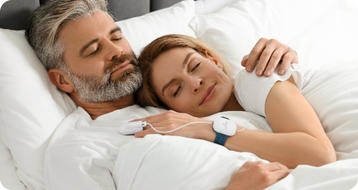
This test was traditionally conducted at a sleep center, but home testing is now available. Sleep Doctor’s At-Home Sleep Study uses medical-grade sensors to track your breathing, oxygen levels, and heart rate overnight and can help determine whether snoring is a sign of obstructive sleep apnea. After the test, a board-certified sleep physician reviews your results and provides a diagnosis, along with personalized next steps for treatment.
How to Prevent Snoring
Experts recommend professional treatment for obstructive sleep apnea and other sleep disorders, though there are things people can try at home to help reduce snoring. While these methods may not be effective for everyone, they may help some people.
Lifestyle Changes
While at-home remedies may not resolve all snoring, some people may notice improvement in symptoms by trying one or a combination of strategies.
- Avoid lying on your back: Snoring tends to be worse when lying on your back. To help prevent sleeping on your back, try wearing a tight fitting T-shirt with a small pocket on the back. Then, place a tennis ball or baseball in the pocket.
- Elevate the head while sleeping: If you don’t have an adjustable bed, you can place two blocks under the mattress to adjust the angle of your bed. A wedge pillow may also help.
- Avoid alcohol and sedatives before bed: Substances like alcohol promote relaxation in muscles around the airway, worsening snoring.
- Quit smoking: Experts report that people who smoke or those who smoked in the past often snore when they sleep.
- Treat nasal congestion: Treating nasal congestion can help some people breathe better at night. Because some decongestants can cause side effects or worsen nasal congestion over time, talk with your doctor first.
- Consider losing weight: Losing weight may also help reduce snoring in people who have overweight or obesity. Although this management strategy doesn’t work for everyone, some people notice a decrease in snoring after weight loss.
Anti-Snoring Devices
Over-the-counter anti-snoring devices are available online or at a local pharmacy that may help offer some relief from snoring. These devices are designed to help open the airways and allow for breath to flow without obstruction.
I always tell people that they need to decongest for better rest. Any congestion can prevent free flow of air during sleep, so try using nasal sprays, antihistamines, or saline irrigators to help you breathe easier.
- Nasal strips: Nasal dilators open up the nostrils so that breathing through the nose becomes easier. Dilators can be internal or external. External nasal dilators are sticky strips that are placed on top of the nose where the nostrils start to fan out. Internal nasal dilators are devices placed inside the nose to help keep the nostrils open to reduce snoring.
- Mouth taping: Mouth taping involves putting a strip of porous tape over your mouth in order to encourage nasal breathing. While research is still limited, there’s some evidence to suggest that the practice may improve snoring in people who sleep with their mouths open. However, if you suspect you might have sleep apnea, talk to your doctor first, as mouth taping can worsen untreated sleep apnea symptoms.
- Oral appliances: Oral appliances may help keep the airway open and reduce snoring by positioning the lower jaw forward during sleep (mandibular advancement devices) or retaining the tongue using suction (tongue retaining devices). Some are available over-the-counter, while others need to be customized by a dentist.
- CPAP therapy: The most commonly used treatment for obstructive sleep apnea is continuous positive airway pressure (CPAP) therapy. A CPAP machine regulates the flow of air to help keep the airway from becoming blocked or collapsing. It’s not yet known if CPAP therapy is effective in treating snoring in people who don’t have other symptoms of OSA.
Surgery
If a patient doesn’t respond well to CPAP therapy or other treatments, a doctor may recommend surgery to treat snoring or sleep apnea. Surgery for snoring may be minimal, or more complex. The goal is to treat the areas where your airway is obstructed during sleep and eliminate the blockage.
Here are a two of the most common procedures:
- Uvulopalatopharyngoplasty (UPPP): The surgeon either removes or repositions the excess tissue at the back of your mouth in order to widen the airway. It may involve your soft palette, tonsils, or uvula, and it’s sometimes done in conjunction with other procedures.
- Hypoglossal nerve stimulation: A surgeon implants a small device, called a hypoglossal nerve stimulator, that delivers electrical stimulation to the muscles of the upper airway. This helps prevent the airway from collapsing during sleep.
- Radiofrequency volumetric tissue reduction (RFVTR): A heated instrument is used to shrink and tighten the tissues in or near the throat.
When to Talk to Your Doctor
Although snoring is a common occurrence, it can be a sign of other underlying health conditions like sleep apnea. Chronic snoring may also affect the quality of your sleep and possibly interfere with your bed partner’s sleep. If you feel that snoring has become a problem, it’s a good idea to consult with a doctor.
A doctor can talk to you and your family members about how frequently you snore and assess whether you have any other signs or symptoms of a health condition that could be causing you to snore. In most cases, remedies for snoring are available with the proper diagnosis.
Frequently Asked Questions
Is snoring normal?
Snoring is very common. About 44% of men and 28% of women between the ages of 30 and 60 snore on a regular basis. It isn’t necessarily a sign of a serious condition. However, if snoring is disturbing you or your partner at night, or if it’s accompanied by other symptoms of sleep apnea, it’s worth visiting a healthcare provider for diagnosis and treatment.
Is snoring bad?
Snoring isn’t always a cause for concern, but in some cases, it could be a warning sign of something more serious. Occasional snoring caused by temporary factors like sickness, is usually nothing to worry about.
However, chronic, loud snoring may be a symptom of a sleep disorder like sleep apnea. Also, quality sleep is essential to your health, and if long-term snoring causes sleep disruptions and increases your risk of health issues. If your snoring is disturbing you or your sleep partner, it’s time to visit a doctor.
How can I tell if I snore if I sleep alone?
If you sleep alone, you can look for less obvious symptoms of snoring or use an app to determine whether or not you snore. Because snoring disrupts your breathing, you may wake up in the middle of the night with a dry mouth or headache. If this happens often, there’s a good chance you’re snoring. Alternatively, there are a number of apps available that monitor your sleep and detect snoring.