People with obesity can be at a higher risk for sleep apnea. As excess weight can restrict airflow, weight loss might help reduce some of the symptoms of OSA. Weight loss may also improve airflow during sleep by reducing soft tissues that collapse into the upper airway.
While weight loss is commonly recommended for people with obesity and obstructive sleep apnea (OSA), it is not a cure for this condition. Weight loss may improve some symptoms of OSA, but many people need additional treatments or therapies as recommended by their health care provider. Below, we discuss how sleep apnea and weight loss are connected.
How Does Extra Weight Affect Sleep Apnea?
Research has shown that extra weight can make it more difficult for a person to breathe while they sleep. Having more fat deposits around the throat and tongue can narrow the airway, put excess weight on the airway, and increase the likelihood that soft tissues will collapse.
Excess weight around the stomach can also reduce lung capacity, especially for people who sleep on their backs. People with fat deposits in their abdomens may also experience impairments in the muscles that control breathing, which can contribute to sleep disordered breathing. However, more research is needed to fully understand why this happens.
Does Sleep Apnea Cause Weight Gain?
Experts believe that weight and sleep apnea have a bidirectional relationship. This means that excess weight can contribute to symptoms of OSA, and OSA can be a risk factor for gaining weight.
Getting enough sleep each night is important for maintaining many functions in the body, including weight regulation. However, OSA can make it difficult to get quality rest because the airway collapses throughout the night and interrupts sleep.
Poor sleep can affect the release of certain hormones that are responsible for regulating appetite, like leptin and ghrelin. This could lead some people with OSA to eat more than they normally would.
Additionally, getting poor sleep can cause a person to become less active during the day due to general tiredness or lack of energy. Experts believe that this, in combination with eating more than usual, may make some people with OSA more susceptible to gaining weight.
Beyond the effects of bad sleep, one small study found that some people gain weight after starting continuous positive airway pressure (CPAP) therapy because they retain extra fluid. CPAP therapy is a common treatment for OSA that uses pressurized air to keep the airway open while a person sleeps. Fluid retention with CPAP may happen because the pressure from a CPAP machine lowers certain hormone levels that direct fluid to the kidneys, keeping that fluid in the body instead.
Don’t Just Test Your Sleep. Understand It.
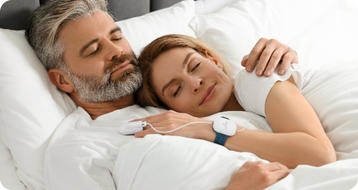
Measure key sleep metrics and review your results with a licensed sleep-care provider. Discuss sleep issues and options to make restless nights a thing of the past.


Does Losing Weight Help Sleep Apnea?
Weight loss improves OSA symptoms, but it’s typically recommended in addition to traditional sleep apnea treatment like CPAP. One analysis of 27 studies found that decreasing body mass index (BMI) by 20% was associated with 57% fewer breathing pauses during sleep, as measured by the apnea-hypopnea index (AHI). Another study of 180 people found the sweet spot for improved OSA was between 5% and 10% of body weight loss.
Weight loss may reduce AHI and snoring through a few different mechanisms:
- Less outside pressure on your airways
- More stable breathing signals from the brain
- Larger space available for lungs to expand
The benefits of weight loss for sleep apnea increase the more pounds you shed. That said, after people have decreased their BMI by 20%, losing weight doesn’t improve OSA symptoms as much. Experts say more research is needed to fully understand the connection between weight loss and improved sleep apnea. Results can differ from person to person, based on other factors including medical conditions like diabetes or heart disease.
Can You Lose Weight if You Treat Sleep Apnea?
The relationship between weight and sleep apnea is complex, and it’s not entirely clear to experts whether treating sleep apnea might also aid in weight loss.
Research has examined how CPAP therapy affects a person’s weight. For example, in one study of 183 people with sleep apnea, some gained weight after starting CPAP therapy and none lost weight. In another study of 32 people, 47% experienced weight loss after nine months of using their CPAP. For 6%, body weight increased, and the rest had no weight change. Since research on this subject is mixed, more studies are needed to clarify whether treating OSA has any effect on weight.
Weight Loss Strategies for People With Sleep Apnea
For the best weight loss results with sleep apnea, it’s important to stick to a healthy diet, get enough exercise, and sleep well. Here are the top strategies to lose weight with OSA:
- Change dietary habits: When you lower the amount of calories you eat each day, you create a calorie deficit that results in weight loss. For results that stick, make diet changes you can adopt for life with food options you enjoy. Try to avoid eating close to bedtime or during the night if you wake up.
- Add physical activity: Combined with a low-calorie diet, aerobic exercise like walking, running, cycling, and swimming can also help you lose weight. As you start integrating exercise into your routine, aim for weekly benchmarks like two and a half hours to five hours of moderate-intensity aerobic exercise or an hour and 15 minutes to two and a half hours of vigorous activity such as running.
- Ask about weight loss drugs: GLP-1 medications can help you lose weight, and one study found people taking liraglutide (Saxenda) had a lower AHI. But tirzepatide (Zepbound) has proven even more effective and was the first FDA-approved GLP-1 for OSA.
When to See a Doctor
Before starting any weight loss regimen, it’s important to check in with your doctor to discuss what a healthy weight range looks like for you. And while weight loss may be one way to improve symptoms of OSA, losing weight is not always possible through diet and exercise alone. Each person’s genetics, environment, and lifestyle can affect their weight loss journey differently.
If you’re struggling to lose weight, be assured that this is common and that there are additional treatments, such as surgery or medications, you may be able to explore with your doctor.
It is also important to discuss additional treatments for OSA with your doctor because weight loss alone cannot cure this condition. Treating OSA early can help prevent other complications of OSA, including mental health or heart issues.
If you’re unsure if you have sleep apnea, talk to your doctor or start with a home test for sleep apnea. Your doctor can provide more detail on treatment options, like CPAP therapy, and recommend a plan that is right for you.
Frequently Asked Questions
How much weight do I need to lose to see improvement in sleep apnea symptoms?
You may see improvement in your sleep apnea symptoms with even small amounts of weight loss, but losing between 5% and 10% of your body weight is considered the most effective benchmark for reducing these symptoms. Some studies suggest that after losing 20%, OSA symptom improvements may taper off.
Does weight loss cure sleep apnea?
Weight loss doesn’t cure sleep apnea alone, but can improve symptoms alongside other treatments.
Will losing weight stop snoring?
No research shows a direct connection between weight loss and a snoring cure. However, experts know weight gain can make snoring worse and losing weight may improve respiratory disturbance index (RDI) scores, which include snoring.