Can Lifting Weights Cause Sleep Apnea?
There isn't evidence to suggest that lifting weights might cause or increase the risk of obstructive sleep apnea (OSA), a sleep disorder in which the airway repeatedly becomes blocked during sleep and leads to pauses in breathing, in most people. In fact, multiple studies have found that resistance training can actually reduce sleep apnea severity.
That said, among athletes with very large muscles, certain aspects of their size may play a role in the development of OSA. Specifically, studies have found that male athletes who weigh more, have larger necks, have larger waists, or have a higher body mass index (BMI) face a greater risk for OSA.
The increased risk isn't directly due to lifting weights but is considered the result of other factors, such as having a neck that measures over 17 inches around. This increases the likelihood of the airway becoming obstructed during sleep. These features can contribute to OSA by increasing pressure around the airway or narrowing the upper airway, making it more likely to collapse during sleep.
While weight lifters and body builders haven't been specifically studied in regard to sleep apnea risk, researchers have studied football and rugby players, among other athletes, and found an increased risk of sleep apnea in these groups. Although this risk is unlikely to translate to the general public, anyone who lifts weights or plays sports and is concerned about their sleep apnea risk may want to consider taking a home sleep apnea test.
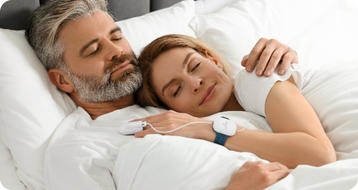
Don’t Just Test Your Sleep. Understand It.
Measure key sleep metrics and review your results with a licensed sleep-care provider. Discuss sleep issues and options to make restless nights a thing of the past.


Does Weight Lifting Help Sleep Apnea?
Multiple studies have found that strength training on its own or in combination with aerobic exercise can improve obstructive sleep apnea severity. When strength training contributes to weight loss, this directly reduces sleep apnea symptoms by taking pressure off of the airway.
But the positive effect of strength training has been found to occur even when it doesn't lead to weight loss or a lower body mass index (BMI). Experts aren't entirely sure why, but they have a few theories. One idea is that the muscles associated with breathing become stronger, so the airway is less likely to collapse during sleep.
Another idea suggests that stronger leg muscles lead to better fluid circulation in the body, which could counteract the fluid-related factors that sometimes impact breathing. A third theory is that strength training increases deep sleep at night, and this shift leads to reduced sleep apnea symptoms.
Although weight lifting may reduce obstructive sleep apnea severity or symptoms, keep in mind that it isn’t a cure. It’s rare for a person to be able to manage the disorder through exercise alone.
Is It Safe to Lift Weights With Sleep Apnea?
The research studies on strength training with sleep apnea didn't find any safety issues. One study even found strength training was "well tolerated" by adults between ages 65 and 80.
Of course, it's important to talk to your doctor about your unique situation and potential risks before beginning a strength training program or any type of exercise program. Also, if you’re currently being treated for obstructive sleep apnea with CPAP therapy or another treatment type, continue your treatment, even if you start strength training in an attempt to improve symptoms.
Does CPAP Improve Workout Performance?
Treating obstructive sleep apnea with CPAP therapy has been found to improve physical performance in multiple studies. One study found that people with obstructive sleep apnea who were treated with CPAP therapy became 20% more physically active than those not treated with CPAP. Another study determined that undergoing CPAP treatment allowed people with the disorder to exercise more intensely.
Some experts have suggested that treating sleep apnea could improve the performance of professional athletes while reducing health risks. They also noted that untreated sleep apnea can slow reaction times and sports performance, slow recovery time between workouts, and increase the risk of injury. It’s likely that adequately treating sleep apnea would reduce these negative effects.
When to Talk to a Doctor
Talk to a doctor if you suspect you have symptoms of sleep apnea, which include loud, chronic snoring; gasping, choking, or snorting during sleep; feeling tired during the day; having a headache in the morning; and waking up throughout the night. Often, a bed partner may recognize a person's sleep apnea symptoms more easily than they can.
Among athletes, untreated sleep apnea may lead to poor sleep, daytime tiredness, slower reaction times, and worse sports performance. The disorder may also increase an athlete's risk of being injured and slow recovery between workouts. In the long-term, experts warn that untreated sleep apnea may contribute to high blood pressure, metabolic syndrome, heart disease, and the development of serious heart problems, like a heart attack or stroke, which is why seeing a doctor is so important.