What Is Mounjaro?
Mounjaro is an injectible medication manufactured by Eli Lilly that’s FDA-approved to treat type 2 diabetes by helping control blood sugar levels. The active ingredient is tirzepatide, a glucose-dependent insulinotropic polypeptide (GIP) receptor and glucagon-like peptide-1 (GLP-1) receptor agonist. GIP and GLP-1 are two hormones that help control appetite and the body’s response to food.
Mounjaro regulates blood sugar levels by mimicking the actions of GIP and GLP-1. This triggers the body to release insulin, remove excess blood sugar, and reduce sugar production by the liver. Mounjaro also reduces appetite and keeps food in the stomach for longer.
Does Mounjaro Help With Sleep Apnea?
Mounjaro may help with obstructive sleep apnea in people who also have obesity. OSA occurs when tissues in the throat relax during sleep and block the airway. Obesity adds extra fat to the neck and makes it more likely that the airway will close, which is why people with obesity are much more likely to develop OSA.
By reducing appetite, Mounjaro indirectly helps with weight loss. And when someone loses enough weight, their neck circumference shrinks and allows the airway to remain open during sleep, helping prevent the typical pauses in breathing from sleep apnea. Preliminary studies also suggest that tirzepatide may help sleep apnea by reducing systemic inflammation or exerting direct benefits for breathing.
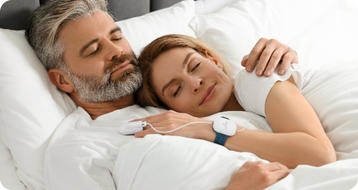
Don’t Just Test Your Sleep. Understand It.
Measure key sleep metrics and review your results with a licensed sleep-care provider. Discuss sleep issues and options to make restless nights a thing of the past.


How Does Mounjaro Help Sleep Apnea?
Clinical trials have found that the active ingredient in Mounjaro, tirzepatide, helps people lose weight and reduces sleep-related breathing incidents. As a result, people experience positive effects on blood oxygen levels, blood pressure, and sleep quality. Tirzepatide may also reduce the risk of future cardiovascular disease.
Most of this research was conducted with the aim of getting FDA approval for Mounjaro’s sister drug, Zepbound. Zepbound has the same active ingredient and is made by the same manufacturer, but it’s marketed to people with obesity, rather than type 2 diabetes.
However, many people have both OSA and type 2 diabetes, and there’s a possibility that managing diabetes with Mounjaro may reduce the risk of long-term health effects from OSA. More research is needed on how Mounjaro for diabetes helps with OSA.
Who Might Benefit
Using Mounjaro for sleep apnea is only likely to be useful for people with obesity, as the benefits on sleep apnea symptoms are thought to be a secondary effect of weight loss.
While people with a body mass index (BMI) under 25 may benefit from Mounjaro for control of their diabetes, they’re unlikely to see significant improvements in sleep apnea symptoms.
Risks and Considerations
Like all medications, Mounjaro can cause side effects, including some serious health-related side effects. Most importantly, Mounjaro carries a warning for its potential to increase the risk of thyroid C-cell tumors, so it should not be used by people with a known risk factor for MTC or multiple endocrine meoplasia (MEN) syndrome type 2.
Before using Mounjaro, ask your doctor to explain how to use it and confirm the dose you need to take. It’s important to follow the instructions carefully, since there are some potential risks if you use Mounjaro together with other medications or inject it in the wrong part of the body.
In general the medicine is injected once per week at home, rotating between your stomach, thigh, or back of the upper arm. It’s available by prescription only in amounts ranging from 2.5 mg to 15 mg, and it’s intended to be used together with diet and exercise.
Common side effects of Mounjaro include:
- Indigestion and stomach pain
- Decreased appetite
- Nausea
- Diarrhea or constipation
More rarely, Mounjaro may trigger serious complications, including:
- Allergic reactions to the ingredients
- Dehydration and kidney problems
- Changes in vision
- Gallbladder problems
- Stomach problems
- Aspiration during surgery
- Suicidal behavior and ideations
- Pancreatitis
Mounjaro may reduce the effectiveness of birth control pills. Using Mounjaro at the same time as another blood sugar medication like insulin may lead to dangerously low levels of blood sugar.
You should only use Mounjaro under the guidance of your doctor. It’s not intended to be used by people with type 1 diabetes or children under the age of 10.
Mounjaro vs. Zepbound: Which Is Better for Sleep Apnea?
Mounjaro and Zepbound have the same active ingredient (tirzepatide) and are used at the same doses. The only difference is that Zepbound is FDA-approved for treating moderate to severe OSA in people with obesity, while Mounjaro is FDA-approved for treating type 2 diabetes. As Mounjaro isn’t approved for treating OSA, it might be easier for your doctor to prescribe Zepbound.
What Are Other Treatment Options for Sleep Apnea?
Sleep apnea is typically treated with a combination of lifestyle factors and continuous positive airway pressure (CPAP) therapy or oral appliances. In rare cases, a surgical procedure may help clear up a feature that was blocking the airway.
- CPAP: CPAP therapy prevents interruptions in breathing by gently blowing air into the nose or mouth while you sleep. This type of sleep apnea therapy is very effective, but many people stop using it because it can feel uncomfortable at first. Finding a mask that fits well and working with your provider to adjust the air pressure can help.
- Oral appliances:Oral appliances consist of a mouthguard that you wear during sleep to pull your tongue or jaw and tongue forward. When professionally fit by a sleep medicine dentist, they work well for people with mild to moderate OSA.
- Lifestyle changes: Many people find their OSA symptoms improve with lifestyle changes, such as sleeping on their side, limiting alcohol and sedatives, getting regular exercise, working toward a healthy weight, and improving sleep hygiene.
- Surgery: Surgery is usually considered a secondary treatment option, as it has a higher risk of serious side effects. However, surgery may be effective at reducing sleep apnea symptoms for people with certain features, such as nasal polyps or large tonsils.
Frequently Asked Questions
Is Mounjaro approved for sleep apnea?
Mounjaro is not FDA-approved for sleep apnea. Currently, Mounjaro only has FDA approval for blood sugar management in people with type 2 diabetes. A similar drug called Zepbound is approved for treating moderate to severe sleep apnea in adults with obesity.
Will insurance cover Mounjaro for sleep apnea?
Insurance coverage for Mounjaro may vary according to your plan. Since Mounjaro isn’t FDA-approved for sleep apnea, you’ll need to check to see if your policy covers off-label drug uses. Of course, if you have type 2 diabetes, you would be more likely to get coverage if your doctor prescribes Mounjaro for this purpose.
Does Medicare cover Mounjaro for sleep apnea?
Medicare considers payment for off-label drugs based on whether you can prove the drug is safe, effective, and necessary for the purpose you’d like to use it. Medications go through Medicare Part D, which works together with private insurers. This means that coverage may vary, with each provider establishing a list of covered medications based on rules set by Medicare. While Mounjaro is included on the general list of covered drugs, it requires prior authorization.
When will Mounjaro be approved for sleep apnea?
Eli Lilly hasn’t given any indication that the company is pursuing FDA approval for Mounjaro to treat sleep apnea. The brand also makes another drug, Zepbound, which is approved for sleep apnea. Mounjaro and Zepbound have the same active ingredient and are used in similar ways, so if you’re interested in using this drug for sleep apnea, ask your doctor about Zepbound.