Common Causes of Gasping for Air While Sleeping
Though there are several reasons you could be gasping for air when you wake up, a few are more likely than others. Here are some of the most common health problems that cause people to experience breathing issues.
Obstructive Sleep Apnea (OSA)
Obstructive sleep apnea (OSA) is a common sleep disorder that can cause nighttime gasping and choking. People with OSA stop or pause breathing because of an obstruction in their breathing passage that causes their upper airway to collapse.
When their airway narrows, air can’t travel through effectively, which can lead to snoring, choking, and gasping for air. People with OSA sometimes complain of daytime fatigue, irritability, headaches, and brain fog. Untreated OSA can contribute to severe health issues, including cardiovascular disease, diabetes, increased potential for workplace accidents, high blood pressure, and stroke.
Don’t Just Test Your Sleep. Understand It.
Measure key sleep metrics and review your results with a licensed sleep-care provider. Discuss sleep issues and options to make restless nights a thing of the past.


Central Sleep Apnea (CSA)
Like OSA, central sleep apnea (CSA) causes pauses in breathing that result in gasping or choking during sleep. In people with OSA, this issue is caused by an obstruction within their breathing passages. But for those with CSA, breathing pauses occur because their brain doesn’t send the right signals to the muscles that control breathing.
CSA is much less common than OSA, affecting under 1% of the population. It shares some of the same risk factors with OSA, but it’s more likely to occur as a result of heart failure, opioid use, problems at altitude, and other breathing disorders like Cheyenne-Stokes breathing.
Like OSA, people with CSA can experience daytime sleepiness, gasping, choking, snoring, mood swings, and headaches.
Acid Reflux or GERD
People with acid reflux and gastroesophageal reflux disease (GERD) may have bile, stomach acids, and food particles traveling back up their esophagus. This can create a sour taste, heartburn, and regurgitation. At night, this can also cause shortness of breath, wheezing, gasping for air, and coughing.
GERD can also cause irritation that inflames the airway enough to cause injury. Some people may also experience laryngospasm, which is when the larynx (voice box) suddenly spasms and closes to prevent foreign objects, like stomach acid, from entering the airway. When this happens, your vocal cords close and don’t let air pass between your lungs and airway, resulting in breathing pauses and the sensation that you’re gasping for air.
Anxiety or Panic Attacks
There’s a link between anxiety disorders and irregular breathing. People with panic disorder (PD) can experience involuntary respiratory and nervous system responses that cause breathing problems. Sometimes, this manifests as hyperventilation, or breathing too fast, which can feel like you’re gasping or struggling to get enough air.
Nighttime panic attacks can happen without warning. In addition to shortness of breath, symptoms can include sweating, increased heart rate, dizziness, chest pain, choking, nausea, and fear of dying.
Heart Conditions
Heart failure and sleep disordered breathing (SDB) are common comorbidities, which means people often have them at the same time. SDB occurs in between 50% and 80% of people with heart failure.
SDB is a broad term that both OSA and CSA fall within. People with sleep apnea experience hypopneas (slowed or shallow breathing) and apneas (pauses in breathing), which can cause people to gasp for air.
Some people with heart conditions have fluid buildup within their bodies that can cause airway obstructions when they lie down. These obstructions can make it more difficult to breathe, especially while in bed.
Asthma
Asthma is a respiratory condition that causes inflammation, coughing, and wheezing. Sleep disorders including OSA are complications associated with asthma. In the mornings and at night, people with asthma are particularly susceptible to experiencing wheezing, chest tightness, gasping, coughing, and breathlessness.
Experts aren’t totally sure why some people get worse symptoms at night, but some hypothesize that it could be inflammation-related or be a result of nighttime hormonal shifts.
Chronic Obstructive Pulmonary Disease (COPD)
Chronic obstructive pulmonary disease (COPD) is another respiratory condition that affects millions of people across the world. Those with COPD experience progressively worsening breathing problems as their airflow gets more and more limited.
At night and during the day, people with COPD have difficulty breathing, chronic cough, wheezing, chest tightness, and increased mucus production.
Obesity Hypoventilation Syndrome
Obesity hypoventilation syndrome (OHS) has overlapping symptoms with OSA, but it’s not the same disorder. About 10% of people with OHS don’t have OSA, but roughly 70% of people with OHS have severe sleep apnea with more than 30 breathing pauses in an hour of sleep.
Those with OHS may have breathing pauses because excess weight restricts airflow. Similarly to OSA, this restriction causes apneas, or breathing pauses that can result in choking, snorting, or gasping for air.
How Doctors Diagnose the Cause
At appointments, doctors review a patient’s symptoms and look closely at their medical history. They also perform physical exams and tests specific to patient symptoms. Some commonly used respiratory diagnostic tests include the STOP-Bang questionnaire, the Epworth Sleepiness Scale, and the Berlin Questionnaire.
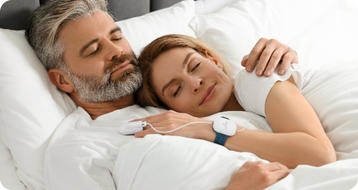
Physicians also use data from sleep tests to help them make diagnoses. At-home sleep tests like the Sleep Doctor home sleep study measure your sleep data using a simple device that you wear to bed. The data gets transmitted to a licensed respiratory therapist who reviews your results and connects you with a clinical team to offer the right kind of treatment.
Treatment Options for Gasping During Sleep
Treatment for gasping during sleep depends on the underlying cause of your breathing problems. In many cases, addressing issues like sleep apnea, acid reflux, nasal congestion, or excess weight can significantly improve nighttime breathing and sleep quality.
CPAP Therapy
Continuous positive airway pressure (CPAP) therapy is the most common treatment for OSA. It’s highly effective when used correctly and adhered to. CPAP therapy pushes pressurized air into your breathing passages using a mask that fits over your nose, mouth, or both. That pressurized air supports your upper airway and prevents it from collapsing. There are many types of PAP machines with numerous comfort features designed to make therapy easier to stick with.
Weight Loss and Other Lifestyle Changes
Some breathing problems stem from excess weight. Often, these issues get worse at night when people lay in a supine position that lets weight press down on their neck and restrict their airway. Losing weight and exercising can improve outcomes and increase the muscle tone needed to prevent upper airway collapse.
Drinking, smoking, and opioid use can also cause breathing problems and make existing issues worse.
Sleeping Position Adjustments
Back sleeping can make snoring worse, and in some cases, restrict breathing. Switching to side sleeping may be an easy way to prevent breathing problems that cause gasping. Keep in mind that certain CPAP masks are more effective with specific sleeping positions. Check with your physician or a sleep specialist to determine which ones will work best with your sleep habits.
Treating Acid Reflux or Nasal Congestion
Untreated nasal congestion can make OSA symptoms worse, and OSA can make nasal congestion worse. To stop this cycle, treat both nasal congestion and OSA (if you’ve been diagnosed).
Acid reflux can be uncomfortable, and it can also cause breathing problems. Over-the-counter medications like proton pump inhibitors, H2 blockers, and antacids can make a difference. If you have chronic acid reflux, you should talk with your doctor.
Medications for Underlying Conditions
Many respiratory problems, including OSA, have comorbidities, or other conditions that exist at the same time. Sometimes, treating these underlying conditions can help improve other simultaneously occurring problems.
For example, Zepbound is a weight-loss drug that’s approved by the U.S. Food and Drug Administration (FDA) to treat OSA. It doesn’t directly treat breathing pauses but instead works by lowering a person’s weight enough to decrease weight-related sleep apnea symptoms.
Oral Appliances
Mandibular advancement devices (MADs) and tongue-retaining devices (TRDs) are alternatives to CPAP therapy. MADs shift your jaw forward to clear your airway, while TRDs employ suction to move your tongue away from your throat.
Surgery
Certain people who have unsuccessfully tried CPAP therapy may qualify for sleep apnea surgery. Some surgeries are permanent procedures that open your airway by altering or removing parts of your anatomy. Inspire is an OSA treatment that uses an implant and nerve stimulator to move your tongue away from your airway.
When to Talk to a Doctor
You should speak with your physician if you or a partner notice any of the following symptoms:
- Frequent choking or gasping episodes
- Breathing pauses
- Severe daytime fatigue
- Chest pain or shortness of breath
An at-home test can also be a cost-effective, valuable way to learn more about your nighttime sleep health.