How CPAP Machine Readings May Be Used
CPAP machine readings serve several important purposes. The data produced by your device may be used to:
- Assess how well CPAP therapy is treating your sleep apnea
- Detect leaks that might compromise the effectiveness of treatment
- Document adherence to the prescribed therapy for insurance reimbursement purposes
- Help identify other conditions that may require further medical treatment
Don’t Just Test Your Sleep. Understand It.
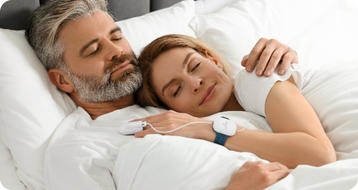
Measure key sleep metrics and review your results with a licensed sleep-care provider. Discuss sleep issues and options to make restless nights a thing of the past.


What Your CPAP Machine Data Means
The data generated by your CPAP machine can offer insights into how well your therapy is working and whether any adjustments might be necessary. How you access your data and what it looks like may vary by machine, but most devices provide similar information.
Some CPAP machines may also allow you to choose between a basic report that summarizes data collected over a period of one or more months and a more detailed report that provides information about specific nights and even particular respiratory events.
Usage
CPAP machines provide data about how often and how long users operate their devices over a specified time period. Usually, reports include the percentage of days within the time period that a person:
- Used their machine
- Used their machine for more than four hours
Insurance companies and doctors use this information to determine whether a person is adhering to the prescribed CPAP therapy. Minimal CPAP usage is usually defined as using the device for at least four hours per night on 70% of nights over a consecutive 30-day period, often within the first 90 days of treatment. However, the more you use your CPAP machine, the more effective it is at treating your sleep apnea.
Apnea Hypopnea Index (AHI)
Apneas and hypopneas are when a person’s breathing fully stops or is significantly reduced for at least 10 seconds. The apnea hypopnea index (AHI) is calculated by dividing the number of apneas and hypopneas by the time spent asleep. In general, this is how AHI is classified:
- AHI <5: normal
- 5 to 15: mild sleep apnea
- 15 to 30: moderate sleep apnea
- >30: severe sleep apnea
Some physicians consider CPAP therapy adequate if a person achieves an AHI reading of fewer than 10 respiratory events per hour.
It’s important to note that AHI readings provided by CPAP machines aren't as accurate as those provided by in-lab sleep studies, so AHI readings from CPAP machines should be seen as estimates and interpreted alongside other data.
Open and Closed Airway Events
Some CPAP machines are able to determine whether a person’s airway closes or remains open during respiratory events. This information, in conjunction with other readings, can help determine if more pressure is needed during therapy. It can also help detect the onset of central sleep apnea, evidenced by respiratory events that occur when airways are open.
Leaks
CPAP machines also detect and report air leaks that occur during use. While CPAP masks are designed to allow some exhaled air to escape, an excessive leak can cause air pressure to drop, decreasing the effectiveness of CPAP therapy. Leaks are most commonly caused by:
- A poorly fitting mask that doesn’t seal properly
- Mouth breathing while using a nasal mask
Many manufacturers consider leak rates below about 24 liters per minute (L/min) to be acceptable, though exact thresholds vary by device. Different devices have different ways of determining what constitutes an excessive leak, and how leaks are reported can vary by machine. Refer to the manual for your CPAP machine for further guidance on how to interpret leak data.
Pressure
Some CPAP machines report the amount of pressure used to keep your airway open, measured in centimeters of water pressure, or cm H20. For most CPAP users, this will be a single number—the pressure setting prescribed by your physician.
Typical CPAP pressures range from 4 to 20 cm H2O, with many people falling somewhere in the 8 to 10 cm H2O range.
However, some people with obstructive sleep apnea use a device that automatically adjusts continuous positive airway pressure during use, known as APAP or autoCPAP. These machines often provide several pressure readings.
- Median pressure: This is the average amount of pressure administered during therapy.
- 95th percentile: This is the most effective pressure—that is, the pressure that resulted in the fewest respiratory events.
- Maximum pressure: This is the greatest amount of pressure delivered by the machine during therapy.
Other Settings
In addition to pressure and usage data, many CPAP machines include comfort settings that can affect how therapy feels.
- Ramp: The ramp feature starts therapy at a lower pressure—often between 4 and 6 cm H2O—and gradually increases to your prescribed pressure over 5 to 45 minutes, depending on your settings.
- Humidity: Humidity levels are usually adjustable on a scale from 0 to 8 (or similar), with higher numbers adding more moisture to help reduce dryness in the nose and throat.
- EPR: Some machines also offer expiratory pressure relief (EPR), which slightly lowers pressure when you exhale to make breathing more comfortable. EPR is typically set to 1, 2, or 3, representing a 1 to 3 cm H2O reduction in pressure.
Adjusting these settings—under your provider’s guidance—can help improve comfort and adherence.
How to Access CPAP Machine Data
Depending on what CPAP model you use, there are several possible ways that you or your healthcare provider might access the data it collects. In most cases, the data will be presented in report form.
- Wireless transmission: Many modern CPAP machines can connect to your wireless network and send information to an online database. To access your data, you can then either log into a secure website or use an app.
- Secure digital card: Some CPAP machines record data on a secure digital (SD) card that you can remove and insert into a device with an SD card reader. You'll likely need to download a software that puts the data in report form.
- Modem: Other CPAP machines use a modem—a small box that connects to an internet service provider—to transfer information to an online database. Some devices contain a modem, while others use a cord to connect to an external modem.
- Machine screen: In rare cases, a CPAP machine may allow you to access information using a menu on the device screen. However, these readings tend to be considerably less detailed than those provided by other methods of data reporting.
Tips for Understanding CPAP Readings
While CPAP machine readings may initially feel intimidating, taking the time to understand the data collected by your device can help you get the most out of CPAP therapy. There are also several things you can do to make sure that you're putting your CPAP machine data to good use.
- Read the user manual for your device: Most user manuals contain helpful instructions about how to access and interpret data. They also offer advice about how to troubleshoot problems, such as leaks, that might be revealed by readings.
- Consider the big picture: It’s important to consider readings in conjunction with each other rather than using a single data point—such as AHI—to assess the effectiveness of your therapy.
- Listen to your body: While CPAP readings can offer insights into how your therapy is working, how you feel is also important. Even if CPAP machine data indicate that treatment is going well, talk to your doctor if you continue to experience symptoms such as daytime tiredness.
- When in doubt, reach out to your healthcare provider: Your doctor can answer questions you have about your CPAP machine readings or your treatment. It's especially important to reach out if your respiratory events don't improve or if you run into a problem, like a leak, that you're unable to resolve on your own.