For people with obstructive sleep apnea (OSA), the difference before and after continuous positive airway pressure (CPAP) therapy can be significant. When used consistently, a CPAP machine can offer benefits like better sleep, enhanced productivity, and reduced long-term health risks.
CPAP therapy is considered one of the most effective treatments for sleep apnea, a condition defined by repeated breathing interruptions during sleep. By delivering air through a mask and into the airway, a CPAP device can stabilize breathing and improve overall health.
Before CPAP: How Sleep Apnea Impacts Your Health
Before treatment, OSA can impact sleep and everyday health. OSA involves recurring pauses in breathing that trigger short awakenings throughout the night. When left untreated, disrupted breathing and fragmented sleep can cause numerous short-term symptoms, including:
- Loud snoring
- Gasping or choking during sleep
- Excessive daytime sleepiness and a tendency to doze off at inappropriate times
- Impaired focus, memory, and other elements of thinking
- Morning headaches
- Frequent urination at night
- Elevated risk of accidents, including when driving or working
Long-Term Risks of Sleep Apnea
In addition to its immediate effects, untreated OSA heightens the risk of a number of serious medical conditions and overall mortality.
By interfering with normal processes of sleep and lowering oxygen levels in the body, sleep apnea can lead to cardiovascular problems. For example, untreated OSA is linked with a greater risk of high blood pressure, stroke, heart attack, and heart disease.
OSA can negatively affect how the body manages blood sugar, making it more likely for people with untreated OSA to develop type 2 diabetes. OSA also increases the risk of liver disease and has been associated with acid reflux, asthma and lung problems, and kidney disease.
Don’t Just Test Your Sleep. Understand It.
Measure key sleep metrics and review your results with a licensed sleep-care provider. Discuss sleep issues and options to make restless nights a thing of the past.


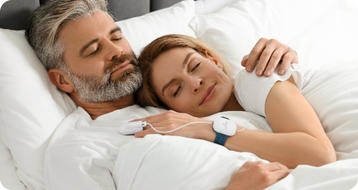
How Your Body Changes After CPAP
CPAP therapy can reduce the symptoms of OSA, improve quality of life, and decrease the chances of long-term health complications. With consistent use, a CPAP can have many potential positive effects.
Sounder Sleep
A CPAP keeps breathing steady during sleep, which minimizes interruptions and helps users wake up feeling well-rested. For most people, sleep improves almost immediately after starting CPAP therapy, and healthier sleep patterns develop within the first week.
Reduced Snoring
Very loud and frequent snoring is common in people with OSA, and CPAP therapy is calibrated to resolve this bothersome symptom.
Greater Daytime Energy and Focus
By reducing sleep fragmentation, CPAP therapy can boost daytime alertness. Using a CPAP supports better concentration, clearer thinking, and improved productivity.
Lower Risk of Accidents
People with untreated OSA are at least twice as likely to have a car crash related to drowsy driving. After CPAP treatment, alertness improves and the risk of accidents decreases.
Improved Sleep For a Bed Partner
Since nightly use of a CPAP can minimize snoring, tossing and turning, and other OSA symptoms, the therapy may also improve sleep for the bed partners of people with sleep apnea.
Enhanced Mental Health
People with OSA who use CPAP report having a better mood and fewer symptoms of depression. CPAP enables better sleep, which has a close connection with mental health.
Better Cardiovascular Health
By treating OSA, CPAP machines can promote cardiovascular health, including better control of blood pressure. While the exact impact of CPAP therapy on the likelihood of heart attack and stroke is not clear, growing evidence points to a reduced risk when a CPAP is used consistently.
Better Metabolic Health
OSA makes it harder for the body to regulate blood sugar levels, and CPAP therapy can help address this problem and support metabolic health.
Reduced Risk of Other Health Problems
Studies have found that regular use of a CPAP for OSA can potentially deliver other benefits, including:
- Lower risk of erectile dysfunction
- Decreased acid reflux
- Reduced symptoms of asthma
How CPAP Therapy Affects Your Weight
There has been some research into how CPAP therapy affects weight, but the results are largely mixed. Some study participants have lost weight while using CPAP therapy, others have seen their weight stay the same, and, in some instances, people have actually gained weight.
Obesity is a major risk factor when it comes to sleep apnea, so it makes sense to investigate the relationship between CPAP treatment and weight. Below, we’ll look at what we currently know about CPAP therapy and weight.
Will CPAP Help Me Lose Weight?
Research currently shows that CPAP therapy alone is not enough to induce weight loss.
In the past, doctors theorized that CPAP therapy could help patients lose weight because of the connection between sleep and metabolism. After all, sleep deprivation can impact the hormones that regulate hunger, blood sugar levels, and a person’s energy and activity levels.
Despite this connection, research indicates that for weight loss to be effective, diet and exercise are needed alongside CPAP therapy. It’s worth noting, however, that weight loss can help improve your OSA symptoms.
Does CPAP Cause Weight Gain?
Studies have shown that some people gain weight while using CPAP therapy. Weight is complex, so it’s not clear if CPAP therapy has directly caused the weight gain in these cases or if other factors are at play.
Some theories suggest that because CPAP therapy results in more restful sleep, people burn less energy during the night than if they are tossing and turning due to their OSA symptoms. If they aren’t exercising more during the day, the result could be modest weight gain.
Restful sleep is clearly a positive outcome, but while CPAP therapy is considered the gold standard for treating sleep apnea, it does not replace diet and exercise as methods for reducing weight.
Potential Side Effects of CPAP Therapy
CPAP therapy is the most effective method for treating sleep apnea, but there are potential side effects. These are largely treatable and can usually be fixed by making sure your mask fits properly or adjusting your machine.
- Mask discomfort or leaking: It can be difficult to get used to wearing a CPAP mask while you sleep, and you might also experience skin irritation. Talk to your doctor to make sure your mask fits properly, and it might be worth asking them about trying different types of masks. If your skin is irritated, consider a gel or cloth mask barrier.
- Nasal congestion: You might experience congestion because of air directed into your nasal passage. might help solve the problem, or You can try saline spray or a humidifier to alleviate the congestion. A full-face mask is best for people with congestion because it delivers air into the nose and mouth, so you won’t lose airflow due to blocked nasal passages.
- Dry mouth: Your airways can dry out due to the pressurized air from CPAP therapy. A heated humidifier or heated tubing can help alleviate the problem.
- Aerophagia: Aerophagia is the experience of swallowing air and can lead to bloating, gas, and discomfort. It’s usually a sign that your pressure is too high, so you can talk to your doctor about adjusting the pressure levels. You can also use the ramp feature on your machine so that pressure starts lower when you begin your therapy and gradually increases as you drift off to sleep.
- Claustrophobia: Some people experience claustrophobia while using a CPAP machine, especially as they get used to it. Consider a mask with a minimal design, and try wearing the mask while you’re awake to get used to the sensation.
How to Get Started With CPAP Treatment
Your doctor or sleep specialist will help you get started with CPAP therapy. Sleep Doctor can also guide you through the entire process, from diagnosis to purchasing and using your CPAP machine.
You can get started by ordering an at-home sleep study. If your results indicate that you have sleep apnea, a physician will send you a prescription for a CPAP machine. You’ll also be paired with an experienced Sleep Care Advocate, who will be your partner before and during CPAP treatment.
Your partner can help you order a machine, guide you through setup, monitor your progress, and help with compliance. They can also assist with troubleshooting if something isn’t quite right with your CPAP therapy.
It’s normal to encounter challenges in adjusting to using a CPAP when you first get started. Talk to your Sleep Care Advocate if you have issues or questions, and try these tips to help you stick with CPAP therapy:
- Acclimate faster by using the device as much as possible
- Focus on the positives of treatment, including better sleep
- Practice using the CPAP while you’re awake and doing other activities, like watching TV
When to Talk to Your Doctor
To get the most from CPAP therapy, talk with your doctor if you have any side effects that impact your ability to continue using CPAP. Being proactive enables early troubleshooting, which may involve your doctor making simple adjustments to your mask or pressure settings that can dramatically improve the comfort and success of CPAP therapy.
Below are some examples of side effects and what to ask your doctor.
| Side Effect | What to Ask Your Doctor |
| Mask leaking | If your mask is the right size or if you are wearing it properly |
| Nasal congestion | If a nasal decongestant or spray would be helpful |
| Claustrophobia | If a more minimal mask or nasal pillow mask would be appropriate |
| Aerophagia | If your pressure setting is too high |