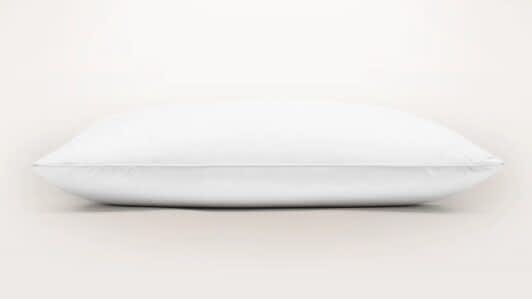
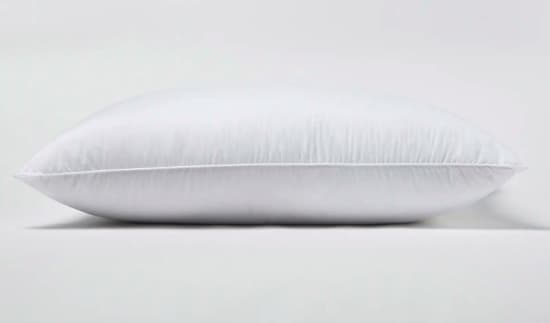
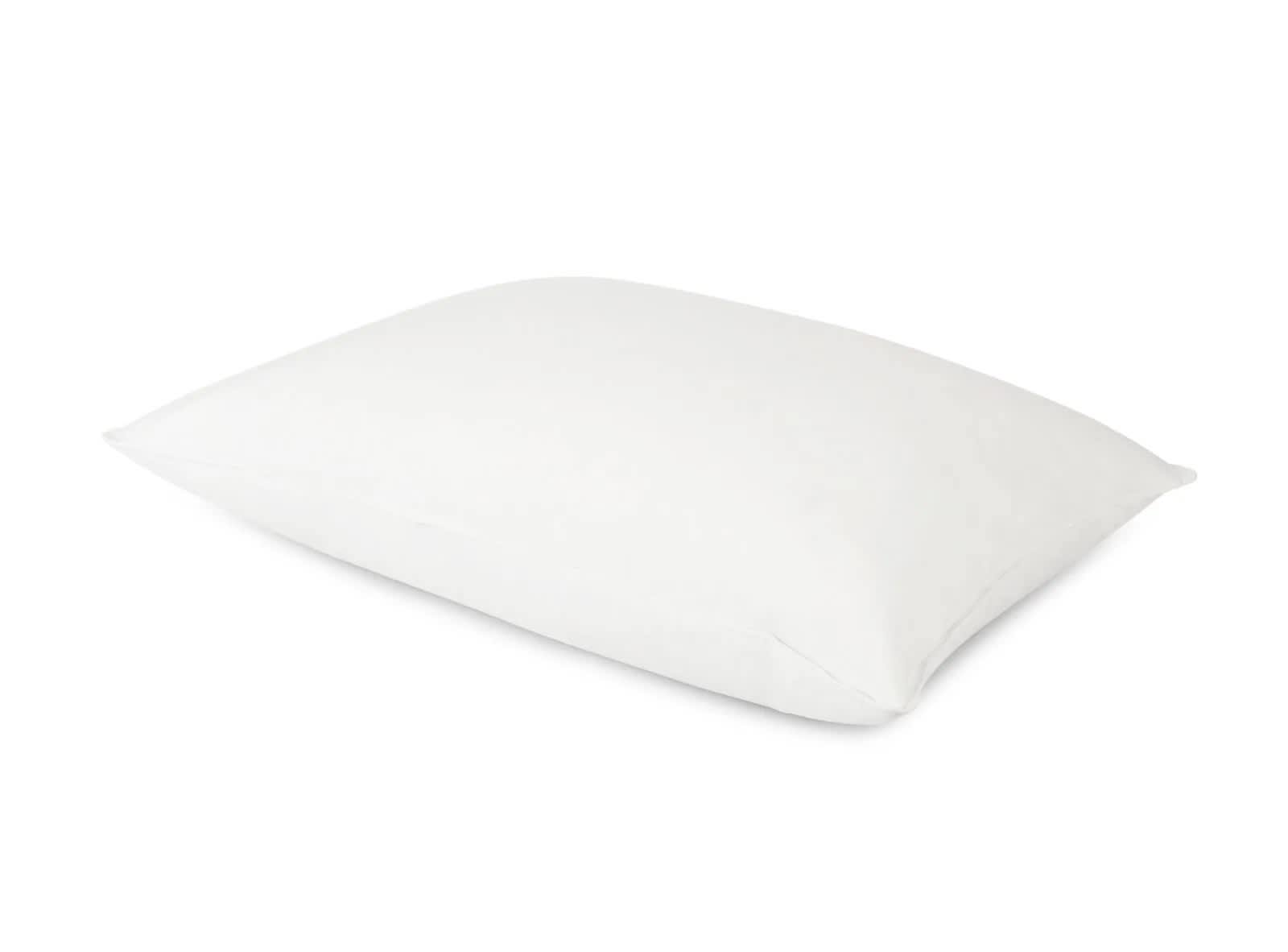
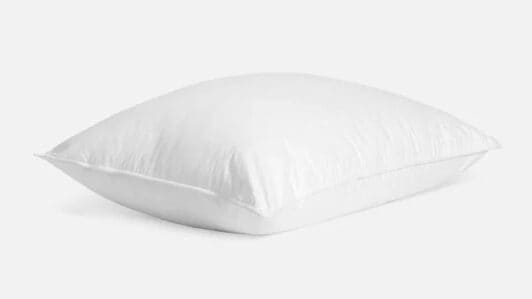
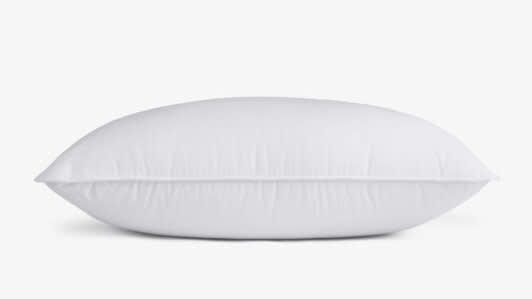
Crafted from down fibers harvested from waterfowl, down pillows have a plush and cushion-like feel. They remain fluffy and light with slight pushback for pressure relief and support.
Although the best pillow varies by sleeper, the ideal model provides a balance of comfort and support for your sleeping position and body type. Down pillows accommodate a wide range of needs and preferences. Stomach sleepers most often prefer softer down pillows with lower lofts, while back sleepers benefit from low to mid lofts and medium firmness levels. Side sleepers generally find firm down pillows with high lofts suitable.
Based on our extensive in-house testing, we’ll explore the best down pillows in several categories. We’ll also explain the different types of down pillows, how to pick the right model for you, and the importance of ethical sourcing.
Three-chamber construction for support and softness
Triple-washed down and feathers
Cons
Sleepers with distinct firmness needs
Combination sleepers
Those interested in ethically sourced down
The Boll & Branch Down Pillow comes in three densities: soft, medium, and firm. This varies the firmness level and loft, making the pillow suitable for most sleepers.
Constructed with three chambers, each density option contains a slightly different combination of fill materials. The soft option uses down in all three chambers. The medium and firm options have feather and down inner pillows with fluffy down outer chambers. All of the down and feathers are triple-washed for cleanliness and durability. A long-staple cotton shell covers the pillow.
After comprehensive assessments, our testers determined the Boll Branch Down Pillow is ideal for many sleepers. Our back and combination sleepers favored the medium option, while our side sleepers preferred the firm pillow’s extra support. Both the medium and firm pillows balanced moldability and shape retention, contouring nicely to our back and side sleepers’ heads, necks, and shoulders.
The soft option also performed well with stomach sleepers. It was slightly loftier than most of our stomach sleepers usually prefer, but they were able to squish it down enough to cushion their heads without excessive lift.
The pillow holds OEKO-TEX Standard 100 and Responsible Down Standard (RDS) certifications. Standard 100 certification verifies the pillow is free from certain substances that pose health risks. RDS certification indicates the down and feathers were ethically sourced.
The Boll & Branch Down Pillow is available in standard and king sizes. It comes with free shipping in the contiguous U.S. and a 30-day return policy. You can machine-wash the pillow on the gentle cycle to freshen it up.
Our testers concluded that this pillow provides comfort and support for nearly every type of sleeper due to its three firmness options and three-chamber design.
Sleepers experiencing neck and shoulder discomfort
Those who value ethically sourced down
The Quince Luxe Goose Down Pillow provides ample cushioning for pressure points in the head and neck. With two firmness options, nearly any sleeper can find the right balance of softness and support.
This model features 700 fill power European white goose down fill, which gives the pillow a fluffy feel. A smooth cotton sateen shell encases the fill. Double-stitched edges with German piping reinforce the perimeter and add aesthetic appeal. Sleepers can choose from two firmness levels: soft-medium and medium-firm.
The Quince Luxe Goose Down Pillow holds Responsible Down Standard certification, meaning suppliers harvest the down without unnecessarily harming the waterfowl.
After extensive testing, we found the pillow suitable for stomach, back, and side sleepers of all body types. Our stomach sleepers preferred the softer option, which conformed to their heads without forcing them too far back. Side and back sleepers appreciated the plush support of the firmer version. Both firmness levels provided generous cushioning for our team members’ heads and necks, relieving pressure points.
The Quince Luxe Goose Down Pillow comes in standard, queen, and king sizes. This model is machine-washable. It includes free ground shipping in the United States and a 365-day return policy.
Our testers reported that the Quince Luxe Goose Down Pillow’s exceptional conforming relieved pressure in their heads and necks. With two firmness options, all of our team members found at least one version comfortable for their sleep position and body type.
Three-chamber design for balanced comfort and support
Soft but supportive
Responsible Down Standard certified
Cons
Side and back sleepers
Stomach sleepers less than 130 pounds
Those who like conforming and moldability
The Helix Down & Feather Pillow’s plush but supportive three-chamber design has the balanced feel side sleepers typically prefer. It cushions the head and neck while molding to their shape to promote good posture.
The Helix Down & Feather Pillow consists of an inner core and two outer layers. The inner core contains a down and feather blend, while the two outer layers use 550 fill power white down. The design results in a soft feel that let our testers sink in a bit before reaching the more supportive core.
A 230 thread count cotton Cambric cover encases the pillow. Reinforced double-stitched edges with German piping enhance the pillow’s durability and give it a finished look.
The pillow is Responsible Down Standard certified, meaning the down feathers are ethically sourced from farms that do not subject their animals to unnecessary harm.
We found that the inner chamber provides support and shape retention, while the outer layers add plush comfort. This creates a balanced feel that provides equal parts support and cushioning. The pillow’s softness and moldability were ideal for our side and back sleepers under 130 pounds. Side and back sleepers over 130 pounds and stomach sleepers under 130 pounds also enjoyed this model.
The Helix Down & Feather Pillow is available in standard and king sizes. It comes with free shipping in the U.S., a 100-night sleep trial, and a one-year limited warranty.
We recommend the Helix Down & Feather Pillow for side and back sleepers who value plushness. Despite its soft feel, this pillow doesn’t skimp on the support thanks to its chambered design.
Fill MaterialCanadian white down clusters or down/feather blend
FirmnessPlush, mid-plush, firm
Price$109
Cover Materials100% cotton sateen
Pros
Available in three firmness levels
Antimicrobial treatment designed to inhibit bacterial, mold, and mildew growth
Sourced and manufactured in Canada
Cons
All sleeping positions
Sleepers who want a plush yet supportive feel
Those with allergies
Because the Brooklinen Down Pillow is available in three firmness levels, sleepers can choose the ideal option for their body type and sleeping position. This enables sleepers to maintain spinal alignment while enjoying the soft, fluffy sensation of down.
The firmness levels include plush, mid-plush, and firm. Each contains differing internal structures and materials to provide the desired support. The plush option contains Canadian down clusters for soft cushioning. The mid-plush pillow uses a dual-core construction with an outer layer of down clusters and an inner layer of feathers. Although this option lets the head sink in, it has more pushback than the plush. The firm choice has a dual-core design with a higher feather-to-down ratio for extra support.
All the down is sourced from Hutterite Farms in Canada, and the pillow is manufactured in Canada. An antimicrobial treatment is designed to inhibit mold, mildew, bacteria, and fungi that could cause allergy symptoms. The pillow’s cotton sateen shell has double-stitched edges for durability.
Our testers found the Brooklinen Down Pillow comfortable for all sleeping positions as long as they used the right firmness option. The plush was appropriate for stomach sleepers, enabling their heads to remain close to the mattress and in line with their spines. Our side sleepers preferred the firm pillow for additional support. Back and combination sleepers found the mid-plush pillow ideal for spinal alignment.
The pillow can be spot-cleaned or dry-cleaned. It is available in standard and king sizes. Purchases include a 365-day return policy, an additional 1-year limited warranty, and free return shipping in the U.S.
The product testing team concluded the Brooklinen Down Pillow is comfortable for a wide range of sleepers. Its three firmness options use varying designs and materials to achieve distinct feels uniquely suited to different sleep positions.
Fill MaterialEuropean white down ~85%
Down/feather blend ~15%
FirmnessSoft, Medium, Firm
Price$129
Cover Materials100% sateen weave cotton
Pros
750 fill power and 7-inch loft for a full shape
Fluffy European white down
Available in three firmness levels
Cons
Side and back sleepers
Those who want a moldable pillow
Luxury shoppers
The Parachute Down Pillow uses premium materials to create a fluffy but supportive surface suitable for side and back sleepers.
This model is made in the U.S. of 85% European white down, one of the highest quality downs on the market. It also contains approximately 15% down and feather blend. The pillow has 750 fill power down, which is higher than we usually see in down pillows. Higher fill power generally equates to a fluffy but lightweight pillow, which our team members noted in testing. The pillow measures 7 inches thick, but our testers found it easy to scrunch as needed. The pillow also has a double-stitched piping seam and a sateen cotton shell.
The Parachute Down Pillow comes in three firmness levels: soft, medium, and firm. Our product testers found the soft and medium options well suited for back sleepers, while the medium and firm options worked well for side sleepers. Due to the high loft, the pillow was not ideal for our stomach sleepers. It raised their heads above a neutral position, causing discomfort.
During our assessments, we found the pillow retains its shape well enough to support good posture. It’s also highly moldable, contouring to the head and neck.
Owners can machine-wash the Parachute Down Pillow on a delicate cycle or dry-clean it. This pillow comes in standard and king sizes. It ships within the U.S., including Alaska and Hawaii. Parachute also offers a 60-day return policy and a three-year limited warranty.
We found the Parachute Down Pillow especially comfortable for side and back sleeping. Its lofty fill provided ample cushioning without going flat under our testers’ heads.
How We Test Pillows
There’s a reason down pillows have been popular for hundreds of years – they’re fluffy, squishy, breathable, and comfortable for a wide range of sleepers. Because there are so many down pillow models available, it’s critical to use standardized trials to compare their performances. Our team examines how a model feels for a range of sleeping positions and body weights to determine support. We also look at the down fill’s power, quality, ratios, and sourcing – which are all important factors that can set down pillows apart from one another.
What Is Down?
Down is a common pillow fill material consisting of soft fibers from the underbelly of waterfowl, such as ducks and geese. These fibers form light and fluffy clusters with nearly undetectable quills.
While down is technically a type of feather, it is distinctly different from standard feathers. Feathers are denser, making up the outer layer of a waterfowl’s wings and back. Individual feathers consist of a prickly quill surrounded by velvety fibers.
Down fill typically creates a light, fluffy, moldable pillow that retains warmth. Sleepers who prefer a cloud-like feel often favor down. In contrast, feather pillows are generally firmer and more breathable. Those who sleep hot or need more support may prefer this fill. Many pillows use a combination of down and feathers to balance support, softness, and temperature regulation.
Because down is so moldable and fluffy, it’s important to buy a pillow with a loft level that supports your neck even once the pillow compresses. Side sleepers will want thicker pillows than back and stomach sleepers to prevent their necks from bending.
What Should You Know About Down Pillows?
Before purchasing a down pillow, sleepers should understand their cost, adjustability options, ease of care, and fill ratio. While these additional factors may be easy to overlook, they can make a big difference in determining the best pillow for you.
How Much Do Down Pillows Cost?
Standard and queen size down pillows typically cost between $80 and $200. Down pillows tend to be more expensive than the average pillow because of their quality. However, the price varies significantly based on the type of down and the ratio of down to feathers. Goose down pillows usually carry higher price tags than those that contain duck down. Pillows with higher feather-to-down ratios are often more budget friendly.
Are Down Pillows Adjustable?
Most down pillows are not adjustable. Sleepers should refrain from removing or adding fill unless the manufacturer explicitly suggests it. Taking out the fill could permanently damage the pillow. In place of customizable fill, many brands offer several loft or firmness options to accommodate different sleep positions.
Can You Wash a Down Pillow?
Depending on its construction, a down pillow may or may not be machine-washable. The harsh movement of washing machines can damage the shells of some pillow models, so spot cleaning and dry cleaning are often preferable. However, other down pillows can be washed and dried on a gentle cycle. Double-check the manufacturer’s care instructions to ensure you properly care for your down pillow.
Do Down Pillows Contain Feathers as Well?
Down vs. Down Alternative in Your Pillows
Down alternative mimics the fluffy softness of down but consists of cotton or synthetic fill, like polyester. Because it does not have animal products, down alternative is hypoallergenic. Pillows that contain down alternative fill are frequently more affordable and more breathable than down models. They’re also often machine-washable. However, down alternative pillows tend to be less durable, and quality varies widely depending on the specific fill material.
Down vs. Down Alternative
Down
Down Alternative
Description
Harvested from the underbelly of waterfowl, down clusters are soft and airy. The fill creates a light and fluffy pillow that conforms to the head with a cloud-like feel.
Down alternative fill uses cotton or synthetic fibers to imitate down’s softness and plushness. While the material feels similar to down, it tends to be more breathable but less durable.
Pros
Durable
Natural and biodegradable
Soft, plush, and lightweight
Compresses easily
Notable insulation
Similar softness to down with a lower price tag
Retains less heat
Hypoallergenic
Cruelty-free
Odorless
Cons
Higher price-point
Not consistently hypoallergenic
Not vegan-friendly
May retain excessive warmth
May compress too easily and require frequent fluffing
Often contains non-biodegradable synthetic materials
Less durable
Quality varies
Prone to clumping
May produce noise
Duck Down vs. Goose Down in Your Pillows
There are two main types of down commonly used in pillows: duck and goose. Although both share similar properties, the two vary in their quality and performance.
Duck down clusters are traditionally smaller than goose down clusters, so the resulting pillows generally aren’t as fluffy or insulating. Because ducks are closer to the ground, the down is also more susceptible to collecting allergens and retaining odors. However, duck down is readily available, making the material more affordable.
Goose down’s larger clusters are typically softer and retain more heat. Despite its plush texture, goose down holds its shape better than duck down. This lends to lofty, durable pillows. Goose down is also less prone to odors and allergens. Since the material is in high demand but less widely available, goose down pillows usually have a higher price tag.
How Do You Know if the Down in Your Pillow Is Ethically Sourced?
Because down is a byproduct of animal agriculture, ethical sourcing is a major concern. Some production methods subject birds to unnecessary pain, stress, and suffering. Relevant certifications can verify that your pillow’s down fill was produced with consideration of animal welfare.
Responsible Down Standard (RDS): This certification ensures the manufacturer has met strict criteria pertaining to the full production chain, from animal breeding through product manufacturing.
DOWNPASS: This zero-tolerance standard uses extensive auditing for product quality monitoring.
Global Traceable Down Standard (Global TDS): Global TDS implements systems for supply chain transparency to verify responsible sourcing.
Upcycling is another popular option to minimize the impact on animals and reduce waste. Owners often dispose of pillows, jackets, duvets, and other products that contain down when the shell becomes damaged. However, the down itself is quite durable. Upcycled down pillows contain previously used down that’s been carefully washed, sterilized, and sorted for quality and cleanliness.
If ethical down sourcing is important to you, look for certifications from third parties that advocate for humane animal treatment and responsible sourcing. You can go even further by buying pillows made from upcycled down jackets and blankets.
Explore More Pillows
If you’re looking for a particular type of pillow, check out our other guides below.
Pillow Height, Firmness, Support, and Keeping Your Spine Aligned
The right pillow loft and firmness are critical to keeping your spine aligned. Your sleeping position is the primary factor that determines what works best for you.
Your Pillow’s Height (or Loft)
Loft refers to a pillow’s height or thickness. Low-loft pillows are 3 inches or less, medium-loft options are between 3 and 5 inches, and high-loft designs are more than 5 inches. Since a pillow should fill the space between your head, neck, and the bed, the ideal loft depends on your sleep position.
Sleeping Position
What Pillow Loft Do You Need?
Side Sleepers
Side sleepers typically require high-loft pillows. The width of their shoulders creates a large gap between their head and the mattress, which a high-loft pillow can fill. This helps keep their head in line with their spine.
Back Sleepers
Back sleepers generally find medium-loft pillows suitable. They should avoid high-loft pillows that raise their head above the level of their spine and low-loft models that let their head sag.
Stomach Sleepers
Stomach sleepers require low-loft pillows to avoid excessive lift. They should keep their head as close to the mattress as possible to maintain spinal alignment.
Combination Sleepers
Combination sleepers may opt for a medium or adjustable loft. Adjustable models enable sleepers to customize the pillow according to their nightly needs. Sleepers can also bunch or fold a low- or medium-loft pillow to create a higher loft.
How Firm Should Your Down Pillow Be?
Firmness level refers to how soft or hard the pillow feels. Although down pillows are generally on the softer side, they come in several firmness levels based on the density and type of fill. The pillow firmness level contributes to the overall support.
Sleeping Position
What Firmness Do You Need?
Side Sleepers
Side sleepers typically need firmer pillows for adequate support. This helps the pillow maintain its shape to promote good spinal alignment.
Back Sleepers
Back sleepers should usually opt for medium to medium firm pillows to keep their upper and lower bodies in line. They should avoid extra soft or extra firm pillows, which can contribute to poor sleep posture.
Stomach Sleepers
Stomach sleepers benefit from soft to medium pillows that compress easily to limit spinal strain.
Combination Sleepers
Combination sleepers often choose a medium pillow or an adjustable model. Pillows with a mid-range firmness can accommodate all sleep positions, though some may be less comfortable than others. Adjustable pillows allow sleepers to adjust the feel for a more customized sleep experience.
Pillow Support and Keeping Your Spine Aligned
Support refers to the pillow’s ability to promote spinal alignment, which is integral to healthy, pain-free sleep. Improper spinal alignment can lead to restless sleep, neck pain, and muscle tension. Sleepers should choose the right pillow for their sleeping position to support good posture and promote quality sleep.
Firmness level and loft determine a down pillow’s level of support. For instance, side sleepers typically require firmer, high-loft pillows for optimal support. Stomach sleepers generally benefit from soft to medium, low-loft pillows. Back sleepers tend to fall right in the middle.
Body type and mattress firmness also come into play. If you sink deeply into your mattress, you won’t need as much support from a pillow because your head is already closer to the mattress surface. However, if your mattress is firm for your body type, you may need a more supportive pillow to fill the gap under your head.
We recommend carefully assessing your needs to find the ideal down pillow for you.
Garen is a health and lifestyle content creator. She realized the importance of sleep when her children made getting a good night's rest more challenging. Garen is always learning something new about the wide world of sleep and sleep products. Married with two girls, ages 7 and 11, she is a book nerd and a lover of pop music, travel, and the Pacific Northwest.