How We Test
Every bed frame we recommend goes through a series of tests in our Seattle sleep lab. We look carefully at construction, design, and materials in-person so that we can get a thorough sense of how bed frames will perform, how long they’ll last, and who will like them best. We test every frame the same way and try them out with different mattress constructions to see which ones they work best with.
Ease of assembly is important too, especially if you’re putting a bed together yourself. When we build frames, we also check their weight and overall size so that you know exactly what you’re getting once it’s out of the box. Finally, before adding bed frames to our top picks, we consult verified customer reviews to discover what users think of their bed bases after extended use.
Are Bed Frames Necessary?
While bed frames are not absolutely necessary, they offer a number of advantages that make them a beneficial accessory for many sleepers.
A bed frame elevates a mattress from the floor, which helps deter dust, mites, and bugs. Also, elevating the bed helps prevent the buildup of heat and moisture under the mattress. This elevation also makes getting out of bed easier and sometimes creates storage space underneath the bed.
However, a bed frame is not essential. Some sleepers prefer the stiff feel of a mattress placed directly on the floor. Those who move often may not want the hassle of a bulky bed frame that has to be assembled in each new home. Others may not be able to afford the extra expense.
Note that many manufacturers void the warranties of mattresses if a proper support system like a bed frame is not used.
Who Should Use a Bed frame?
Bed frames are a good choice for sleepers who want extra elevation or support, sleepers who are sensitive to dust, those who need extra storage space, or those who like a frame’s aesthetic.
Many bed frames offer extra support to help accommodate movement on the mattress and prevent sagging and warping over time. For this reason, many mattress companies void their warranties if the bed is not placed on an acceptable base. Sleepers who feel their mattress is too soft, or those who simply need extra support because of back pain may find that a bed frame helps. Additionally, many find that elevating their mattress makes getting in and out of bed easier.
People sensitive to dust may benefit from the elevation provided by bed frames. When positioned at a higher level, contaminants like dust and mites are less likely to reach the mattress.
Many bed frames help create storage space by giving sleepers a space beneath the bed to put belongings. Also, since bed frames are available in a wide variety of designs, some buyers use them as a core component of their bedroom decor.
Though most bed frames are designed to be used with all sorts of mattresses, some mattress manufacturers void warranties if you use certain types of frames. Make sure the frame you have in mind is compatible with your mattress.
How Much Does a Bed Frame Cost?
Bed frames vary widely in price, costing anywhere from less than $100 to more than $10,000. The cost depends on a number of different factors including materials, size, special features, and design.
Bed frames made with high-quality materials tend to cost more. For example, a frame made from solid wood will have a higher price-point than one made from particle board. Some bed frames include features such as headboards, footboards, and storage compartments which can affect the price. Also, certain types of bed frames — such as adjustable models — tend to cost more than others.
Types of Bed Frames
While all bed frames perform the same basic function of elevating and supporting a mattress, there are many different types available. While this list is not exhaustive, most bed frames fall into one of the following categories.
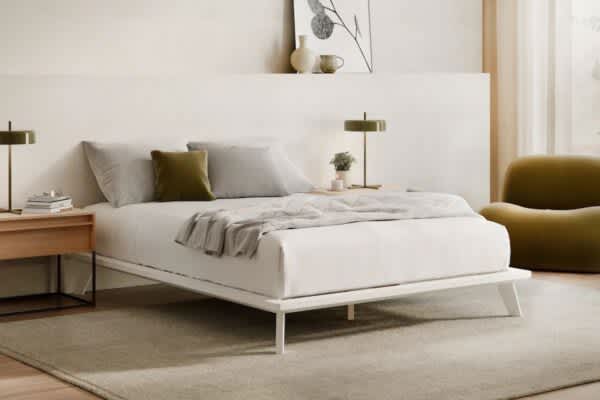
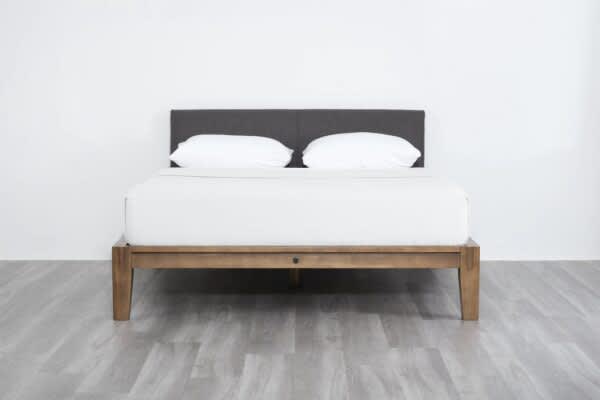
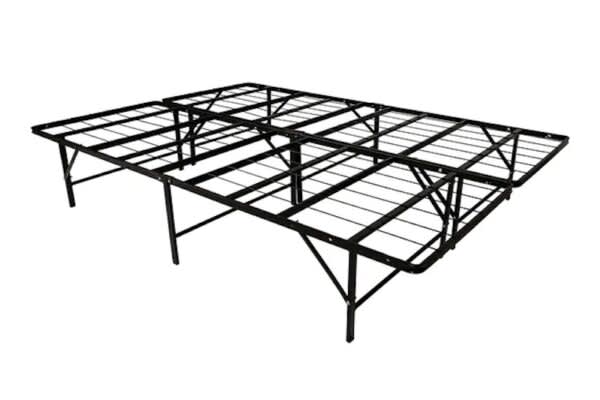
A platform bed provides an elevated surface to place a mattress on and eliminates the need for a box spring. These frames may be constructed from wood or metal, and they usually have simple designs compatible with a variety of mattresses.
Platform beds come in solid or slatted varieties. Solid surfaces offer sturdier support but allow less air to circulate. Slatted bases let mattresses breathe but might be insufficient for extremely heavy mattresses.
Platform beds usually keep the mattress relatively close to the ground, though some have space underneath that can be used to store belongings.
Storage
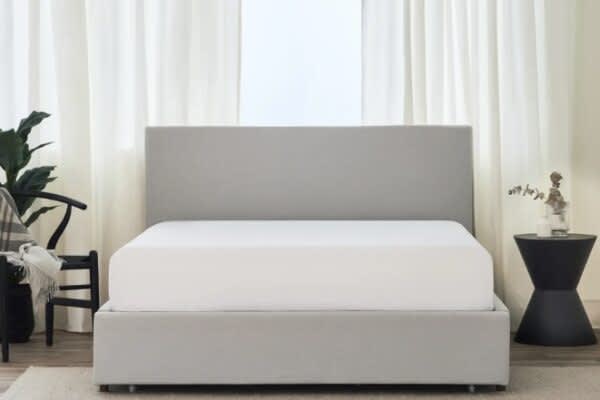
Storage bed frames have drawers or other types of storage space built into the frame. This design makes stored belongings more inconspicuous than if they were placed on the floor under a platform bed. Because of their more complex design, assembly is often more time-consuming.
Sleigh
These bed frames have a curved headboard and footboard which give them the appearance of a sleigh. Usually made from wood, they offer strong support and add a regal aesthetic to the room. They are heavier than many bed frames, so they may not be a good choice for buyers who plan to move or rearrange their room often. They also take up more space, so they are best suited to large bedrooms.
Four-Poster
Four-poster bed frames include posts that rise up from each corner of the frame, sometimes connected by rails at the top. The posts add a dramatic feel to the bed, which you can adjust to your preferred style based on the materials and the height. These bed frames are best for larger rooms with high ceilings. A subcategory of the four-poster frame is the canopy bed, in which the posts are joined at the top and draped with fabric.
Assembly is usually more complicated for four-poster frames, and they are not easy to move once built.
Adjustable
Adjustable beds let sleepers raise parts of the bed — usually the head, the foot, or both. This feature may help alleviate back pain or chronic snoring. Adjustable beds are generally motorized, which means you’ll need an outlet near the bed to plug it in. Because they involve more electronics and technology, adjustable bed frames are often more expensive than other types.
While adjustable beds can accommodate most modern mattresses, certain traditional innerspring models may be too rigid.
If you need a bed frame with a high weight rating, make sure you factor your mattress’ weight into the mix too.
How to Choose a Bed Frame
Besides mattress compatibility, there are several factors to consider when shopping for a bed frame. These range from aesthetic preferences to practical considerations like cost and durability.