How We Test
Before adding a platform bed model to our top picks, we put it to the test in our Seattle sleep lab. We check out each bed’s materials, construction, and design features during assembly. Each of these factors helps us understand the bed’s durability and long-term performance.
To test the beds personally, we put various mattresses on top of the frames to see if they perform differently for hybrids, all-foam, innerspring, and latex mattresses. Our testers also take frames home to try them out over the course of a few weeks, then report back with their thoughts. Existing customer reviews also help us understand how bed frames work for others.
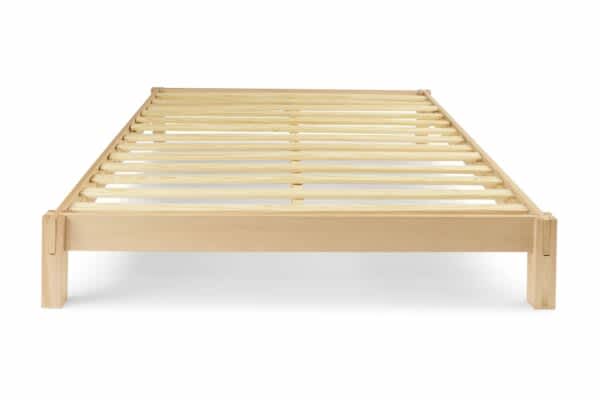
Platform beds form a flat, supportive surface for a mattress. They are designed to eliminate the need for a box spring by using either a solid base or, more commonly, a slatted base made from wood, composite, or metal.
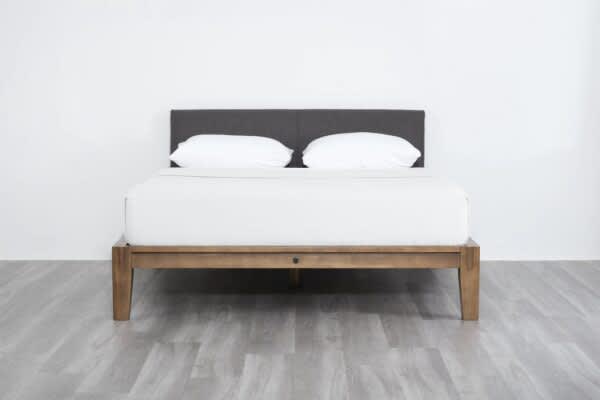
Platform beds typically feature a wood or metal frame. Wood frames come in different stains or can be upholstered for a plusher look. Metal frames usually have a powder coating to make them smooth and easier to clean.
Platform beds provide a sturdy surface to support a variety of mattress types. Some models leave enough space underneath for discreet storage of personal items. When used with a compatible mattress, they can help extend the mattress’ lifespan and enhance performance.
Pros
- Provides a strong foundation that adds to the mattress’ lifespan
- Helps mattress performance by creating edge-to-edge support
- Plenty of color and style options give shoppers flexibility
Cons
- Some platform beds may have slats that are spaced too far apart for optimal supportiveness
- Not all models are designed to accommodate underbed storage
- Assembly may be difficult for platform beds with more intricate designs
Platform beds come in a wide range of prices, from less than $100 to $2,000 or more. Solid hardwoods, Japanese joinery, reinforced attachments, and high-end finishes or upholstery will increase the cost. Shoppers looking for larger sizes, including king and California king, can expect to pay more as well.
Platform beds often have slats that form the support system for your mattress. Make sure they’re placed according to manufacturer specs for both the frame and your mattress. If the slats aren’t spaced correctly, they can void your mattress’ warranty.
Platform beds vary widely in materials, design, and functionality. We’ll break down four of the most common platform bed types to help you decide which one makes the most sense for your bedroom.
Storage
Platform beds that feature storage usually include drawers built into the bottom of the frame. This can be one large drawer or multiple smaller drawers for storing extra bedding, pillows, or other items. Shoppers should keep in mind drawer access when taking measurements.
Wood
This is perhaps the largest category of platform bed, with a large variety of options at a range of price-points. Wooden platform beds can feature solid hardwoods or composite wood and may use different types of wood in the frame and the slats.
Metal platform beds provide an ultra-sturdy and durable base. They typically have a sleek, industrial style that fits in well with modern decor. Most metal platform beds feature a powder-coat finish that helps protect them and adds shine.
Upholstered
Plush and sophisticated, upholstered beds have a high-end look. Common fabrics used in upholstered models include velvet, linen, and polyester. Generally, upholstered beds carry higher price tags due to the added expense of the materials and construction.
Once you choose a style of platform bed, there are several other key points to consider. Thinking about what best meets your needs in these categories can help give you direction and make it easier to select a model that’s a good fit.
-
Material Quality: Different brands use materials with varying degrees of quality. Higher-quality components like hardwoods and upholstery usually cost more. Budget options are available, but you may sacrifice some durability and performance.
-
Height: Taller platform beds can add significant height, making it easier to get into and out of bed. Taller options also create more space for underbed storage.
-
Mattress Size: Make sure to select an appropriately sized platform bed for your mattress. Most models have size options that correspond to standard mattress sizes, such as full, queen, and king. You may need to search harder — and pay more — for platform beds that can accommodate nonstandard mattress sizes.
-
Mattress Type: It’s best to take into account the weight, firmness, and age of your mattress when determining which type of platform bed is a better fit. While many mattresses are compatible with either a slatted or a solid platform bed, some heavier latex mattresses or innerspring models may require a solid platform.
-
Assembly: Some platform beds are easy to put together, requiring few, if any, tools or fasteners. Others have more extensive instructions and a more involved setup. Some companies offer assembly along with delivery for an additional fee.
Factor your mattress’ height into your purchase. Combined, your platform bed and mattress should be at the right height for you to get in and out of bed without issues.
Choosing the Right Mattress Support
When selecting a platform bed, it’s important to consider mattress and platform bed compatibility. Certain mattress types work better with slatted base platforms and others are better suited to solid bases.
Slatted bases allow more air to circulate, which can help cool down mattresses prone to heat retention, such as those containing memory foam. However, some heavier mattress types, like those made with dense latex, require the firmer support of a solid base.
Check your mattress warranty before purchasing a platform bed. Some warranties stipulate that a certain type of base is required, and failure to adhere to those terms may void coverage.