Today, we know a great deal about how sleep works, but we’re far from knowing everything there is to know on the topic. That’s why it’s no surprise that sleep myths persist, even in a society that has more access to sleep information than ever before.
False beliefs or misinformation about sleep can do real harm to your health and well-being. So let’s take a look at some common sleep myths, and why they are false so they can be put to rest once and for all.
MYTH: It’s Possible to Get by on Less Than 5 Hours of Sleep
FACT: One of the best things you can do for your health is to try and get a full night’s sleep, meaning at least 7 hours of quality sleep per night.
A full night of healthy sleep is key to your health, and missed sleep can have a number of undesirable effects on your productivity, physical and mental health, and your overall well-being.
When you don’t get the quality sleep you need, you’re more likely to be more overweight, sicker, more forgetful, and less able to learn. Your relationships can also suffer, as poor sleep can make you less loving in relationships and less interested in sex and intimacy. Your risks for diseases like heart disease, cancer, diabetes, and Alzheimer’s all go up when you’re consistently sleep-deprived.
MYTH: More Sleep Is Always Better
FACT: If you consistently sleep 9 or more hours a night and still don’t feel rested, you're oversleeping and may have a sleep disorder.
Hypersomnia, or sleeping too much, can be just as bad for you as insomnia, or not sleeping enough. In fact, sleeping too much is linked to many of the same health problems as not getting enough sleep, including:
- Cardiovascular disease
- Diabetes
- Obesity
- Cognitive impairment
MYTH: Loud Snoring Is Normal
FACT: Everyone snores every once in a while, but loud, frequent snoring is not normal.
Loud snoring is a common symptom of obstructive sleep apnea (OSA), a sleep disorder that may be accompanied by serious health risks if left untreated. Loud snoring is only one symptom of OSA. Others include:
- Gasping, choking, snorting during sleep
- Observable episodes of lapses in breathing, most often noticed by sleep partners
- Increased need to urinate during the night (nocturia)
- Headaches, dry mouth, and sore throat in the morning
- Trouble concentrating during the day
- Excessive daytime sleepiness
If you or your sleep partner experience any of these symptoms along with loud snoring, you should consult your doctor or a sleep specialist as soon as possible. Sleep disorders don’t go away on their own, and you need treatment if you want to sleep better.
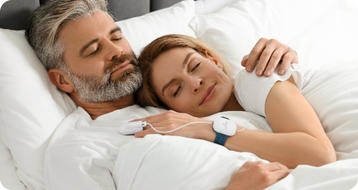
Don’t Just Test Your Sleep. Understand It.
Measure key sleep metrics and review your results with a licensed sleep-care provider. Discuss sleep issues and options to make restless nights a thing of the past.


MYTH: Alcohol and Cannabis Help With Sleep
FACT: Alcohol and cannabis can both have negative effects on your sleep, health, and mood when used improperly or in excess.
Despite alcohol’s sedative effects, health experts discourage its use as a sleep aid because of how it can negatively impact your sleep quality. Sleep disorders are common with those who depend on alcohol to sleep, and alcohol use has been associated with disorders like insomnia, obstructive sleep apnea, and circadian rhythm abnormalities.
Cannabis, on the other hand, is receiving more research for its benefits on physical health, mental health, and sleep health. However, only certain strains of cannabis may benefit your sleep. Indica strains are most often used to treat sleep problems, while Sativa strains may be used as a stimulant.
Additionally, cannabis may suppress REM sleep, and excessive use of cannabis can reduce its effectiveness. Not only that, but cannabis withdrawal can cause additional sleep issues if you stop using it as a sleep aid. Just like with any sleep aid or treatment, consult your doctor before using cannabis.
MYTH: If You Have a Hard Time Falling Asleep, Stay in Bed
FACT: If you can't fall asleep after 20 minutes, get out of bed and do something quiet and relaxing like meditating or reading a physical book.
If you’ve tried tricks like counting sheep or counting backward from 100 by 3’s, staying in bed is actually the worst thing you can do, as may unintentionally connect your bed with frustration and sleep loss.
Instead, try getting out of bed and doing something relaxing in low light. The goal is to take your mind off sleep for a few minutes to help encourage quick and easy sleep onset when you return to bed. A few things you can try include:
- Meditation
- Writing your thoughts in a journal
- Walking slowly and quietly, so you don’t disturb anyone else’s sleep
- Light stretching
MYTH: Older People Need Less Sleep
FACT: You may get less sleep in middle age or older adulthood, but that doesn’t mean you need less sleep.
It’s a common perception that you need less sleep with age. However, this myth that older people need less sleep is false. Sleep needs change as you grow from a child into an adult. That individual need doesn’t change significantly as you approach or pass the age of 55.
As you get older, sleep problems like insomnia and sleep apnea tend to become more frequent. Older adults often experience sleep problems such as:
- Difficulty falling asleep or staying asleep
- Waking too early each morning
- Unrefreshing or poor quality sleep
Your circadian rhythm gradually weakens as you age, which contributes to a less robust and more inconsistent sleep cycle. Older adults may sleep less during the night and need to nap during the day to get adequate sleep. Other health conditions — as well as medications used to treat them — may also interfere with your sleep health as you grow older.
MYTH: You Can Make Up Any Lost Sleep on the Weekends
FACT: Weekend recovery sleep does help, but it won’t fully erase the negative effects of losing sleep during the week.
Many people build a sleep debt — a deficit between the sleep you need and the amount you actually get — during the week. It’s a common strategy to use the weekend to make up for this lost sleep. But even if you sleep in over the weekend, it still won’t completely restore attention, focus, and other measurements of cognitive performance.
Think of it like working out. If you don’t workout for a month, doing a weekend workout, while beneficial, doesn’t erase the loss of the benefit exercise over time. With sleep, like exercise, consistency of effort is key.
If you’re trying to reduce sleep debt, some recovery sleep on weekends can help. Use weekend catch-up sleep in moderation, staying within 60 minutes of your regular bedtime and wake time so you don’t throw off your normal sleep schedule.
The most important thing to remember is to try and get your required sleep during the week so that you don’t need to make it up at all.
MYTH: Turkey and Warm Milk Will Make You Sleepy
FACT: Turkey and warm milk can be part of a healthy sleep-supporting diet, but neither contains enough tryptophan to act as a natural sleep aid on its own.
This is an interesting myth because while parts of it are based in fact, it’s still not 100% true. Ultimately, no, turkey won’t make you sleepy, and neither will a glass of warm milk.
Yes, the contain the amino acid tryptophan, which does play a vital role in sleep. However, the tryptophan you ingest in a serving of Thanksgiving turkey or a steaming cup of hot milk doesn’t act as a sedative because you aren't getting enough of the tryptophan to have a notable effect on your sleep.
MYTH: Hitting the Snooze Button Helps Your Sleep
FACT: Rise with your morning alarm — whether you feel rested or not — so you can reduce sleep inertia and be more ready to take on your day.
If you didn’t sleep well during the night, the last thing you want to do is keep hitting the snooze button in the morning.
Any extra sleep you get in between alarms is fragmented and poor quality. You need deep sleep to feel rested in the morning, and you just can’t get that from hitting the snooze button in the morning. Not to mention, lingering in bed for too long can lengthen sleep inertia, or that drowsy, sluggish feeling in the morning.
MYTH: Long Naps Are More Refreshing
FACT: A short nap can help you feel more alert and less stressed afterward — emphasis on the short part.
Long afternoon naps can make you feel groggy, disoriented, and hazy, which is the opposite of how you should feel after a nap. However, short nap can help you perk up if you feel yourself lagging during the afternoon. Keep power naps under 30 minutes.
In addition, napping too late in the day can throw off your sleep schedule, making it harder for you to fall asleep at your normal bedtime. Avoid napping after 3 p.m.