Some people who’ve been prescribed a CPAP machine for sleep apnea find the air pressure feels too high, especially at first. Usually, it’s just that the air pressure feels uncomfortable and takes getting used to, even though the CPAP settings match your needs. However, it’s also possible that the air pressure is too high, because it was initially set up incorrectly or your needs have changed over time.
When CPAP air pressure feels too high, it's important to address the situation, so CPAP therapy can continue. Untreated sleep apnea increases a person's risk of car crashes and health issues ranging from heart attacks to type 2 diabetes. Keep reading to learn how CPAP pressure settings are determined, what changes can ease the discomfort of CPAP air pressure that feels too high, and when to reevaluate CPAP settings.
How Are CPAP Pressure Settings Determined?
CPAP pressure settings are determined through a process called titration. Titration involves identifying the minimum amount of air flow that must come through your tubing and CPAP mask to keep your airway adequately open while you sleep. There are two main types of titration: in-lab, fixed CPAP titration and at-home, auto-CPAP titration.
CPAP Titration Study
In-lab titration is considered the gold standard titration method for people being prescribed CPAP machines that release air at a fixed pressure. Also called manual titration, in-lab titration determines a person's optimal CPAP air pressure setting with an in-lab sleep study. Sometimes this happens during the second half of the sleep study that diagnosed their sleep apnea (split-night study). In other cases, a separate sleep study is performed on a different night.
In the fixed CPAP titration process, air pressure is increased until your sleep apnea symptoms decrease to a specific level. Symptoms are assessed by measuring how much you snore, briefly awaken from sleep, and stop or slow down your breathing. The specific measure of how often your breathing stops or slows down during sleep is called the apnea-hypopnea index (AHI).
Ideally, titration will identify a CPAP air pressure setting that reduces your breathing disruptions to fewer than five each hour. In some severe cases, ten or fewer breathing disruptions per hour, or a reduction of 75% or more, can be considered a good or adequate outcome.
APAP Titration
Auto-adjusting CPAP machines (also called APAP) can be used by sleepers in their homes to titrate their ideal air pressure settings over a course of time generally ranging from one to two weeks.
Unlike fixed CPAP devices, APAP machines continually adjust the rate of air pressure delivered as a person sleeps, in response to what’s required to keep the airway open.
A person may be given an APAP device temporarily, for titration only, to identify the ideal air pressure setting for a fixed CPAP machine they’ll then use for long-term treatment. Conversely, a person may be given an APAP device for long-term treatment and have their first week or two of using the device provide titration.
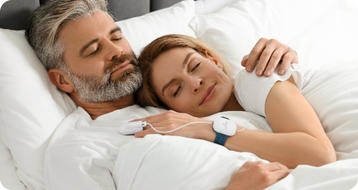
Don’t Just Test Your Sleep. Understand It.
Measure key sleep metrics and review your results with a licensed sleep-care provider. Discuss sleep issues and options to make restless nights a thing of the past.


What Are the Symptoms of CPAP Pressure Being Too High?
Symptoms of CPAP pressure being too high may include:
- Difficulty exhaling: Some sleepers report that breathing out while using CPAP therapy feels difficult, because of the strength of air flowing into their mask.
- Feeling claustrophobic: Claustrophobia, which involves anxiety from a sense of feeling trapped, may occur among some people beginning CPAP therapy. While this can stem from air pressure settings, it may also be psychological or relate to mask type.
- Dryness: CPAP air pressure can cause dryness, especially in the nose. While this may be caused by the air pressure level itself, dryness may also relate to the local climate and whether or not the CPAP machine has heated humidification. Dry mouth is common when an air leak is present, which often relates to air pressure.
- Swallowing air: People struggling to maintain CPAP therapy sometimes report that they are swallowing air during sleep, which is called aerophagia. Swallowing air may cause discomfort and burping.
Sometimes new CPAP users experience these same or similar symptoms, even when their air pressure isn't too high, simply because they aren't accustomed to using a CPAP machine. Working with a sleep specialist or technician can help uncover whether air pressure settings need to be lowered, or if other actions can be taken to make CPAP use more comfortable.
What Are the Side Effects of CPAP Pressure Being Too High?
When a person continues to use a CPAP machine with air pressure that is too high, the following side effects may occur:
- Mask leaks: Higher air pressure levels are linked to an increased likelihood of mask leaks, resulting in less effective therapy and increased discomfort.
- Nasal congestion and inflammation: High air pressure may irritate the nasal passages, causing inflammation called rhinitis. Rhinitis may lead to congestion, a runny nose, or difficulty breathing through the nose.
- Waking up from sleep: Anecdotally, some CPAP users report waking up during the night due to discomfort related to high air pressure. Nighttime wake-ups associated with high air pressure levels can also be caused by the louder sounds produced by a CPAP machine releasing air at a higher air pressure level.
- Discontinuation of CPAP therapy: Nearly one-half of people prescribed CPAP therapy either discontinue CPAP therapy or don't use it as often as they should, primarily due to side effects, such as discomfort or other issues related to air pressure settings.
What Should You Do if Your CPAP Pressure Is Too High?
If you’re experiencing discomfort while using your CPAP machine or suspect the air pressure setting is too high, talk with your doctor or sleep specialist. Do not attempt to change your machine's settings on your own.
Your doctor or sleep specialist has a variety of ways to help you improve your CPAP therapy when the air pressure feels too high. For example, they may have you try another type of mask or switch you from a fixed CPAP machine to an APAP.
Comfort features, which can be used on a fixed or APAP machine, can also make air pressure feel less severe. Expiratory pressure relief describes when air pressure is briefly lowered as you first exhale. The ramp function describes when air pressure is gradually increased when you first begin your therapy at night.
Lastly, they may have you undergo titration again to determine if the air pressure levels need to be adjusted.
When to Talk to Your Doctor
Talk to your doctor if you aren't able to comfortably use your CPAP machine the amount of time recommended, which is generally four or more hours per night, most nights. Also, let your doctor know if you are still experiencing sleep apnea symptoms. They can help you troubleshoot any CPAP issues you're having, as well as explore whether there are other medical issues present.
Finally, be open with your doctor or sleep specialist if you've discontinued CPAP therapy or don't think you can continue CPAP therapy. There are other sleep apnea treatments available, like an oral appliance or surgery.
Frequently Asked Questions
What pressure should my CPAP be set at?
Your sleep specialist or technician identifies your personal ideal CPAP air pressure setting during titration, based on what reduces your sleep apnea symptoms. CPAP air pressures generally fall between 4 and 20 cm H2O. You should not try to change your CPAP air pressure settings after your sleep specialist or technician has set them for you.
Does reducing your CPAP pressure make therapy less effective?
The ideal CPAP air pressure setting for you is the lowest one that can effectively reduce your sleep apnea symptoms. This setting is determined during titration, and reducing the pressure may make therapy less effective.
Why does my CPAP mask leak air?
Your CPAP mask may leak air for a variety of reasons, such as high air pressure or a poor mask fit. Talk with your doctor or sleep specialist to troubleshoot your mask leak cause if you cannot resolve it on your own. They may adjust your mask tightness or switch you from a full face mask to nasal pillows, for example.