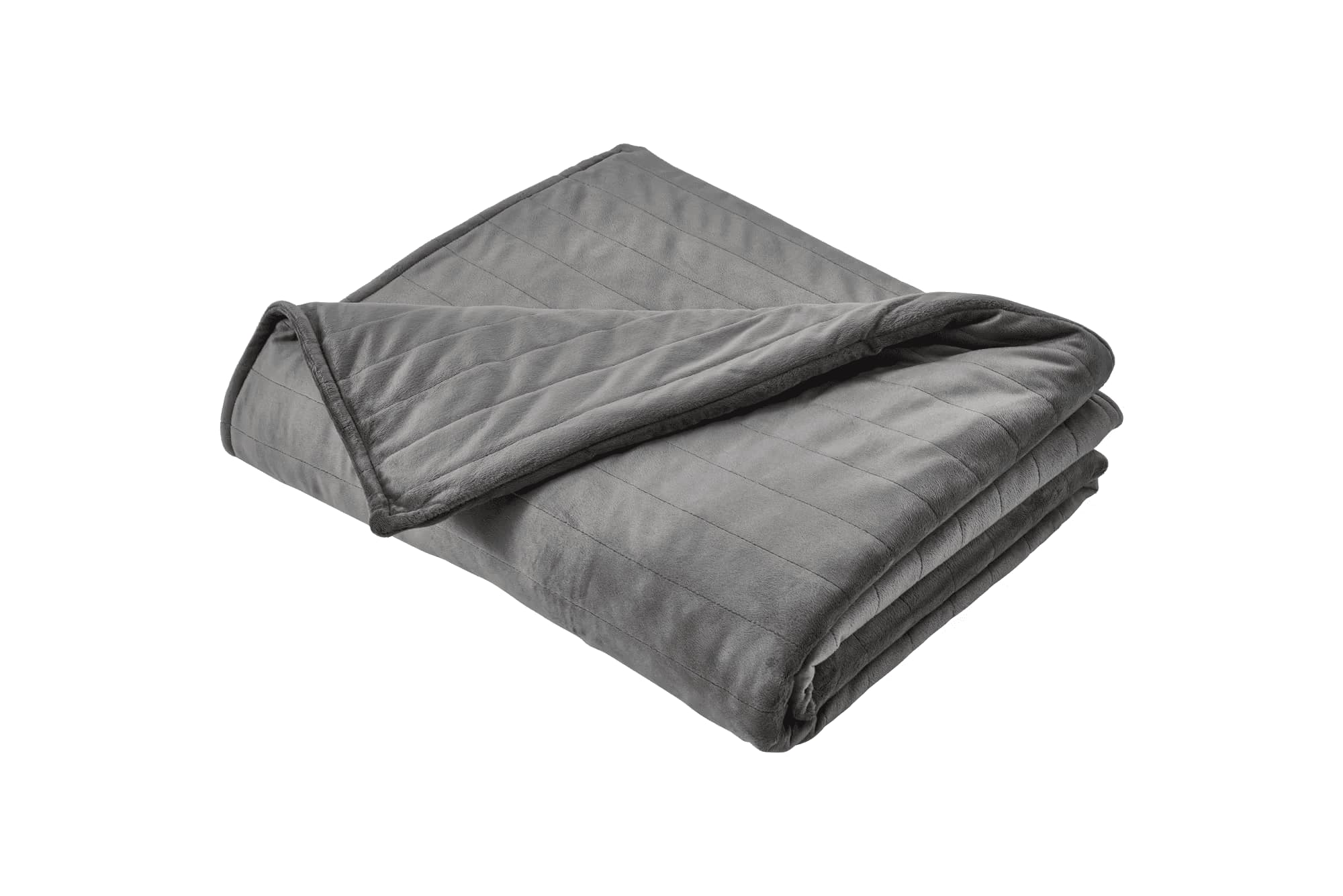
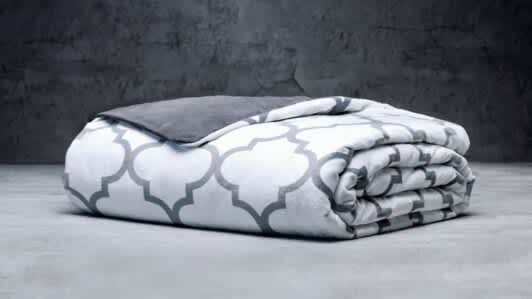
A weighted blanket is like a security blanket for adults and older children, offering a hugging sensation that many sleepers find soothing. Some claim that weighted blankets help them fall asleep faster and stay asleep longer. Others simply enjoy their extra coziness.
Weighted blankets are densely filled with materials like glass, steel, or plastic pellets. Most weigh between between 5 and 30 pounds, so they’re significantly heavier than standard blankets. The applied pressure is thought to have a calming effect on sleepers.
Choosing the right blanket weight for your body size is essential to your comfort. If it’s too heavy, you may feel claustrophobic. A model that’s too light might not offer full benefits. Most sleepers enjoy a blanket that weighs about 10% of their body weight.
We’ll cover how to choose the best weighted blanket based on your body size and other needs. We’ll also share our top picks, plus how factors like materials, ease of care, and temperature control may influence your choice.
The Bearaby Cotton Napper stands out from the competition with a breathable open-knit design, an extensive weight and color selection, and easy care instructions. We also like how the blanket's cotton yarns feel soft and gentle on the skin.
Inner FillOrganic long-staple cotton
Weight Options10 lbs., 15 lbs., 20 lbs., 25 lbs.
Easy to CleanYes
Size10 lbs. (40" x 64"), 15 lbs. (40" x 72"), 20 lbs. (45" x 72"), 25 lbs. (48" x 72")
Pros
Open-knit construction promotes breathability to keep you cool
Four weight options ranging from 10 to 25 pounds
Wide color selection, including two-tone designs
Cons
Edges may curl in over time
Heavier blankets not compatible with some household washing machines
The Bearaby Cotton Napper mitigates some of the issues sleepers have had with traditional weighted blankets in the past. Rather than containing glass beads or plastic pellets, the blanket is weighted with open-knit organic cotton yarns layered tightly to deliver the desired level of compression. This ensures the soothing hug people expect from weighted blankets without the hat retention or loss of airflow.
You can choose between weights of 10, 15, 20, or 25 pounds. Using the "10% rule" as a general guide, this means the blanket is ideal for people who weigh 100 to 250 pounds with a little wiggle room in either direction. Each weight has a different corresponding size, though all four have dimensions best suited to single-person use.
You can wash and dry the blanket in most household machines. However, we recommend checking your washer to ensure compatibility prior to cleaning the blanket – especially if you've chosen a heavier option. Additionally, some owners say the blanket's edges begin to fold in over time.
Ten colors are currently available, and Bearaby continuously adds new designs to their lineup. Customers in the contiguous U.S. qualify for free ground shipping and a sleep trial spanning 30 nights in length. Returns are not accepted for blankets that have been laundered. If you decide to keep the Bearaby Cotton Napper, your purchase is further backed by a 1-year manufacturer's warranty.
Silk & Snow's Hand Knitted Weighted Blanket offers excellent long-term value thanks to its durable, high-quality construction and competitive price-point. A wide selection of weights makes the blanket suitable for children and adults across a range of body types.
Size8 lbs. (41" x 60"), 12 lbs. (41" x 72"), 15 lbs. (45" x 72"), 20 lbs. (51" x 72"), 25 lbs. (54" x 72")
Pros
Open-knit design with cotton yarns is exceptionally breathable
Five weight options ranging from 8 to 25 pounds
Cotton fabric is soft and easy on your skin
Cons
Not compatible with certain washing machines
Edges may fold in over time
Weighted blankets represent a significant investment for most households, but some outperform the competition in terms of design quality and overall lasting power. The Silk & Snow Hand Knitted Weighted Blanket is a prime example. Crafted from cotton yarns wound tightly to deliver the desired compression level, this open-knit blanket soothes and calms you as you drift off while promoting airflow to sleep cool. And with five weight options, almost anyone can find at least one design that will work with their body type.
For children who weigh 80 pounds or more, the 8-pound blanket should provide sufficient compression without feeling too heavy – though parents should always check with their child's doctor before allowing them to use a weighted blanket. The remaining options are best suited to adults. With 12-, 15, 20-, and 25-pound options, most people between 120 and 250 pounds can find a comfortable fit.
Eight neutral colors are available. You can clean the blanket in a front-loading washing machine, then lay it flat to dry. Alternatively, you can tumble dry the blanket for two to three cycles. Please note the edges may curl in over time with use and regular cleaning.
Silk & Snow offers free ground shipping throughout the contiguous U.S. and provincial Canada. Your Hand Knitted Weighted Blanket comes with a 100-night sleep trial, during which you may return it for a refund if you aren't satisfied as long as it's in donatable condition.
The Tempur-Pedic Weighted Blanket provides some of the best weight distribution we’ve seen firsthand in our testing lab. Vertical quilting keeps the fill isolated, so you should never have to deal with the clumping or shifting people tend to encounter with baffle-box blankets.
Inner Fill91% glass beads, 9% polyester fibers
Weight Options15 lbs., 20 lbs.
Easy to CleanYes
Size48" x 72"
Pros
Glass beads are secured in pouches for even pressure
Machine-washable polyester cover
Two weight options: 15 or 20 pounds
Cons
Bothersome heat retention may occur
Weights limited to two options
The Tempur-Pedic Weighted Blanket is an outlier for a brand that’s known for memory foam. While it doesn’t contain the company’s signature foam, the blanket still offers the comfort you’d expect from Tempur-Pedic products. Combining glass beads and polyester fibers, the fill is secured in polyester pockets for balanced weight distribution.
The cover’s charcoal gray outer shell is made from soft and cozy polyester. The removable shell can be washed by machine in cold water and tumble dried on low. A breathable cotton lining helps with temperature regulation and can be spot-cleaned as needed.
Shoppers can choose between 15- or 20-pound options. The lighter version is intended for people who weigh around 150 pounds or hot sleepers who prefer a midweight model. The 20-pound blanket is designed for people who weigh at least 200 pounds or those who like a heavier feel. Both versions measure 48 inches wide by 72 inches long.
The Tempur-Pedic Weighted Blanket ships for free within the contiguous U.S. Deliveries to Alaska or Hawaii have a $25 freight fee. The blanket is not returnable.
The Luxome Weighted Blanket is so soft and cozy. I especially enjoyed the dual-sided design with the minky fabric on one side and cooling lyocell on the other. The weight range is also impressive — most people should find a good match with the available options regardless of their body type.
Interior FillGlass beads
Weight Options8 lbs., 15 lbs., 18 lbs., 25 lbs.
Easy to CleanYes
SizeSmall (42" x 56"), Medium (54" x 72"), Large (60" x 80"), Extra Large (90" x 80")
Pros
Wide range of weights to suit different body weights
Glass beads provide deep compression without trapping too much heat
Available with an integrated or removable cover
Cons
Only one size for each weight option
Heavier blankets may be too bulky for household washing machines
Most weighted blankets are soft by definition, but the Luxome Weighted Blanket gives you several choices on which plush cover material to use. You can opt for minky fleece derived from polyester, bamboo-derived lyocell that feels silky-smooth and wicks away moisture, or a dual-sided cover that incorporates both fabrics. Additionally, you can choose whether the cover is removable or integrated with the insert to create a one-piece design.
Glass microbeads are used to create the weighted effect — these retain less heat than the plastic pellets found in some competing blankets. Luxome offers weights of 8, 15, 18, and 25 pounds. Using the “10% rule,” this makes the blanket suitable for anyone between 80 and 250 pounds with some wiggle room in either direction. Each weight has a different corresponding size, with the two lowest weights ideal for solo sleepers and the two highest weights wide enough for couples.
The blanket and cover are both machine-washable with the exception of the extra-large 25-pound insert, which is too bulky for most household appliances and may cause permanent damage. You may want to consider the two-piece design if you choose this weight in order to easily keep the cover clean.
The Luxome Weighted Blanket carries an approachable price-point and shipping is free for all orders within the contiguous U.S. You’ll also receive a complimentary tote bag with your purchase. You may test out the blanket for up to 30 nights before deciding whether to return it for a refund or keep it.
If you enjoy compression as you fall asleep but also run hot in bed, the Layla Weighted Blanket provides a deep hug to help you nod off without absorbing or trapping heat. A reversible cover with smooth and fleecy sides makes the blanket suitable for year-round use.
Inner FillGlass microbeads
Weight Options15 lbs., 20 lbs., 25 lbs.
Easy to CleanYes
Size15 lbs. (48" x 72"), 20 lbs. (60" x 80"), 25 lbs. (80" x 87")
Pros
Reversible cover features smooth and fleecy sides
Available in weights of 15, 20, and 25 pounds
Glass beads supply deep compression without absorbing too much heat
Cons
Fill may shift and clump to one side
Limited options for people under 150 pounds
Many traditional weighted blankets trap and absorb heat because their covers restrict airflow. Layla's Weighted Blanket stands out from the competition thanks to its reversible cover with one side made from breathable, moisture-wicking cotton. The opposite side is textured with fleecy polyester minky fabric, giving it a cozy feel that's better suited to colder times of the year.
Glass microbead fill creates the intended weight. The beads are sewn into tight, hexagonal baffles to evenly distribute them – though you may need to fluff the blanket periodically to recover its shape. Padding layers create a cushy buffer between your body and the beads. You may wash and dry the entire blanket in your household machines for quick, easy care.
Weights of 15, 20, and 25 pounds are available, making the blanket a solid match for people between 150 and 250 pounds. People under 150 pounds may want to consider a lighter weighted blanket to prevent feelings of claustrophobia while they sleep, though some in this weight range enjoy the deep compression of a heavier weight.
The sticker price is approachable, and Layla offers free ground shipping to customers in the contiguous U.S. Your order includes a 30-night trial period. If you decide to keep the Layla Weighted Blanket after the return period ends, it's further backed by a 5-year warranty against manufacturing defects.
The Baloo Weighted Blanket is soft, smooth, and thin without sacrificing deep compression. Our team’s hot sleepers were particularly impressed with the breathable design, and an extensive weight range means most people can find a comfortable option.
Inner FillGlass Microbeads, Cotton Batting
Weight Options12 lbs., 15 lbs., 20 lbs., 25 lbs.
Easy to CleanYes
SizeThrow (42" x 72"), Full/Queen (60" x 80"), King (80" x 87")
Pros
Four weight options ranging from 12 to 25 lbs.
Available in four shell colors
Fully machine-washable for quick and easy care
Cons
Blanket may trap heat
Somewhat expensive compared to the competition
Design is an important element when choosing a weighted blanket, so you should determine which textures and styles you prefer before choosing one. The majority of our testers enjoyed the design of the Baloo Weighted Blanket, which is quilted with tight baffles to evenly distribute the fill. A slim profile and breathable cotton shell makes the blanket a good option for hot sleepers — especially those who have felt uncomfortably warm with other weighted blankets — and four weight options covers a wide range of body types.
Baloo’s most popular model is a throw size weighing 12 pounds, and is intended for single sleepers between 100 and 140 pounds. You can also choose from full/queen options that weigh 15 and 20 pounds, which should provide sufficient compression for anyone in the range of 120 and 220 pounds. If you want an oversize weighted blanket to share with a partner, the king size measures 80 inches wide by 87 inches long, and weighs 25 pounds. You can also use this size if you weigh 220 to 280 pounds.
The fill consists of glass microbeads that provide gentle compression without trapping heat. The blanket does not contain any synthetic fabrics or liners, and cotton is free of chemicals. A fully machine-washable design makes the blanket easy to clean, though you may need commercial appliances for heavier sizes. Four shell colors are available.
The Baloo Weighted Blanket is competitively priced, and shipping is free of charge for customers in the contiguous U.S. You can also opt for expedited shipping with an additional fee. Optional monogramming is available for the throw size. Returns and exchanges may be requested within 30 days throughout most of the calendar year, with an extended trial period for the holiday season.
How We Test
There are a lot of qualities to consider when choosing which weighted blanket to buy. Luckily, our team does all the heavy lifting (pun intended) for you. Our product experts personally try out every weighted blanket that appears on our site, examining them for performance features and quality. We look at how the blankets are constructed, which can indicate how well they’ll hold up and whether the weighted fill will leak or bunch over time.
The fabric quality is also important, so the team examines materials to learn about their weaves, textile source, and the quilting or stitching that keeps the weighted fill in place. We try every blanket ourselves to see how well the weight options work for different body types on our team and we also take notes on how cozy or breathable a model feels. Before making a final recommendation, we consult existing customer reviews to learn what current owners think of their weighted blanket model.
What Is a Weighted Blanket?
A weighted blanket is designed to relax sleepers by applying even pressure on the body. They are much heavier than regular blankets, weighing anywhere from 5 to 30 pounds. The hugging sensation activates deep pressure stimulation, which studies have shown can help reduce anxiety.
Most weighted blankets fall into one of two types: knitted or duvet. Knitted models have a layer-on-layer design made with sturdy yarn. Duvet styles combine a weighted interior with a separate cover. Common types of fill materials include glass, plastic, ceramic, or steel beads.
In general, a weighted blanket should be about 10% of a user’s body weight. This ratio tends to balance comfort and temperature control for most sleepers.
Are Weighted Blankets Safe?
Weighted blankets are generally considered safe as long as users follow recommended weight guidelines. They aren’t suitable for children under age 3 or people with certain health conditions like low blood pressure, diabetes, or sleep apnea.
How Much Do Weighted Blankets Cost?
Shoppers can expect to pay between $100 and $300 for a weighted blanket. Prices vary based on the brand, materials, size, and shipping fees.
Getting a blanket that’s the right ratio for your body weight is important. Generally, the rule of thumb is that you should opt for a blanket that weighs around 10% of your body weight.
What Are the Benefits of a Weighted Blanket?
Weighted blankets are used for a variety of reasons, and not everyone will experience the same benefits. That said, many users report being able to fall asleep quicker and stay asleep longer. Their swaddling sensation is thought to modulate the autonomic nervous system, which may alleviate anxiety for some people.
While more research is needed to thoroughly assess the effectiveness of weighted blankets, trials indicate that they can improve sleep outcomes. In one study, nurses observed that residents at a nursing home fell asleep sooner, had fewer sleep interruptions, slept longer, and had less daytime fatigue when using weighted blankets. The residents were also more eager to go to bed when weighted blankets were introduced.
Another study showed that weighted blankets improved sleep onset, sleep duration, and daytime relaxation in children and adults with attention-deficit/hyperactivity disorder (ADHD) and autism spectrum disorder. Other research suggests that weighted blankets can reduce insomnia symptoms for people with certain psychiatric disorders like major depressive disorder, bipolar disorder, and generalized anxiety disorder.
Weighted blankets activate a user’s touch sensory system in a process known as deep pressure stimulation. By regulating the autonomic nervous system, deep pressure stimulation is thought to reduce anxiety related to excess stress hormones.
The following benefits are associated with deep pressure stimulation:
Calms the nervous system
Provides comfort and security
Eases stress and anxiety
Improves sleep quality
Who Should Use a Weighted Blanket?
Sleep disorders are associated with a number of physical and psychiatric conditions. Preliminary studies show that weighted blankets can reduce anxiety and insomnia symptoms by balancing the nervous system and reducing stress hormones. The hugging sensation is thought to soothe users by increasing serotonin, a neurotransmitter associated with regulating mood and feelings of happiness and calm.
Research indicates that weighted blankets may also help people with chronic pain. One study found that a 15-pound blanket was especially effective at alleviating chronic pain in very anxious adults.
The therapeutic value of weighted blankets appears promising, but more conclusive research is needed. As such, shoppers should be cautious of any manufacturers making bold health claims.
Who Should Not Use a Weighted Blanket?
When used appropriately, weighted blankets are generally considered safe. However, they aren’t appropriate for young children or those with certain health conditions.
People with circulatory or respiratory conditions like low blood pressure, diabetes, asthma, or sleep apnea should speak to their doctor before using a weighted blanket. The heft of the blanket can potentially obstruct airway passages or restrict circulation.
Some lighter blankets are designed specifically for youth, but children under age 3 or those who weigh less than 50 pounds should not use weighted blankets due to the increased risk of suffocation.
The stitching that holds your weighted blanket together is really important. Low-quality baffles or quilting can mean that you wake up with thousands of tiny beads all over the place.
What Should You Consider When Choosing a Weighted Blanket?
People turn to weighted blankets for different reasons, but every shopper should factor in their weight, health status, and budget when picking a model. Materials, ease of care, and temperature regulation are also important considerations.
Your Budget
Quality weighted blankets typically cost between $100 and $300. Prices vary according to materials, craftsmanship, and size. Heavier and larger blankets tend to cost more than lightweight models. Blankets made with glass and ceramic beads are usually more expensive than those made with plastic pellets. Cover materials also influence pricing.
Be on the lookout for additional costs like shipping fees or customer protection plans. While price is often a reflection of quality, the most expensive design isn’t necessarily the best one for your needs.
Your Weight
A weighted blanket should generally be about 10% of a user’s body weight. For example, someone who weighs 150 pounds would typically want a 15-pound blanket. While not a hard-and-fast rule, the 10% formula works for most people. A blanket that’s too heavy can leave sleepers feeling smothered, while one that is too light might not provide the desired result.
If you’re in between weight options, many manufacturers recommend choosing the heavier of the two. That said, hot sleepers tend to be more comfortable with a lighter model. Kids who are in between sizes should go with the lighter option as a precaution.
Your Health
People with medical conditions like diabetes, low blood pressure, obstructive sleep apnea, or asthma should speak with a medical professional before purchasing a weighted blanket. The heaviness can inhibit breathing and circulation and worsen these conditions.
Weighted blankets aren’t suitable for people with certain anxiety disorders like claustrophobia. They can also exacerbate hot flashes in people experiencing menopause.
While research shows that weighted blankets can improve sleep in older individuals, they might be too heavy for some people who are physically weak.
Materials
The types of materials used in a weighted blanket determine its comfort, breathability, and ease of care. Knitted blankets are commonly made from cotton or polyester yarns. These models usually don’t trap as much heat since the open-knit construction promotes airflow.
Both the cover and fill materials vary widely for duvet styles. Tencel, rayon, and cotton are popular cover materials because they are naturally breathable. Blankets designed to be extra cozy may use fleece, velvet, or flannel covers for added insulation.
Fills made with glass, ceramic, or steel beads tend to last longer than plastic varieties. Sand, dried beans or grains, and even pebbles are sometimes used in weighted inserts. While less expensive, these materials are usually less durable and often clump more.
Cleaning and Care
Always refer to the product manual before washing your blanket, as each model has different care guidelines. Some blankets are entirely machine-washable, but this is more the exception than the norm. It’s more common for the cover to be machine-washable, while the insert should only be spot-cleaned. Other manufacturers recommend dry-cleaning only.
Breathability
Uncomfortable heat retention is one of the biggest reasons that people avoid weighted blankets. Not every model is created equal when it comes to temperature control. Some are designed to promote airflow, while others are meant to insulate from the cold.
If you tend to sleep hot, look for covers made from cotton, rayon, or Tencel. These materials naturally wick away moisture and retain less heat. Glass beads tend to absorb less heat than other filler materials.
Should You Buy a Weighted Blanket?
People who enjoy a body-hugging sensation may appreciate a weighted blanket. The even pressure is shown to promote relaxation and ease anxiety for some individuals.
More research is needed, but studies suggest that people with chronic pain, depression, post-traumatic stress disorder, ADHD, and autism spectrum disorder can benefit from weighted blankets.
Getting the most from a weighted blanket depends on choosing an appropriate weight. Most adults are comfortable with a blanket that is about 10% of their body weight.
Pros
A relatively inexpensive method to improve sleep outcomes
Provides a soothing body hug
May help people fall asleep quicker and stay asleep longer
Deep pressure stimulation can reduce anxiety and chronic pain for some individuals
Cons
Not suitable for young children or people with certain health conditions
David is a Certified Sleep Science Coach with a lifelong passion for well-being and health optimization. His interest in sleep developed with the arrival of his son, when sleep suddenly became a precious commodity. Since then, David has researched everything from bedtime routines to mattress toppers in his quest for a great night’s sleep.