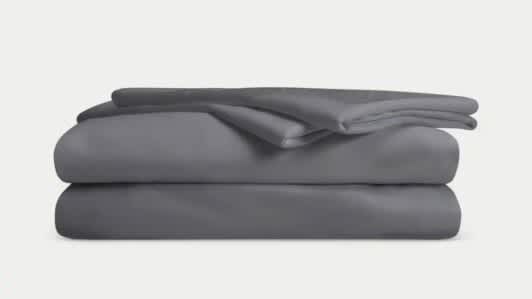
Bedding is an essential component of your sleep space. The sheets and pillowcases you use can play a major role in how well you sleep each night. With so many types of bedding available, choosing the right sheet set can be challenging.
The most common materials for sheets made today include cotton, polyester, linen, Tencel, and viscose derived from bamboo. Other qualities, like weave and thread count, can also affect the feel, breathability, and lifespan of your sheets. You should also take into account practical factors, such as pocket depth, ease of care, and pricing.
We’ll walk you through the process of buying sheets that align with your sleep style without exceeding your budget. We outline our top picks for the best sheets below. Further down, you’ll find our comprehensive guide for choosing, buying, and using new sheets.
Some sateen sheets trap heat around the body, but the Cozy Earth Bamboo Sheet Set is made with materials that helped keep heat retention to a minimum during our tests. They’re also incredibly silky.
Material100% viscose derived from bamboo
WeaveSateen
CoolingGreat airflow
SizeTwin/Twin XL, Full/Queen, King, Split King, California King
Pros
Bamboo-derived viscose is breathable with moisture-wicking properties
Luxuriously soft feel from the sateen weave
Sheets and pillowcases are warrantied against pilling
Cons
Not optimal for people who prefer crisp sheets
Too expensive for most budget shoppers
Quality sateen bedding is generally soft, but the sheets and pillowcases in the Cozy Earth Bamboo Sheet Set feel exceptionally silky and smooth thanks to their composition. Other key strengths include excellent cooling and a long lifespan.
Sijo's LuxeSoft Cotton Sheet Set is both high-quality and affordably priced, making it a solid option for shoppers with limited budgets. People with sensitive skin should also appreciate the soft fabrication and silky-smooth hand-feel.
SizeTwin, Twin XL, Full, Queen, King, California King
Pros
Organic long-staple cotton is durable, eco-friendly, and long-lasting
Generous 16-inch pocket depth
Sateen weave gives each item a silky, soothing hand-feel
Cons
Not ideal for people who prefer crisp bedding
Fabric may pill over time
The Sijo LuxeSoft Cotton Sheet Set proves you don't need to spend too much money on quality bedding. Each sheet and pillowcase in this collection is crafted from durable long-staple cotton that offers luxurious softness and excellent breathability. A GOTS certification also ensures the cotton has been sustainably grown and cultivated, making the set a good pick for eco-conscious shoppers. However, the sticker price falls well below average for cotton sheets of this caliber.
The Saatva Organic Sateen Sheet Set felt buttery smooth against my skin. These are ideal sheets if you enjoy bedding that feels cool to the touch.
Material100% GOTS-certified organic cotton
WeaveSateen
CoolingGreat airflow
SizeTwin, Twin XL, Full, Queen, King, California King, Split King, Queen Upper-Flex, King Upper-Flex
Pros
Organic cotton with a sateen weave offers a balance of softness and breathability
GOTS certification ensures sustainable growth and production
Available in three colors and nine sizes
Cons
Expensive sticker price compared to the competition
Not compatible with mattresses over 16 inches thick
During our hands-on tests, we found that the Organic Sateen Sheet Set epitomizes Saatva’s reputation for luxurious and eco-friendly sleep products. The sheets and pillowcases in this collection consist of organic cotton certified by the Global Organic Textile Standard (GOTS), a leading authority for sustainably produced fabrics. The sateen weave gives each item a buttery-soft feel that glides gently across the skin.
Approachable pricing and free shipping within the contiguous U.S. make the Organic Sateen Sheet Set a good option if you want to invest in high-end bedding without breaking the bank. Your order comes with a return policy that allows you to test the sheets for up to 45 nights. If you decide to keep the set, you’ll also receive a 1-year limited warranty against defects in workmanship.
The Slumber Cloud Performance Sheet Set is engineered for consistent cooling and airflow with a breathable, moisture-wicking blend of cotton and bamboo-derived fabric. You can choose between a standard four-piece set or a seven-piece collection with a duvet cover and extra pillowcases.
Material70% cotton, 30% viscose
WeaveSateen
CoolingExcellent airflow
SizeTwin, Twin XL, Full, Queen, King, California King
Pros
Ultra-cool cotton and viscose fabric blend
Available in 4-piece or 7-piece sets
Corner straps and elastic band secure the fitted sheet to your mattress
Cons
Pocket depth varies by size
Expensive pricing may be a dealbreaker for budget shoppers
If you prefer your bedding silky-smooth, it's hard to beat the Slumber Cloud Performance Sheet Set. Each item in this collection is composed of 70% cotton and 30% bamboo-derived viscose, ensuring a luxuriously soft hand-feel, and a sateen weave further enhances the softness and drapiness. At the same time, breathable construction helps ensure you won't overheat or sweat too much in bed.
The Temperature-Regulating Sheets from LUSOMÉ live up to their name with crisp, breathable cotton percale fabrication. This material resists heat better than sateen-woven fabrics to stop sweating before it begins and keep you cool all night long.
Material100% cotton
WeavePercale
CoolingExcellent airflow
SizeQueen, King, Split King, California King
Pros
Pure cotton percale is crisp and breathable
Pocket depth accommodates most mattresses sold today
Split king size for couples with adjustable beds
Cons
Not sold in smaller sizes
Return period is short (14 days) and only available for unused products
The LUSOMÉ Temperature-Regulating Sheets are made from cotton with a crisp, breathable percale weave for consistent air circulation and minimal body draping. A 16-inch pocket depth makes the fitted sheet compatible with the vast majority of mattresses sold today, and also comes equipped with 'long' and 'short' labels to help you make the bed easily.
How We Test
To choose which sheets are the best, we try them ourselves. In our Seattle sleep lab, we test every sheet set in the same categories to help us understand how they’ll feel and perform. Our testers also take sheets home to see how well they hold up in a non-lab setting.
We use every set the same way, examining how their weave, fabric, and thread count feels against the skin. We look carefully at fabric details and research textiles to learn how they were made. Our trials also include breathability and durability tests. In addition to personally trying every set, we also use customer reviews and surveys to get a thorough sense of what real-world users think.
What Types of Sheets Are There?
Many types of sheets are available for today’s shoppers. You can choose from various materials, weaves, and thread counts to find a set that’s comfortable for you. Other considerations that may influence your decision include ease of cleaning, color or pattern, pocket depth, and price. We’ll discuss each of these factors in detail to help you find the ideal sheet set based on your needs and preferences.
Cotton Sheets
Cotton is a widely grown crop used to produce a multitude of different products. For cotton sheets, one of the most important considerations is the staple length, which is the length of individual cotton fibers used in the sheets. Staples fall into three general categories:
Short-staple: Shorter than 1.13 inches long
Long-staple: 1.13 to 1.38 inches long
Extra-long staple: Greater than 1.38 inches long
Longer staples usually produce softer and more durable fabric. Long-staple and extra-long staple (ELS) cotton are associated with high-end bedding. Short-staple cotton, which tends to wear out more quickly and feel rougher, is common in inexpensive sheets.
Beyond staple length, cotton sheets can fall into additional categories based on their composition:
Types of Cotton Used in Sheets
Types of Cotton
Description
Regular
Regular cotton is a generic term for non-organic cotton. There is not a specific staple length or thread count associated with this type of cotton, and it may be constructed using any weave or knit.
Pima
Pima cotton is an extra-long staple variety that originated in Peru. Today, it is grown across the globe. Exceptional softness, consistent breathability, and a long lifespan are some of Pima cotton’s defining traits. Genuine Pima cotton sheets tend to be fairly expensive but durable.
Supima
Supima cotton refers to Pima cotton grown in the U.S. Like traditional Pima, Supima cotton offers luxurious softness and excellent cooling. The extra-long staples also ensure above-average longevity. With proper cleaning and care, you can enjoy Supima cotton sheets for five years or more. Expect steep price-points for non-blended Supima cotton sheets.
Egyptian
Egyptian cotton is another extra-long staple variety known for exceptional softness and breathability. To qualify as genuine Egyptian cotton sheets, each fiber must be traced back to Egypt. However, some manufacturers advertise sheets as Egyptian cotton if they contain even a small percentage of the material. A certification from the Cotton Egypt Association can help you verify the authenticity. Egyptian cotton sheets are typically among the most expensive types of bedding sold today.
Organic Cotton
Organic cotton is grown naturally and cultivated without chemical-based fertilizers, pesticides, or fungicides. While organic cotton does not refer to a specific type of plant, it must be grown from non-GMO seeds to qualify. Genuine organic cotton should carry certifications from authoritative organizations, such as the Global Organic Textile Standard (GOTS) or the U.S. Department of Agriculture (USDA). You can generally find relevant certifications on the product pages for organic cotton sheet sets.
A lot of times, fiber type is more important than thread count. High-quality Pima cotton with a lower thread count is probably going to last longer than synthetic fiber with a high thread count.
Sheets Made From Other Natural Materials
Cotton is one of the most popular natural fibers for sheets, but it’s not the only option. Other natural materials can also offer superior breathability and durability compared to synthetic alternatives, such as polyester. While you might pay extra for sheets made from natural materials, their cooling abilities and longer lifespans may make them a solid investment.
Other Natural Materials Commonly Used in Sheets
Materials
Description
Linen
Linen is a textile derived from the flax plant. Most linen sheets are initially coarse, but the feel gradually softens. Certain washing techniques during production can relax the fibers to make them softer at first touch. Our testers frequently note linen’s exceptional breathability and durability.
Silk
Silk is derived from cocoons spun by silkworms. While silk bedding is luxuriously soft, smooth, and lustrous, it also tends to be durable. In our tests, silk sheets also usually offer excellent cooling. However, shoppers should be prepared for steep price tags — some silk sheet sets cost thousands of dollars.
Flannel
Flannel sheets can be made from cotton, wool, or polyester. Most flannel sheets are heavy and intended to provide superior insulation on cold nights. The fabric may be brushed to give the sheets a luxuriously soft, fuzzy feel. Otherwise, flannel may feel somewhat coarse. While flannel sheets are a great investment for cold temperatures, they may be too warm during hotter times of the year.
Synthetic Materials and Fabric Blends
Sheets made from synthetic textiles are usually more affordable than those containing natural materials. While synthetic fabrics may not offer the same durability or overall performance as natural fibers, they can be engineered for potentially beneficial qualities, such as stain or wrinkle resistance. It’s also important to note that some fabrics, while technically synthetic, are derived from natural sources.
Common Synthetic Materials Used in Sheets
Synthetic Materials
Description
Bamboo (Rayon)
Brands often refer to this material simply as bamboo, but it is technically rayon derived from bamboo. Known for exceptional softness and breathability, rayon from bamboo tends to drape well and have a silky appearance. Its resistance to pilling makes it fairly durable.
Tencel Lyocell
Lyocell is a fabric derived from wood pulp, and Tencel is a trademarked type of lyocell that frequently uses eucalyptus tree pulp. Our testers often praise their silky-smooth feel, excellent breathability and moisture control, and wrinkle resistance. Tencel and lyocell sheets can be fairly expensive compared to other synthetic options, but they also tend to be more durable.
Polyester
Polyester is one of the most widely used synthetic fabrics. Sheets made from polyester are typically among the most affordable options, making them accessible for shoppers on a tight budget. They are also widely available online and in stores. In our tests, common drawbacks include limited breathability and a shorter-than-average lifespan.
Microfiber
Microfiber uses extremely fine fibers that may consist of polyester, nylon, cellulose, or other materials. A tight weave makes microfiber sheets wrinkle-resistant and relatively durable. Microfiber sheets are usually affordable. However, they also tend to trap heat and sleep uncomfortably warm in our tests.
Fabric Blends
A fabric blend consists of two or more types of fibers. Fabric blends may combine exclusively natural fibers, just synthetic fibers, or both natural and synthetic components.
Sheet sets often use synthetic blends or blends of synthetic and natural fibers. Cotton and polyester are the most common pairing. Elastic materials, like spandex, may also be used in blends to make sheets stretchy.
Some blends enhance the fabric’s performance by combining the benefits of two types of materials. Blends can also serve as cost-saving measures. Customers interested in premium components without a high price tag might seek out a blend to cut costs. Meanwhile, some manufacturers use blends so that they can advertise the pricier fiber without spending as much on raw materials.
Common Weaves and Knits for Sheets
In addition to the type of material, the weave or knit used to construct sheets can affect factors like softness, breathability, and longevity. Weaves consist of lengthwise warp yarns and crosswise weft yarns floating over and under one another to create a uniform, grid-like pattern. A knit is composed of a single yarn interlooped through itself. We’ll explain the most common weaves and knits used for bedding.
Percale: Percale is a weave with a one-over-one-under pattern. This strong weave results in a signature crisp hand-feel. With subsequent use and laundry cycles, the fibers relax and become softer. Percale bedding tends to be more breathable and better suited to warm weather than sateen sheets.
Sateen: The sateen weave differs from percale in structure. Most often, it uses a four-over-one-under or a three-over-one-under pattern. This results in a dense weave that produces a silky-soft feel and close draping. Sateen sheets may sleep somewhat warmer than percale options, but using a breathable material can offset heat retention.
Twill: The twill weave creates a diagonal rib pattern. This weave is more commonly used for hardier textiles, like furniture upholstery and denim. While twill sheets are fairly rare, they tend to be quite durable. However, they may feel somewhat rough.
Jersey: Jersey is a knit traditionally used for T-shirts, though many sheets incorporate it today. Threads are continuously looped, resulting in a soft, pliable fabric that clings lightly to the skin but also breathes well. Jersey sheets are generally somewhat stretchy. Some integrate spandex or a similarly elastic material for extra stretch.
Weave is important to consider and you shouldn’t overlook it. A set of cotton sheets with a crisp percale weave is going to feel really different than the same cotton that’s woven using a silky sateen weave.
Good Thread Counts for Different Types of Sheets
Thread count refers to the number of individual threads in one square inch of fabric. Thread count plays a role in breathability, softness, and durability. Historically, higher thread counts have often correlated with higher quality.
However, some brands inflate their numbers to make their sheets appear higher in quality. A common method to justify this is incorporating two-ply or three-ply threads, which consist of more than one yarn twisted together. A brand may count each yarn toward the overall thread count, which increases the number without adding to the sheet’s overall structure.
So while certain thread counts are a good starting point, this is not the most reliable indicator of overall quality.
Common Thread Counts for Quality Sheets
Materials
Thread Count
Cotton
Cotton sheets typically have a minimum thread count of 200 to 400. While a higher thread count may sometimes enhance the quality, our testers generally report little noticeable difference once the thread count reaches 600. Additionally, thread counts over 900 are often inflated, which can make it difficult to assess the true quality.
Bamboo (Rayon)
Rayon derived from bamboo uses fine threads, allowing for a slightly higher thread count. We recommend a thread count of 300 to 500 for a balance of softness and breathability.
Linen
We generally suggest that linen sheets have a thread count between 80 and 140. However, this is rarely listed on product pages. Linen yarns are especially thick, hence the lower range.
Percale Weave
Most high-quality percale sheets have a thread count between 200 to 400. This lightweight weave generally uses fewer threads per square inch than sateen.
Sateen Weave
The denser sateen weave allows for a higher thread count than percale. We recommend sateen sheets in the range of 300 to 600.
Some Materials Are Measured by Weight
Rather than thread count, some sheet fabrics are measured by weight.
Silk: The momme unit, or pounds per 100 yards, is used to measure the weight of silk. We recommend silk sheets in the range of 17 to 22 momme.
Microfiber: Microfiber is measured in grams per square meter (GSM). Most high-quality microfiber sheets fall within a range of 90 to 120 GSM.
Flannel: Flannel sheets are also measured in GSM but tend to be heavier than microfiber bedding. Look for a measurement of at least 170 GSM for flannel sheets.
Jersey: Jersey sheets typically use GSM, generally hovering around 150 GSM.
Textile Certifications and Eco-Friendly Solutions
Certifications indicate that sheets have met certain criteria regarding their content, production, or carbon footprint. Most certifications involve a rigorous, multi-tiered evaluation conducted by a certifying organization. While all certifications indicate that sheets have met certain standards, some carry more weight than others. We’ll break down some of the most common certifications for today’s sheets.
Common Textile Certifications
Textile Certification
Description
OEKO-TEX Standard 100
OEKO-TEX Standard 100 certification ensures every component of the sheets has been tested for harmful chemicals and substances. This certification is very common in the bedding industry.
Global Organic Textile Standard (GOTS)
A GOTS certification indicates the materials used to produce sheets are grown, harvested, and manufactured through environmentally and socially responsible means. This certification is considered the gold standard for organic textiles.
USDA Organic
Certain textiles may also receive organic certification from the U.S. Department of Agriculture if they are derived from natural materials that meet certain growth and processing standards.
100% Egyptian Cotton
The Cotton Egypt Association certifies bedding and other products made of Egyptian cotton. This certification includes DNA testing to verify that the fiber traces back to Egypt.
Eco-Friendly Solutions for Your Sheets
Sheets made from natural or organic materials produce the smallest carbon footprint. As such, these are widely considered the most eco-friendly bedding options. However, there are measures you can take to lessen your environmental impact if you prefer sheets made of synthetic textiles.
Synthetic sheets can shed fibers when you wash them. Eventually, these fibers can make their way into the water table or oceans, contributing to microplastic pollution. Experts think microplastics may be harmful to human and animal life. Using a specially designed washing bag can help prevent these fibers from escaping your household machine.
Upcycling or reusing old sheets are also eco-friendly solutions for bedding owners. Old sheets can be repurposed for a wide range of uses, such as soil barriers in gardening, coverings for items in your garage or attic, and drop cloths for painting. If your sheets are made entirely from natural materials, they may also be compostable.
David is a Certified Sleep Science Coach with a lifelong passion for well-being and health optimization. His interest in sleep developed with the arrival of his son, when sleep suddenly became a precious commodity. Since then, David has researched everything from bedtime routines to mattress toppers in his quest for a great night’s sleep.