How We Test Pillows
We test pillows against the same set of strict standards that we use for other pillow types, but we pay close attention to several factors that set different pillows apart. In addition to firmness, conforming, and ease of cleaning, we also measure breathability. Many sleepers choose specific materials for their cool feel. To determine how well a pillow regulates temperature, we use thermal sensors that measure heat retention and we try them ourselves too, taking notes on how warm or cool we think a pillow feels after use.
There are many factors to consider when choosing a pillow, but you’ll ultimately want a pillow that feels comfortable and keeps your head, neck, and spine in healthy alignment. I recommend considering a pillow’s materials, loft, and firmness to determine if it’s a good fit for your sleep position and personal preferences.
Considering how much sleep preferences vary, it’s not surprising that pillows come in a variety of styles. Materials and construction methods determine key performance features like contouring, loft, and support.
In addition to standard models, there are also a number of specialty pillows designed to address the specific needs of different types of sleepers.
Fill and Materials
Fill and materials determine a pillow’s comfort and support. Each pillow type has its pros and cons, and some are better suited to certain body types and sleep styles than others.
Down and Down Alternative
Natural down consists of the fine feathers of ducks and geese and is used in a variety of bedding products. Down pillows are usually soft, breathable, and durable. However, they may aggravate allergies or asthma.
Down alternative simulates the fluffiness and malleability of natural down using polyester or other fibers. This option is suitable for vegans and those with allergies, but they tend to be less durable than natural down pillows.
Feather
Some people use feather and down interchangeably, but there’s actually a distinction between the two. Down is the soft plumage of ducks and geese, while feathers are somewhat coarser. Feather pillows typically contain a combination of feather and down for a more balanced feel.
Similar to down, feather pillows are lightweight, moldable, and breathable. They often appeal to people living in warm or humid climates because they resist heat buildup. Stomach sleepers can also benefit from their lower loft.
However, feather quills can sometimes poke through the pillow’s lining. Additionally, they tend to make more rustling noises than other pillow types.
Memory Foam
Memory foam pillows are valued for their durability and shape retention. Most consist of either solid, shredded, or cut memory foam, each resulting in a different feel. Solid designs tend to be firmer and have higher lofts. Ergonomic models commonly use solid memory foam because of its density and support. Shredded or cut pillows are often combined with other materials like microfiber clusters to create a fluffier feel.
Because memory foam tends to retain heat, this kind of pillow isn’t always the best match for people who sleep hot. However, many manufacturers use gel infusions or other cooling technologies engineered to improve temperature control.
While memory foam pillows often have higher price-points, they do tend to be more durable. That said, they also produce more off-gassing odors than natural materials like down or cotton. This is common for memory foam products, and off-gassing is generally considered harmless. However, the odor can be unpleasant if you’re particularly sensitive to smell.
Latex
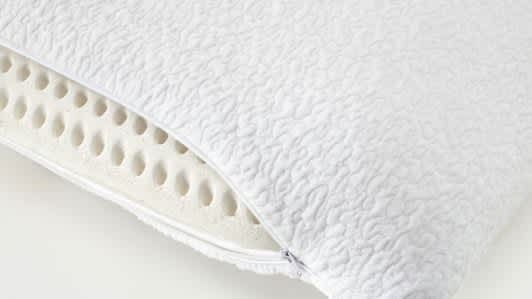
Natural or synthetic latex pillows offer moderate to high contouring without trapping too much heat. Similar to memory foam, latex cores can be either solid or shredded. The feel of the pillow also depends on the type of latex used. For example, Talalay latex has a springer feel, while Dunlop offers denser support.
Latex pillows are a good option for those who like the higher density and loft of memory foam but don’t want to risk overheating. However, the higher price-points of latex pillows may be cost-prohibitive for some shoppers.
Cotton
Shoppers who prefer natural materials may want to consider cotton pillows, which are generally soft and breathable. Cotton fibers naturally wick away heat and moisture, which can help those with night sweats or hot flashes.
Cotton pillows tend to be fluffier than latex or foam models. As a result, they may lose their shape or flatten more readily. However, they can be a good fit for stomach sleepers or anyone who prefers a lower loft pillow.
Buckwheat
Filled with buckwheat hulls, these pillows have a grainy texture that contours to the sleeper. Buckwheat pillows typically deliver above-average pressure relief since they closely cradle the neck and head. They don’t trap a lot of heat, and they’re often considered a more eco-friendly alternative to other pillow types.
Buckwheat pillows may not be cushiony enough for some sleepers, though, and they tend to have higher price-points.
A pillow’s fill material is really what creates shape and moldability. The fill’s structure is important too – a shredded memory foam pillow is going to feel a lot squishier than a solid memory foam pillow.
Specialty Pillows
Shoppers can also find a range of speciality pillows to accommodate various needs.
Explore More Pillow Types
Common pillow sizes tend to have similar dimensions. However, decorative and other specialty pillows come in a range of shapes and sizes.
How Much Do Pillows Cost?
Pillows range anywhere from $10 to upwards of $200, so you should be able to find a model that fits your budget. Materials and craftsmanship tend to have the most impact on price, but pillow type, size, and brand can also influence price-points.
-
Size: Price generally increases with size. That said, a luxury pillow model could be three times the cost of a mid-range model of the same size. Custom sizes or specialty models tend to be pricier because they are less common.
-
Type: Not all pillow types require the same construction or craftsmanship. Handcrafted, ergonomic, or more complex designs typically command higher price-points than standard pillows.
-
Material: Material type and quality heavily influence pricing. Down, latex, and memory foam tend to drive up cost, while polyester and polyfoam models are usually more economical. Natural and organic materials can also increase price-points.
-
Brand: While many shoppers are willing to spend more for brand recognition, an affordable generic model is sometimes comparable to well-known brand products that cost more. Be sure to compare different brands and models to ensure you’re getting the best deal.
How to Choose a Pillow
As with mattresses, there isn’t a perfect pillow that satisfies every sleeper. Preferences vary widely when it comes to pillow type, loft, and firmness. The best pillow for you also depends on factors like body type, sleep position, and health conditions. And because not everyone has the same budget, pricing is also a consideration.
What Should You Consider?
Shoppers should consider a variety of factors when choosing a pillow, including body type, sleep position, and health concerns.
Your Body Type
Body weight, size, and head shape all affect the way a pillow feels and performs. Sleepers under 130 pounds usually enjoy a plusher model that offers more cushioning. However, a thinner design can still feel supportive for sleepers in this weight category.
People between 130 and 230 pounds are the most versatile and can enjoy a range of lofts and firmness levels. Sleepers over 230 pounds cause pillows to compress more, so they typically require a firmer model to support that level of pressure.
Weight aside, some people simply have broader shoulders, making anything smaller than a queen or king pillow feel cramped. People with larger heads sink into their pillows more, so they usually prefer higher lofts for additional support.
Your Sleeping Position
Sleep position is a huge factor when it comes to pillow compatibility. Side sleepers tend to do best with a high loft pillow that keeps their head on the same plane as their neck and shoulders. A low to medium loft design can help maintain a straighter spine for back sleepers. Stomach sleepers usually require a thin pillow to keep their head from straining upwards.
Your Health Needs
A number of pillows are designed to address various health needs. Pillows that elevate the head and upper body can alleviate snoring, acid reflux, and allergies caused by nasal congestion.
Ergonomic models like wedge, knee, and body pillows can give relief to those with aches and pains by promoting proper spinal alignment. Pillows with cooling features can benefit anyone who sleeps hot. And people with allergies might want to consider a model that’s been treated to resist the growth of bacteria, dust, mold, and other allergy triggers.
Your Budget
While higher-quality pillows tend to have higher price-points, there are options to fit just about any budget. Still, a smaller budget will somewhat limit choices, potentially excluding pricier models like latex, memory foam, or down.
Many companies offer free shipping, which can help with budgeting, but it’s always wise to check for price minimums and other exclusions.
What to Look for in a Pillow
Certain pillow qualities have a bigger impact on comfort and support than others.
Type and Material
The type and quality of materials used determines the feel and function of a pillow. Down, cotton, and microfiber clusters yield a fluffier pillow, while memory foam and latex models have more structure.
Pillows made with synthetic materials are sometimes less breathable and durable than their natural counterparts. If you have allergies, you should approach latex and down models with caution.
Height or Loft
A pillow’s relative thickness is critical for support and proper spine alignment. Each sleep position has different loft needs in order to reinforce good sleep posture. Body weight and frame also influence loft preferences.
Low loft pillows are typically less than 3 inches thick. Medium loft designs are between 3 and 5 inches, while high loft pillows are taller.
Loft makes a big difference in terms of spinal support. If you use a low-loft pillow while sleeping on your side, your neck’s going to bend in order to make contact with the pillow. The same goes for stomach sleeping with a pillow that’s too thick – you may wake up with neck stiffness.
Firmness
Firmness indicates a pillow’s feel and relative support. Softer pillows allow the head and shoulders to sink more than firmer models.
Special Features
Some pillows boast special features to enhance comfort. If you tend to overheat at night, you might want to consider pillows with gel infusions, open-cell foam, copper fibers, and other cooling technologies. If you have allergies or asthma, you may benefit from pillows with antimicrobial treatments. Materials like latex and cotton can also help, as they naturally resist allergen triggers.
Adjustable designs allow you to modify the loft of your pillow by changing the amount of fill. These pillows are good for people who like to experiment with different heights and feels.
Get the Most Out of Your Pillow
It’s important to take good care of your pillow and use it correctly in order to get the best performance out of it.
Support Your Sleep Position
Support refers to how well a pillow keeps the head and neck in optimal alignment. Good sleep posture is key to avoiding aches and pains the next morning. Material type, loft, and firmness all influence relative support.
Different body types have varying support needs. Heavier sleepers generally require more supportive pillows to keep a pillow from flattening too much.
Where you place a pillow to promote good posture is also important. The best option for you depends on your sleep position.
Read the Care Instructions
Every pillow has different care guidelines based on its materials and construction. It’s best to follow the manufacturer’s instructions to prolong your pillow’s lifespan.
Some covers are removable and machine-washable, while others should only be spot treated. You may also be able to wash the core, but this often shortens a pillow’s lifespan.
Know When to Replace Your Pillow
How long a pillow lasts will vary based on material quality, craftsmanship, and use. Most pillows hold up for several years but start losing their shape and loft beyond this time frame. That’s why it’s important to keep an eye out for indicators that your pillow needs to be replaced.
-
Irregular clumping or deep impressions: If a pillow’s fill starts to clump or bunch, then you’re probably not getting the uniform support you need. Memory foam pillows with deep indentations or impressions are likely past their prime.
-
Your pillow smells: If you notice unpleasant odors despite regular cleaning, it’s time for a new pillow.
-
You have aches and pains in the morning: Waking up with a stiff neck or shoulders can indicate a pillow that is no longer offering you optimal support.
-
You’ve changed your sleep style: If you’ve switched your sleep position, you may need a new pillow with a different firmness level or loft.
Boost Your Pillow’s Lifespan
You can extend your pillow’s life by regularly washing pillowcases and, if applicable, the cover. Protectors can also safeguard against bacteria, mold, and mildew, which can degrade a pillow at a faster rate.
Above all, the best method for increasing your pillow’s lifespan is to follow the manufacturer’s cleaning guidelines.