Pain can make getting quality sleep more difficult. Shoulder pain is especially common. Even if it isn’t severe, you might struggle to get comfortable in bed. Certain sleeping positions and products may cause shoulder pain or intensify existing pain. Finding the right pillow can help take pressure off your shoulders, promote good posture, and enhance comfort.
Pillows vary by materials, lofts, sizes, shapes, and styles, all of which influence their performance. Each sleeper has unique needs and requires distinct pillow characteristics. Factors such as sleeping position, body size, and the nature of the discomfort determine the best pillow for shoulder pain.
Fill MaterialShredded memory foam and kapok tree fiber blend
FirmnessAdjustable
Price$109
Cover MaterialsCopper-infused polyester and viscose blend
Pros
Blend of shredded memory foam and kapok fibers creates a plush and supportive feel
Airy and breathable materials promote temperature neutrality
Removable fill for adjustable loft and firmness
Cons
Side and back sleepers under 230 pounds
People who tend to sleep hot
Sleepers with changing needs or preferences
Constructed from a unique blend of materials, the Layla Kapok Pillow offers comfort and support for nearly any sleeper due to its adjustability.
The pillow contains a blend of shredded memory foam and natural kapok fibers. Derived from a tree cultivated primarily in Southeast Asia, kapok fibers are highly buoyant and lighter than cotton. They’re also breathable and quick-drying to help keep the pillow cooler. When combined with shredded memory foam, this unique fill balances responsiveness, support, and plushness.
The cover uses a blend of polyester, viscose, and Lycra that lets air circulate into and out of the pillow. A zippered side allows sleepers to remove fill to adjust the loft and firmness.
Because of its adjustability, the Layla Kapok Pillow was popular with the majority of our testers. Stomach sleepers removed some fill so that the pillow didn’t force them to crane their neck excessively, while side sleepers appreciated the plush support of the fully stuffed pillow. In addition, testers noted that the pillow is easy to mold and manipulate as needed, and the surface also stayed quite cool in our temperature readings.
The Layla Kapok Pillow is available in queen and king sizes. Layla offers free shipping in the contiguous U.S., a 120-night trial period, and a five-year limited warranty.
The signature material blend and adjustable design make the Layla Kapok Pillow a comfortable option for many sleepers with shoulder pain regardless of their body type and sleep position.
One-of-a-king design helps ease pressure off shoulder during sleep
Foam fill cushions the body
Two size options
Cons
Side sleepers
People who experience painful pressure buildup in the shoulders
Those who enjoy sleeping with a body pillow
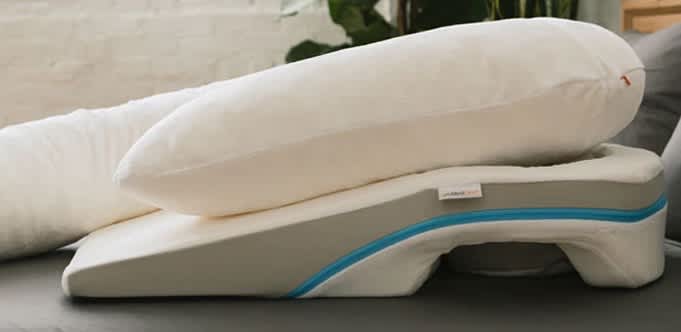
The MedCline Shoulder Relief System has a unique design that goes above and beyond your average pillow when it comes to relieving shoulder pain. The three-piece construction is specifically aimed at side sleepers who experience pain in their shoulder during sleep.
The pillow system consists of a body pillow, a wedge pillow, and an insert. The body pillow is 50 inches long and tucks comfortably between your legs. A shredded foam fill conforms deeply to your body for significant pressure relief. The wedge pillow contains solid foam and features a pocket to cradle your downward-facing arm. This relieves pressure buildup that many side sleepers experience in the arm and shoulder. The insert is placed in the wedge to support your head while still allowing space for your arm to rest.
You can use the MedCline Shoulder Relief System whether you sleep on your left or right side. The pillow comes in a small/medium or large size. The latter features a longer wedge to accommodate taller people. Shipping is free in the contiguous U.S. You may return the pillow within 30 days for a refund minus a $25 return fee.
The unique design of the MedCline Shoulder Relief System makes it a worthwhile option for side sleepers who experience acute pressure-induced pain during sleep.
Long-strand silk fill is both luxuriously plush and ultra-supportive
Cover is made from breathable, moisture-wicking bamboo-derived viscose
Excellent durability and long-term performance
Cons
Shoppers with flexible budgets
Hot sleepers
Those who want to invest in a long-lasting pillow
The Cozy Earth Silk Pillow is a splurge-worthy option for shoppers who don't mind spending a little extra on their new pillow. While the sticker price is on the expensive side, this pillow's high-quality construction helps ensure strong performance across the board and a longer-than-average lifespan. Cozy Earth's warranty for the pillow covers pilling and other types of wear and tear for up to 10 years after the purchase date.
The fill is made of long-strand mulberry silk, a material that's comparable to real down in terms of softness and lightness but also doesn't lose shape. This means you shouldn't need to fluff the pillow too often. Silk is also naturally breathable and won't absorb body heat. A cover composed of breathable viscose derived from bamboo adds to the excellent temperature control. Viscose also wicks moisture away to help you stay dry on hot or humid nights.
Sleep Doctor offers free ground shipping for all customers in the contiguous U.S. Those in Alaska, Hawaii, and U.S. territories pay an additional delivery fee. The Cozy Earth Silk Pillow is backed by a 100-night sleep trial in addition to the 10-year manufacturer's warranty.
Plush fill composed of shredded memory foam and down alternative fibers
Nylon-blend cover is breathable and long-lasting
Cons
Hot sleepers
Combination sleepers who frequently change sleep positions
Shoppers with limited budgets
Side sleepers with shoulder pain should invest in a high-loft pillow that fills the space between their head and downward-facing shoulder – otherwise pain and pressure buildup can occur in these areas. The Sijo FlexCool Memory Foam Pillow is adjustable, so you can add as much fill as you need to sleep comfortably on either side. Alternatively, you can remove the fill for a lower loft if you sleep on your back or stomach.
The fill primarily consists of shredded memory foam, though the pillow also contains down alternative fibers for extra softness and cushioning. A cotton liner holds the fill, while the outer cover is made from a durable nylon-spandex blend. You can separate the cover from the inner pouch and machine-wash the former at home. The fill should only be spot cleaned as needed. Standard/queen and king sizes are available.
Sleep Doctor offers free ground shipping if you order two or more pillows. Single-purchase orders qualify for reasonable flat-rate delivery in the contiguous U.S. You may return the pillow unopened and unused within 60 days of receipt.
How We Test Pillows
We test pillows against the same set of strict standards that we use for other pillow types, but we pay close attention to several factors that set different pillows apart. In addition to firmness, conforming, and ease of cleaning, we also measure breathability. Many sleepers choose specific materials for their cool feel. To determine how well a pillow regulates temperature, we use thermal sensors that measure heat retention and we try them ourselves too, taking notes on how warm or cool we think a pillow feels after use.
What Is Shoulder Pain?
Shoulder pain is among the most common orthopedic ailments. The cause is often difficult to pinpoint because so many muscles, tendons, ligaments, bones, and fluid-filled sacs occupy the area. In some cases, shoulder pain clears up in a few months. In others, it may become chronic and go on for years.
Persistent shoulder pain can result from a variety of medical conditions, including:
Rotator cuff injuries
Osteoarthritis
Tendinitis
Bursitis
Frozen shoulder
Depending on the cause of the issue, associated symptoms may include discomfort during daily activities, limited movement, swelling, and stiffness.
Talk to your doctor to assess the root cause and possible treatments, particularly if you’re experiencing chronic pain.
Why Does Shoulder Pain Feel Worse at Night?
Inflammation is linked to pain, and compressing the affected shoulder can make it that much more pronounced — particularly if you sleep on your side and put weight on your shoulder. Many conditions that cause shoulder pain, including arthritis and tendinitis, are associated with inflammation.
How Does Your Pillow Affect Shoulder Pain?
Inadequate head and neck support can put stress on the shoulders, contributing to pain. Sleepers must consider pillow height, firmness, and support in relation to their needs. Ideally, a pillow should support the natural curvature of the spine, allowing the sleeper’s muscles to relax.
While your pillow can make a big difference, other factors come into play. To avoid or reduce shoulder pain, your pillow and mattress should both be compatible with your sleeping position and body type.
Can Sleeping on Your Side Cause Shoulder Pain?
Although shoulder pain can arise with any sleeping position, it is most prevalent for side sleepers because of the pressure they place on one shoulder. Any side sleeper may experience occasional shoulder discomfort, but it’s especially common for those with chronic inflammation in their shoulder or conditions like bursitis, rotator cuff injury, tendinitis, or frozen shoulder.
Side sleepers typically require specific support to maintain proper spinal alignment. Thicker pillows fill the gap between the head and the mattress, while a contouring mattress relieves pressure by letting the shoulder sink in more deeply. Without the right pillow and mattress, side sleepers may be more susceptible to shoulder pain.
I’m an occasional combination sleeper, so I have to find a pillow that’s a good middle ground for every sleeping position. That said, my shoulder can get aggravated if I side sleep while using a pillow that’s not tall enough to keep my head from crunching down onto my shoulder.
Choosing the Best Pillow for Shoulder Pain Relief
Choosing the best pillow for shoulder pain requires careful consideration. Because every person has different needs, the ideal pillow for shoulder pain varies. We recommend considering your sleep position and body type to determine the best loft and firmness for you. Striking the right balance can help provide proper support to promote healthy spinal alignment and greater comfort.
Support and Keeping Your Spine Aligned
Support refers to a pillow’s ability to promote proper spinal alignment. A pillow with the right level of support keeps the head, neck, shoulders, and spine in a neutral position, reducing tension and pressure that could otherwise contribute to discomfort.
An individual’s preferred sleeping position impacts the level of support they require from a pillow. For instance, side sleepers generally need pillows with ample support to keep their head aligned with their shoulders. On the other hand, stomach sleepers typically benefit from less support since too much lift could strain their neck. Back sleepers usually fare best with a medium-loft pillow that neither forces their head up nor lets it sag.
Pillow Loft
Pillow loft refers to the height of the pillow. Low-loft pillows are less than 3 inches thick, medium-loft varieties measure 3 to 5 inches, and high-loft options are more than 5 inches. The ideal loft varies depending on sleep position, but personal preferences also contribute.
Sleeping Position
What Pillow Loft Do You Need?
Side Sleepers
Side sleepers typically need a pillow with medium to high loft (5+ inches) to maintain proper spinal alignment. This should fill the space between the neck and shoulder.
Back Sleepers
A medium loft (3 to 5 inches) is most effective for back sleepers. The pillow should neither push the head forward nor let it tip back, either of which could create neck tension.
Stomach Sleepers
Due to the nature of the position, stomach sleepers generally prefer a pillow with a low loft (under 3 inches). Anything higher can tilt the head upward and strain the neck. Some stomach sleepers prefer sleeping without a pillow.
Combination Sleepers
Combination sleepers often use a medium loft pillow that provides comfort and support for multiple positions. They then mold the pillow to accommodate their current position of choice and support proper alignment.
How Firm Should Your Feather Pillow Be?
The ideal pillow firmness varies depending on the sleeper’s position preference. A pillow’s firmness relates to its level of support and overall feel. Firmness determines how much your head sinks into the pillow, which, by extension, affects spinal alignment. Although feather pillows are typically relatively soft, the density of the fill influences the firmness.
Sleeping Position
What Firmness Do You Need?
Side Sleepers
Moderately firm pillows that balance comfort and support are ideal for most side sleepers. Extra firm pillows may allow pressure buildup, while extra soft pillows tend to let the head sink excessively.
Back Sleepers
Back sleepers generally fare best with a medium firmness level. Firmer pillows can raise the head, misaligning the neck, while softer pillows often flatten and let the head sag.
Stomach Sleepers
Stomach sleepers typically enjoy a softer pillow that allows their head to sink in and rest near the mattress, though some prefer a slightly firmer model if they can find one that’s thin enough for their needs.
Combination Sleepers
Combination sleepers often find medium to medium firm pillows most comfortable. However, moldability is key since combination sleepers may need to manipulate the pillow into different positions.
Other Pillow Features to Consider
While loft and firmness are the two primary factors to consider when selecting a pillow for shoulder pain, other aspects can also influence how comfortable the pillow is for you.
Pillow Features
Description
Shape
Rectangular pillows are the most traditional, but other shapes are widely available. Sleepers with shoulder pain might also consider contour pillows, body pillows, wedge pillows, or other designs.
Pressure Relief
A pressure-relieving pillow redistributes the weight of the sleeper’s head and neck to limit pressure buildup.
Quality Materials
High-quality materials typically resist wear and tear better than cheaper varieties, allowing them to maintain their support longer.
Moldability
Moldable pillows enable the sleeper to scrunch up and position it as needed. This quality may be especially beneficial for combination sleepers and individuals with fluctuating shoulder pain.
Temperature Regulation
Hot sleepers may prefer a pillow with temperature-regulating properties. Breathable materials like cotton and latex may suffice for some sleepers, but other models use components like gel infusions specifically engineered for cooling.
What Pillows Are Best for Shoulder Pain?
The best pillows for shoulder pain keep the head, neck, and shoulders in a neutral position while relieving pressure. Orthopedic pillows come in all shapes and sizes. Pillows that excel at easing shoulder pain often contain memory foam, latex, buckwheat, or polyfoam.
That said, each sleeper has unique needs that may be better met by one type of pillow than another. Sleepers who are unsure what they prefer or who have changing needs may benefit from an adjustable pillow.
Memory Foam: Memory foam pillows have either a solid or a shredded core. Solid cores generally provide more consistent support to promote good posture. However, shredded memory foam pillows tend to be more moldable, allowing greater flexibility.
Latex: Latex pillows also use either solid or shredded fill. Like memory foam, solid latex fill is more consistently supportive, while shredded varieties are more moldable. Latex redistributes weight while limiting sinkage, providing an excellent balance of pressure relief and support for sleepers with shoulder pain.
Buckwheat: Buckwheat pillows contain the outer casings of buckwheat seeds, also known as hulls. The buckwheat hulls make the pillow firm and supportive, ensuring the upper body does not sink. They’re also frequently adjustable, allowing individuals with shoulder pain to add or remove hulls to select the ideal loft for them.
Polyfoam: Available with solid or shredded fill, polyfoam pillows are similar to memory foam but are generally not as conforming. That said, they often provide the necessary support at a more affordable price-point.
If you get frequent shoulder pain, I think it’s worth considering pressure-relieving materials like latex and memory foam. Even though a pillow doesn’t directly support your shoulder, fills like these can help disperse weight to keep your neck and head from weighing your shoulder down.
What Pillows Are Worse for Shoulder Pain?
For side sleepers, pillows with minimal support may worsen shoulder pain. Down, down alternative, and feather pillows tend to flatten under pressure. This may allow a side sleeper’s head to sag, which can lead to tension throughout the upper body. Although these materials may not be ideal for side sleepers, they’re often preferable for people who sleep on their stomach.
Specialty Pillows for Shoulder Pain Relief
The most common specialty pillows for shoulder pain relief are wedge, contour, and body pillows. Wedge pillows elevate the head and neck, relieving pressure from the shoulders. Contour pillows have a distinct molded shape designed to support the head and neck. Some also have a cutout or curved edge to accommodate a side sleeper’s shoulder. A body pillow allows the sleeper to drape their arm over it, providing additional shoulder support.
How to Sleep With Shoulder Pain
Although the right pillow can make a considerable difference in relieving shoulder pain, how you sleep also heavily contributes. It is usually best to avoid lying on the affected area when possible, since pressure often worsens shoulder pain. Consider all aspects of your sleeping environment, including your position, pillow, and mattress when formulating a strategy to prevent neck pain while sleeping.
Side Sleepers
A supportive pillow combined with a contouring mattress generally reduces shoulder pressure and the resulting pain. Side sleepers typically prefer a relatively firm, high-loft pillow to promote spinal alignment. If the affected shoulder hurts when you lie on it, you might try switching sides and propping up that arm with another pillow to support the shoulder.
The best mattress for side sleepers usually contours to the shape of the body so that the lower shoulder can sink in, thereby redistributing pressure.
Back Sleepers
Medium-loft pillows with a medium firmness level usually keep a back sleeper’s head in a neutral position, promoting spinal alignment. Firmer pillows may force the head to angle upward, and softer pillows can let the head sink closer to the mattress. Either of these scenarios could aggravate shoulder pain.
Low-loft pillows are ideal for stomach sleepers, limiting neck strain by keeping the head closer to the mattress. As long as the loft is low, soft through medium firm pillows might be suitable.
While people under 130 pounds might prefer a softer bed, the best mattress for stomach sleepers is usually medium firm to firm to prevent the midsection from sagging.
While the right pillow and mattress may reduce discomfort for stomach sleepers, we usually advise against this sleeping position for people who experience chronic shoulder pain. Stomach sleeping requires tilting the head to one side, which can lead to tension in the neck that spreads to the shoulders.
Last Tips for Dealing With Shoulder Pain
Beyond choosing the right pillow, you can make several other lifestyle and sleeping changes to alleviate shoulder pain.
Find the Right Mattress
When it comes to easing shoulder pain, a mattress can be just as important as a pillow. Mattresses that are too soft for your body type and sleep position allow excessive sinkage, which can lead to tension and poor posture. Those that are too firm may contribute to pressure buildup around a side sleeper’s lower shoulder.
Arrange Your Pillows to Alleviate Shoulder Pain
Depending on your sleep position, you may be able to arrange pillows around your body to ease shoulder pain. Side sleepers can rest on their non-painful side with one or two pillows propping up their affected arm. If you must lie on your painful shoulder, consider placing a pillow under your lower back and hip to create an open channel around your arm.
Back sleepers may benefit from placing a pillow under their knees to improve overall posture. Stomach sleepers may want to consider using a body pillow to transition toward sleeping on their side. Alternatively, stomach sleepers can place a body pillow on either side of their torso to encourage back sleeping.
Consult Your Doctor
In some cases, changing your sleeping environment is not enough. Shoulder pain accompanied by chest discomfort, shortness of breath, or feeling lightheaded may be signs of a heart attack, requiring immediate medical attention. If your shoulder pain is severe or includes sudden swelling, a visible deformity, or an inability to use the joint, you should also see a doctor immediately.
Even if the pain is mild but persistent, you should talk to your medical provider. They can diagnose the problem and prescribe an appropriate course of action.
Explore More Pillows
If you’re looking for a particular type of pillow, check out our other guides below.
Garen is a health and lifestyle content creator. She realized the importance of sleep when her children made getting a good night's rest more challenging. Garen is always learning something new about the wide world of sleep and sleep products. Married with two girls, ages 7 and 11, she is a book nerd and a lover of pop music, travel, and the Pacific Northwest.