Sleep is important for everyone, but it’s particularly vital for kids whose bodies are still growing. While getting a child to bed on time every night can be a challenge for busy parents, a comfortable mattress can go a long way toward encouraging healthy sleep habits.
Choosing the right mattress for a child who is constantly growing and changing presents a unique challenge. If your top priority is finding the best kids mattress, we’ve designed this guide for you. We also suggest checking out our recommendations for the best twin mattresses. For mattresses suitable for the rest of the family, don’t miss our comprehensive guide to finding the best mattress.
The two-sided Helix Kids is designed for kids between the ages of 3 and 12. One side is firm and offers optimal support for growing children through age 7, while the softer side cradles the body and is best suited to kids 8 and older. A water-repellent cover protects the foam layers from damage when nighttime accidents occur.
Ideal forValue Shoppers
FirmnessMedium Soft (4), Medium Firm (6)
FeelPlush and Breathable Support
ValueGood Value
Pros
Dual-sided design with each surface intended for different age groups
Water-repellent cover prevents stains and liquid damage
Reinforced perimeter coils minimize sinkage when your child gets in and out of bed
Cons
Foam layers may emit off-gassing odor after the mattress is unboxed
Not available in a twin XL size
Many adult-friendly mattresses are also suitable for children, but the Helix Kids was specifically created for kids and preteens. This flippable hybrid features a distinct feel on each side that can benefit different age groups, allowing your child to use the mattress for up to nine years after they leave their toddler bed. A water-repellent cover, reinforced perimeter, and breathable construction add to the Helix Kids’ strong appeal.
Why We Like It
The Helix Kids’ thoughtful construction sets it apart from many child-friendly mattresses on the market today. Strong edge support is one of its standout qualities. Even if your child weighs more than 130 pounds, they shouldn’t sink excessively when getting in and out of bed or sleeping close to the edge of the mattress. Breathability is another strong suit. The coils promote steady airflow to keep the interior cool, and the foam layers shouldn’t trap too much heat.
How Does It Feel?
One side of the mattress is medium firm (6). This surface is geared toward kids between the ages of 3 and 7, and provides robust support to ensure healthy growth and development. The opposite surface is medium soft (4). This side should deliver adequate cushioning for kids 8 to 12 who enjoy the cradling of adaptive foam. That said, kids outside the intended age groups may find one surface more comfortable than the other. A shared layer of pocketed coils serves as the support core for both sides. The coils are reinforced along the perimeter to help your child get in and out of bed without sinking too much along the edges. A water-repellent membrane on both sides limits damage to the internal layers if your child has an accident during the night.
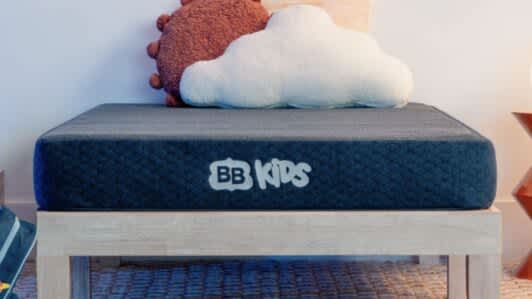
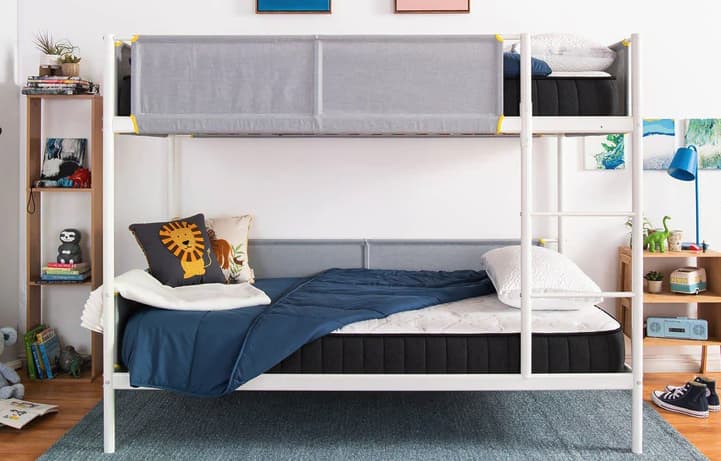
The Brooklyn Bedding Kids Mattress is a well-made bed at an approachable sticker price, making it a good option for parents with limited shopping budgets. A 6-inch profile means the mattress is safe and compatible with virtually any bunk bed on the market, while the stain-resistant cover protects the inner layers if your child wets the bed.
Ideal forSide and Back Sleepers
FirmnessFirm (7)
FeelFirm Breathable Support
ValueGood Value
Pros
Firm feel helps promote even alignment and proper growth
Cover is treated to resist stains and liquid damage
Low-profile design ideal for bunk beds
Cons
Strong off-gassing odor for the first few nights
Foam layers may trap heat
The Brooklyn Bedding Kids Mattress offers great value thanks to its solid construction and below-average price-point. You can use the mattress with any bed frame, including a bunk bed, and a firm (7) feel means the surface should resist wear and tear for years to come. Thoughtful details like a cooling gel infusion in the top layer and a stain-resistant cover add to the appealing, child-friendly design.
Why We Like It
The Kids Mattress measures 6 inches thick. This profile should meet the latest safety guidelines regarding bunk bed rail heights, and a lightweight design makes the mattress fairly easy to lift, carry, and reposition as needed. The top memory foam layer is somewhat adaptive, resulting in a gentle cradle for your child’s body, while the high-density base pushes back against their weight to keep their spine aligned — this is key for healthy growth and development.
Despite the cooling gel infusion in the memory foam, heat retention may occur. Cooling sheets can help offset this. You may notice some strong off-gassing odor for the first few nights after the mattress is unboxed, but these smells will eventually dissipate.
How Does It Feel?
The Kids Mattress feels very firm and solid for an all-foam model. Your child will notice some light cushioning from the top layer, but the dense support core prevents them from sinking too deeply into the mattress. This should help ensure minimal wear and tear even as kids age and naturally put on weight. The cover is treated with Nano Stain Terminator, a child-safe agent sewn into the fabric to protect the foam layers.
The Bear Cub’s reliable foam-over-coil design is a great choice for toddlers, young children, and preteens. A plush foam surface and strong pocketed coils deliver a nice balance of contouring, support, bounce, and breathability — not to mention the approachable price-point for parents.
Ideal forYoung Children
FirmnessFirm (7)
FeelPlush, contouring surface
ValueGreat Value
Pros
Firm hybrid design promotes even alignment and healthy development
Stable perimeter helps kids get in and out of bed with ease
Cover made from cooling Celliant-blend fabric
Cons
Initial off-gassing odor can be strong and unpleasant
No waterproof or liquid-blocking components
Bear’s kid-friendly Cub hybrid takes a cue from the brand’s adult-oriented mattresses with a firm (7) feel, dense foam layers, and a robust coil system. Toddlers transitioning from cribs get the support they need for healthy growth and development, but the surface offers plenty of cushioning and pressure relief to keep them comfortable as they grow older and become more physically active.
Why We Like It
The Cub encapsulates everything our team has enjoyed about Bear’s grown-up mattresses, so we’re confident kids will also find it comfortable. Adaptive foam makes the surface feel nice and plush when your child gets into bed, but the zoned transitional foam and pocketed coils deliver ample pushback to prevent them from sinking too deeply into the mattress. This robust construction should translate to a healthy lifespan and years of continuous use before a replacement is needed. We also like the Cub for its temperature-regulating properties. The surface foam doesn’t retain much heat, air flows freely through the coils, and the Celliant yarns in the cover fabric make the mattress feel cool to the touch at all times.
How Does It Feel?
At 7 out of 10, the Cub is firmer than many competing hybrids — this should provide the even sleep surface young children need to develop properly. At the same time, the mattress shouldn’t feel overly stiff. The foam contours and molds to your child’s body, resulting in extra reinforcement for the midsection and gentle cradling beneath their head and legs.
You can choose from salmon or Arctic blue color schemes, as well as twin and full sizes. Unlike many competing kid-friendly models, the Bear Cub does not contain any waterproof materials. If your child is prone to bedwetting, you should consider a mattress protector to safeguard the Cub’s internal layers.
The Leesa Kids Mattress uses plush, adaptive foams to create a soothing sleep surface for your child. This helps ensure they don't feel pressure in sensitive areas during their growing pains phase.
Ideal ForAges 4 and up
FirmnessMedium Firm (6)
FeelPlush and Breathable Support
ValueGood Value
Pros
All-foam design provides gentle cushioning to prevent pressure buildup
Breathable open-cell layers won't trap too much heat
Low-profile design is compatible with most bed frames
Cons
Not available in a twin XL size
No waterproofing or liquid protection
Why We Like It
Adults are the only sleepers susceptible to pressure buildup while they sleep, and the Leesa Kids Mattress is well-equipped to prevent your child from waking up feeling sore or stiff. Comfort layers of memory foam and transitional polyfoam create a pressure-relieving cradle – the mattress offers a gentle hug without sinking too deeply beneath the child's weight. Both of these layers have an open-cell composition, so the surface won't absorb too much heat. And at 7 inches thick, the Leesa Kids can be used with most kid-friendly bed frames, including bunk beds with side rails that stand at least 12 inches from the top of the mattress.
How Does It Feel?
The Leesa Kids' top layer consists of memory foam, so the surface is quite cushy and will mold to your child's body. Transitional polyfoam provides additional cushioning while lightly pushing back against their weight – this prevents them from sinking too much. A 5-inch base layer of high-density polyfoam stabilizes the mattress and minimizes compression along the perimeter when your child gets in and out of bed. Twin and full sizes are available.
The Nest Bedding Puffin is a firm, supportive all-foam mattress with dense layers to properly support your child and aid their development. The Puffin is approachably priced in all three sizes, and you can add an accident protection plan that covers stains and liquid damage.
Ideal forBunk Beds
FirmnessFirm (7)
FeelResponsive Foam
ValueGreat Value
Pros
Polyfoam comfort system combines responsiveness and pressure relief
Phase change material in the cover is designed to regulate temperature
All-foam construction is virtually noiseless
Cons
May be too firm for some children
Relatively short trial period
Designed with growing bodies in mind, the Puffin Memory Foam Kids Bed from Nest Bedding is available in twin, twin XL, and full sizes. It measures 7 inches tall and consists of a quilted cover, 2 inches of Energex polyfoam, and 5 inches of high-density polyfoam. Our team found that the Energex polyfoam felt like a blend of memory foam and latex, providing conforming pressure relief with bounceback that enabled easy movement.
Why We Like It
To avoid heat retention, the cover contains phase change material designed to maintain temperature neutrality by adapting in response to body heat. As a result, our evaluations showed that the mattress slept much cooler than most all-foam beds. Instead of a chemical flame retardant, Nest Bedding utilizes a silica fire barrier. Thanks to the bed’s temperature-regulating features, the Puffin may be ideal for kids who sleep hot. We also liked that the Nest Bedding Puffin’s responsive foam design provides pressure relief without limiting movement.
How Does It Feel?
The Puffin’s firm feel is rated 7 out of 10 on our firmness scale. While the mattress is designed for children under 110 pounds, our testers between 130 and 230 pounds found it comfortable for all sleep positions. Our back and stomach sleepers under 130 pounds also felt the mattress’ sturdier support helped keep their spines aligned. However, some side sleepers under 130 pounds reported pressure buildup around their hips and shoulders.
The reversible Nolah Nurture is designed to support your child through different growth stages. One side feels firm and supportive, making it ideal for most younger kids, while the opposite surface is plusher and best suited to older children.
Ideal ForAges 3 and up
FirmnessSoft (3), Firm (7)
FeelSoft on One Side, Firm on the Other
ValueGood Value
Pros
Reversible design with a different feel on each side
Zoned coils provide extra support for the midsection to promote healthy alignment
Cover is composed of breathable organic cotton
Cons
Not ideal for older kids who prefer mid-level firmness
Sticker price is somewhat steep
Why We Like It
The Nolah Nurture is a versatile, dual-sided hybrid that can serve your child's needs for years to come. For toddlers and young children, the firm (7) side provides ample support and promotes healthy spinal alignment. As your child gets older, they may prefer a plusher sleep surface, so you can flip the Nurture to the soft (3) side. A shared pocketed coil layer delivers reinforcement and pushback to both comfort layers. The coils are zoned for midsection support, so the child's torso and hips won't sink too deeply into the mattress. An organic cotton cover and wool batting layers help each surface stay cool.
How Does It Feel?
Both sides of the mattress feature comfort layers made of adaptive polyfoam, but they feel distinct from one another. One side is firm and barely conforms at all, while the opposite surface contours closely to mold to the child's body and alleviate pressure. Regardless of which side your child uses, they should feel extra pushback around their midsection from the coil layers. Both surfaces feel quite breathable, and the wool batting layers – which double as natural fire barriers – have moisture-wicking properties to keep kids cool and dry.
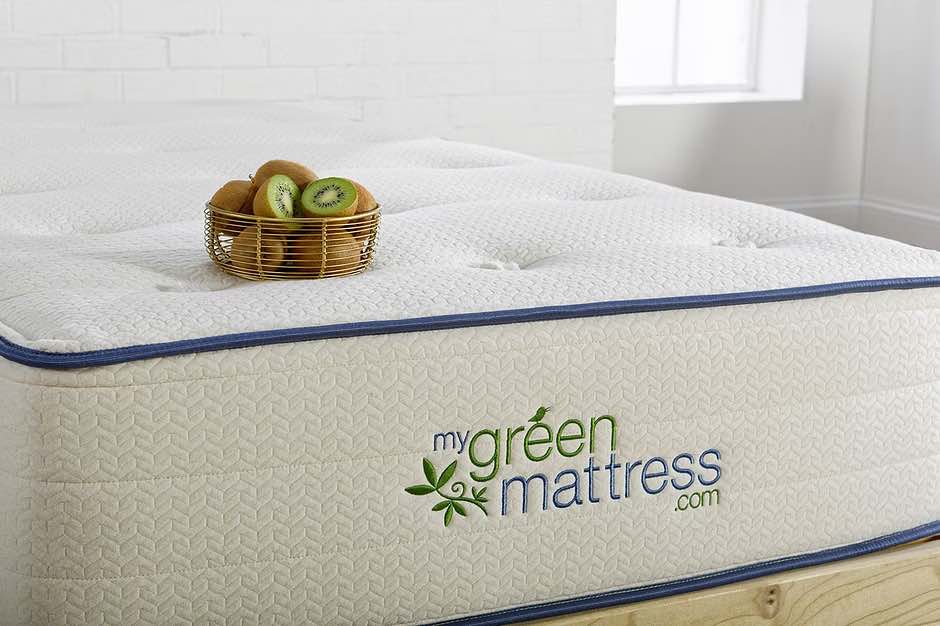
The My Green Mattress Kiwi’s latex hybrid design ensures a responsive, bouncy surface to help kids get in and out of bed with ease. GOLS and GOTS certifications also make the mattress a good option for parents who want to invest in eco-friendly products.
Ideal forKids With Allergies
FirmnessMedium (5)
FeelResponsive Latex
ValueFair Value
Pros
Latex and wool offer gentle contouring
Breathable coil system keeps the surface cool
GOLS and GOTS certifications ensure sustainably sourced materials
Cons
Thick coil system creates surface vibrations when a sleeper moves
Priced higher than a typical kids mattress
Why We Like It
The Kiwi Organic Mattress from My Green Mattress is an excellent choice for parents seeking an eco-friendly bed for their child. The thoughtful design features organic materials and offers plenty of support and cushioning for a child’s growing body. The latex has GOLS organic certification and the wool and cotton both have GOTS organic certification, so eco-conscious parents can rest assured that the materials are organically sourced. The comfort layer contains a thin layer of wool batting and 1.25 inches of Dunlop latex. Beneath is an 8-inch coil system with a zoned design that enhances support in the lumbar area. The perimeter is reinforced with stronger coils to boost support along the edges, and a quilted organic cotton cover encases the entire mattress.
How Does It Feel?
The medium firm (6) feel is ideal for kids – firm enough to support their bodies through development but soft enough to feel comfortable and reduce pressure buildup. Latex, wool, and cotton are all naturally breathable materials, so even children who tend to overheat during sleep should feel fairly comfortable. For an additional fee, you can upgrade to a two-sided option. The dual-sided design allows you to use both sides of the mattress, which can extend the bed’s lifespan.
What Do Kids Need for a Good Night’s Sleep?
Choosing a mattress for kids comes with a few different requirements than picking a bed for adults. We’ll look at some useful considerations to keep in mind and then examine each one in depth.
Find the Type of Mattress That Works Best for Your Child
One of the first decisions to make when buying a mattress is whether you prefer a hybrid, innerspring, foam, or latex design. Each has potential advantages and disadvantages for different sleeper types.
Choose the Right Mattress Size and Firmness
When deciding on mattress size and firmness level, parents should consider how the needs of their child may change as they grow. Some mattresses designed for kids feature a flippable construction tailored for multiple age groups.
Price and Lifespan of Your Child’s Mattress
As with any product, you generally pay more for a higher-quality mattress. It might be worthwhile to invest in a higher-end model if you anticipate your child will use the mattress for many years.
Children’s bodies grow every year, which means sleep preferences might change. Shop for a mattress that can accommodate evolving sleep needs, whether it’s a flippable design or a versatile mid-range firmness level.
Is It Time to Buy a New Bed for Your Child?
Well-timed upgrades to your child’s bed are key to their continued comfort as they grow. Here are a few tips on how to know it’s time to replace an old mattress:
Your child has outgrown their bed: Children need a progressively larger bed as they grow. Your child will need to transition from a crib to a toddler mattress before moving to a bed that provides adequate support for their adolescent and teen years.
Your child isn’t sleeping well on their current bed: If your child is uncomfortable on their bed or is waking up tired and achy, it may be a sign that their bed isn’t providing the necessary support.
Their current mattress is old or worn out: Mattresses typically last 7 to 10 years, so be cautious about passing down an old mattress to younger siblings. Signs such as sagging, lumps, and creaking indicate that it’s time for a new bed.
Choosing the Right Mattress Size and Firmness for Your Child
Two of the most important factors to consider when buying a mattress for a child are size and firmness.
How Much Space Does Your Child Need to Sleep?
The sleeping space required for your child depends on their age, size, and personal preferences. Some kids prefer smaller mattresses that feel contained, while others like a larger mattress they can spread out on. After graduating from a toddler bed, we generally recommend anywhere from a twin to a full size mattress.
Twin Mattress
A twin mattress typically measures 38 by 75 inches and is ideal for younger children. It provides ample space for them to move comfortably and change positions while sleeping and is efficient for smaller bedrooms, making it a practical choice for most kids.
Twin XL Mattress
A twin XL mattress, measuring approximately 38 by 80 inches, offers extra length, making it suitable for taller children and adolescents. This extra space helps to accommodate growth spurts, ensuring the mattress remains usable for a longer period of time.
Full Size Mattress
At around 54 by 75 inches, a full size mattress provides more width than smaller sizes. We find this size best for children who move a lot in their sleep or prefer more sleeping space. It’s also a good mattress for adolescents who want a mattress that should last through high school.
How Firm Should Your Child’s Mattress Be?
A child’s mattress should balance firm support with comfortable cushioning. Firmness levels should cater to their growing bodies, ensuring proper spinal alignment and comfortable sleep.
Contouring
Contouring refers to how a mattress conforms to the body’s natural curvature. Soft mattresses contour more deeply, allowing a child’s body to sink into the surface. Firm mattresses are less conforming and maintain their shape under weight. Younger children generally need a firmer mattress with less contouring, while older children often appreciate more softness and cushioning.
Sleep Position
Consider your child’s sleep position when selecting the right mattress firmness. Children who sleep on their side normally require softer surfaces for adequate pressure relief, while stomach and back sleepers may benefit from firmer support to maintain spinal alignment.
Edge Support
Good edge support in a child’s mattress provides stability and safety. It ensures the mattress retains its shape and is important for children who sleep, sit, or play near the edge of the bed.
What Should You Consider in a Mattress for Kids?
When shopping for a kids mattress, consider key qualities like the mattress type, durability, and breathability. It’s also important to think about your budget and any allergies or sensitivities that may affect your choice.
Mattress Type
Most mattresses designed for kids are one of four mattress types, each with their pros and cons.
Innerspring: Innerspring mattresses feature metal coils with a thin layer of cushioning beneath the cover. These beds are often responsive and affordable, but they typically aren’t as durable as other mattress types.
Foam: Foam mattresses generally provide excellent contouring and pressure relief. However, they can retain heat and may lack edge support.
Hybrid: Hybrid mattresses offer a balance of a thick comfort system and coil-based support. They are usually responsive and breathable but can be on the pricier side.
Latex: Natural latex mattresses generally have a buoyant feel that doesn’t conform as closely as other types of foam. They are often favored by eco-conscious consumers but tend to carry high price tags.
Durability
A durable mattress offers long-term comfort and support, making it a wise investment for growing children. How long a mattress lasts depends on a child’s size and sleep position, as well as the mattress’ materials and construction. For example, latex and high-density foam models typically last longer than innersprings and those made with low-density foams.
Allergies
For children with allergies or sensitivities, look for a mattress that minimizes exposure to potential irritants. This means, for example, avoiding latex models for children sensitive to that material. You can also look for certifications that guarantee the mattress is free of certain harmful chemicals and allergens. Common third-party certifications include:
Global Organic Textile Standard (GOTS): This certifying body verifies that textiles like cotton and wool meet organic and nontoxic standards.
Global Organic Latex Standard (GOLS): Specifically for natural latex, this standard confirms the organic status and safety of the material.
OEKO-TEX Standard 100: This certification ensures that textiles do not contain any of more than 300 potentially harmful chemicals and other substances.
CertiPUR-US: This foam certification program indicates that foams used in a mattress are free of certain harmful substances, including heavy metals and toxic flame retardants.
Safety was our top consideration when looking for mattresses for our kids, so my wife and I made sure to check for certifications from third party organizations to ensure the materials used in the mattresses were safe for our growing family.
Breathability
Breathability in a mattress is important for children who sleep hot. A breathable mattress effectively regulates temperature and doesn’t allow body heat to build up in the materials. When looking for a breathable mattress, focus on types that allow for ample airflow, like innersprings, hybrids, or perforated latex models.
Price
Children’s mattresses are available in a wide range of price-points, ranging from less than $100 for a basic foam model to over $1,000 for a luxury model with added features. Factors influencing the price include mattress size, material quality, and brand reputation.
Tips to Get the Most Out of a Mattress for Your Child
We know that a new mattress can be a big investment, so we’ve compiled several tips to help you make the most of your purchase.
Think Ahead and Plan for the Future
When selecting a mattress, consider how your child’s needs may evolve over time. For example, a young child may be happy on a twin size mattress, but a twin XL may be a better choice to account for adolescent growth spurts. A mattress that suits both current comfort and future growth can be a smart, long-lasting choice.
Use a Waterproof Mattress Protector
To extend the lifespan of your child’s mattress, consider buying several mattress protectors that can be swapped out when one is soiled. This can help if you’re managing bedwetting or trying to resist stains. Also, be sure to clean the mattress according to the manufacturer’s instructions and rotate or flip it as needed.
Mattresses that are well-maintained are more likely to go the distance. Since kids mattresses are prone to stains and spills, it’s helpful to be prepared when things get messy. Watch our video below for more tips on how to keep your child’s bed clean.
Consider a Mattress Topper or Pad
Young children typically need a firm mattress, while older children and those going through adolescence tend to appreciate more softness. Rather than having to buy a new mattress when a child’s preferences change, mattress toppers and mattress pads can be a quick and easy way to add a touch of plushness to an otherwise firm bed.
Take Advantage of Trials and Warranties
Before making a purchase, check the length of the mattress’ sleep trial and warranty. Sleep trials allow parents and children to test a mattress for a period of time before deciding if it’s a good fit. If the new mattress isn’t right, the brand will arrange a return or exchange.
Warranties cover manufacturer defects like tears and excessive sagging. Leveraging sleep trials and warranties can ensure you’re satisfied with your purchase, especially if you’re shopping for a mattress online.
Discover More Mattress Solutions
If you also need a crib mattress for a newborn or a bigger bed for a teen, check out our guides below. We’ve also included some other niche mattress picks for specific types of sleepers.
As experts in the sleep industry, our approach to testing children’s mattresses is thorough and informed by data. To come up with our favorites, we evaluated a wide array of mattresses for kids, considering factors like support, breathability, temperature regulation, and reversibility.
Frequently Asked Questions
Should kids sleep on a firm or soft mattress?
While it’s essential that babies sleep on a firm mattress in a safety-approved crib, older children can sleep on a firm or soft mattress as long as it feels comfortable and provides the necessary amount of support. The choice between firm and soft depends on the child’s weight, sleeping position, and personal preference.
What type of mattress is best for children?
There’s no single best mattress type for children, as the ideal choice varies based on individual needs and preferences. Hybrid mattresses are often chosen for their combination of support and comfort, while foam mattresses are favored for their contouring and lower price tag. Ultimately, consider factors like support, comfort, and potential allergies when choosing the right type of mattress for your child.
What is the best mattress size for kids?
The best mattress size for children varies with age. Toddlers transitioning from a crib can move to a twin or a twin XL, offering ample space for growth. As children grow into teenagers, a full or queen size mattress can provide more room and remain suitable into adulthood.
How tall should a kids mattress be?
Kids mattresses are usually 6 to 10 inches tall. While taller mattresses can offer a more luxurious look, lower profiles are often needed for bunk and trundle beds. Additionally, shorter mattresses provide easier accessibility for young children, making it simpler for them to climb in and out of bed.
What is the best mattress for kids with allergies?
The best mattress for kids with allergies is typically one containing hypoallergenic materials like natural latex or organic cotton. We also suggest looking for mattresses with certifications like CertiPUR-US, OEKO-TEX, or GOTS to ensure they are free of harmful chemicals.
David is a Certified Sleep Science Coach with a lifelong passion for well-being and health optimization. His interest in sleep developed with the arrival of his son, when sleep suddenly became a precious commodity. Since then, David has researched everything from bedtime routines to mattress toppers in his quest for a great night’s sleep.