On top of its negative impact during the day, hip pain can be burdensome at night. Nagging hip pain can make it hard to get comfortable in bed and can disrupt a good night’s sleep. A low-quality mattress can put further strain on the hips and exacerbate hip pain. The right mattress can help cushion the hips and support the body to make it easier to get restorative sleep.
Our guide introduces our testing team’s picks for the best mattresses for hip pain and reviews all the essential information you need when shopping for a new mattress. For a wider look at our picks for top-performing mattresses in a range of categories, check out our list of the best mattresses of 2025. If you are struggling with discomfort in your back rather than your hips, you can find recommendations in our guide to the best mattresses for back pain.
Read on to see why the following six options made our top picks list of 2025’s best mattresses for hip pain relief.
The Ziwi ZiPP Zenergy is a specialized all-foam mattress that balances adaptive cushioning with a responsive, column-based support system. It is specifically engineered to accommodate combination sleepers who require a surface that shifts as quickly as they do.
Ideal forCombination Sleepers
FirmnessMedium Firm (6)
FeelPlush and Responsive
ValueFair Value
Pros
Exceptional motion isolation for couples
Proprietary pillar system offers targeted pressure relief
Cover is removable and machine-washable
Cons
Noticeable off-gassing odor for the first few nights after unboxing
Sleepers over 230 pounds may need more support
Side Sleepers
Under 130 lbs
8.0/10
130-230 lbs
8.5/10
Above 230 lbs
7.5/10
Back Sleepers
Under 130 lbs
8.5/10
130-230 lbs
7.5/10
Above 230 lbs
6.5/10
Stomach Sleepers
Under 130 lbs
7.5/10
130-230 lbs
6.5/10
Above 230 lbs
6.0/10
"The Ziwi ZiPP Zenergy checks all the important boxes for people with hip pain. A deep contour from the top layers, light pushback around the midsection, and specialized interlocking support columns give the mattress a balanced feel most side and back sleepers up to 230 pounds can get behind." -David Rubin, Director of Product Testing
The Ziwi ZiPP Zenergy offers the cushioning and contouring of traditional memory foam without the restrictive, deep hug many people dislike about the material. Its medium firm (6) feel provides a moderate surface cradle that eases tension in the joints, while the interlocking support core keeps the body on an even plane. This design is particularly effective for those who frequently experience back pain and need a stable, yet gentle, foundation.
Why We Like It
Our testing indicates that this mattress performs well for individuals between 130 and 230 pounds. Side sleepers in this weight range receive excellent cushioning around the shoulders and hips, while back sleepers benefit from the support core's extra pushback. The polyfoam comfort layer absorbs vibrations almost instantly, and this prevents movement from traveling across the surface. This level of motion isolation is a standout feature for couples.
We also found that the mattress offers better ease of movement than many of its competitors. The interlocking foam pillars provide a subtle bounce that allows you to change positions without feeling stuck in the material. Additionally, the gaps between these pillars act as natural air channels to help regulate temperature. Pressure relief is another strong suit, as the system provides extra reinforcement beneath the lumbar region to prevent muscle strain.
How Does It Feel?
The 12-inch profile of the Zenergy consists of a top layer of adaptive polyfoam that responds to your movements with a light bounce. Below this, the patented ZiPP Support Core uses a series of interlocking foam pillars that alternate between soft and firm to provide stronger support where the body is heaviest. The exterior is wrapped in a breathable polyester cover that feels soft to the touch and can be removed for machine-washing.
Ziwi offers free ground shipping within the contiguous U.S. Customers can test the mattress during a 100-night sleep trial, and the brand provides free returns if the bed is not a perfect fit. The mattress is backed by a 20-year manufacturer's warranty that covers structural defects and excessive material degradation.
The Softer WinkBed is plusher and more adaptive than most competing hybrids, and this level of contouring can greatly benefit people with persistent hip pain. Side sleepers on our team were particularly impressed with the cradling, cloud-like feel of the mattress.
Ideal forLighter Sleepers
FirmnessMedium Soft (4)
FeelPlush and Relieving Support
ValueGood Value
Pros
Polyfoam layers contour closely to the hips to reduce impact and promote spinal alignment
Zoned coils prevent excessive sinkage into the mattress
Breathable and moisture-wicking Tencel cover helps keeps the surface cool
Cons
Limited edge support compared to firmer WinkBed models
May feel too soft for back and stomach sleepers over 230 pounds
Side Sleepers
Under 130 lbs
9.5/10
130-230 lbs
8.5/10
Above 230 lbs
7.5/10
Back Sleepers
Under 130 lbs
8.0/10
130-230 lbs
7.0/10
Above 230 lbs
6.0/10
Stomach Sleepers
Under 130 lbs
7.0/10
130-230 lbs
6.0/10
Above 230 lbs
5.0/10
“When my hip pain flares up, I place a premium on having a mattress like the Softer WinkBed that can cradle and cushion achy joints. This mattress is on the softer side, but it felt great and gave me the support I needed.” –David Rubin, Director of Product Testing
The WinkBed is a versatile luxury hybrid available in four firmness levels. For sleepers with hip pain, we’re spotlighting the most adaptive design. The Softer WinkBed — which rates as medium soft, or a 4 on our 10-point firmness scale — contains plush foam layers that contour closely to cushion the hips and other pressure-prone areas along the spine. However, uncomfortable sinkage shouldn’t be an issue for most people thanks to the zoned coil system.
Why We Like It
During hands-on tests, the Softer WinkBed earned its highest ratings from side sleepers weighing up to 230 pounds and back sleepers under 130 pounds. Other testers preferred firmer WinkBed models. If you initially choose the Softer WinkBed and decide you need more support, WinkBeds allows one free exchange during the 120-night sleep trial and the replacement comes with its own 60-night trial period.
Our tests indicate the Softer WinkBed outperforms most competing hybrids in categories like motion isolation and pressure relief. The mattress also sleeps fairly cool, given the adaptive design. Steady airflow through the coil system and a temperature-regulating cover effectively offset heat retention from the foam layers, allowing you to sleep comfortably even when the weather is warm or humid.
How Does It Feel?
The Softer WinkBed begins with a layer of polyfoam quilted onto the Euro-top cover. This material conforms to your unique curves as you sink into the surface. A second polyfoam layer provides additional cushioning while creating a buffer between your body and the support core. Living up to its name, the Softer WinkBed is much plusher than the average hybrid.
The pocketed coils are divided into three zones with more robust support beneath your midsection and a gentler feel elsewhere. This helps maintain an even surface for your entire body without sacrificing pain or pressure relief. A Tencel cover adds breathability and moisture control to the design.
Competitive pricing and free shipping throughout the contiguous U.S. make the Softer WinkBed a good option for budget-conscious shoppers. Whether you choose to keep the Softer WinkBed or exchange it for a different model, the mattress you keep is protected under a lifetime warranty against structural defects.
The Helix Midnight Luxe hits that sweet spot between close contouring and sturdy support, making the mattress a top choice for people with persistent hip pain — side sleepers in particular. A responsive surface and reinforced perimeter also help you move across the mattress with ease.
Ideal forCombination Sleepers
FirmnessMedium Firm (6)
FeelClose-Conforming Foam
ValueGood Value
Pros
Adaptive foam layers cushion sore spots without hugging too closely
Reinforced perimeter coils prevent deep sinkage when you get in and out of bed
Two cooling cover options
Cons
Not supportive enough for most back and stomach sleepers over 230 pounds
Foam layers may produce strong initial off-gassing odor
Side Sleepers
Under 130 lbs
8.5/10
130-230 lbs
10.0/10
Above 230 lbs
8.5/10
Back Sleepers
Under 130 lbs
8.0/10
130-230 lbs
9.5/10
Above 230 lbs
8.0/10
Stomach Sleepers
Under 130 lbs
6.5/10
130-230 lbs
8.0/10
Above 230 lbs
6.5/10
“You can tell that the Helix Midnight Luxe was built to accommodate sharp pressure points. It lightly embraced my joints, but it had enough firmness to maintain a stable, dependable feel. I also liked how the add-on cooling cover helped me sleep at a comfortable temperature.” –Garen Glazier, Product Testing Team Member
Helix specializes in hybrid mattresses geared toward different types of sleepers. While the Helix Midnight Luxe was created for side sleepers between 130 and 230 pounds, our tests show the mattress is versatile enough to accommodate a wide range of body weights and positions. A medium firm (6) feel with light contouring and strong support add to the well-rounded design.
Why We Like It
Side sleepers on our team weighing 130 to 230 pounds awarded high ratings to the Midnight Luxe, so the mattress should meet the needs of its target demographic, but our tests show it is suitable for most side and back sleepers weighing up to 230 pounds. Stomach sleepers under 130 pounds should also find the Midnight Luxe comfortable.
We found that edge support and ease of movement are two of the Midnight Luxe’s major strengths. The coils provide excellent overall stability and help you move across the mattress with ease. Our team also gave the Midnight Luxe high marks for temperature control, thanks in large part to its moisture-wicking Tencel cover, but we recommend the GlacioTex cover upgrade if you’re an exceptionally hot sleeper.
How Does It Feel?
The Midnight Luxe’s top two layers consist of memory foam that softens when it comes into contact with body heat. This creates a gentle cradling effect as you settle into the mattress, but the transitional polyfoam and pocketed coil layers push back against your weight to prevent excessive sinkage.
The mattress is also fairly responsive, so you’ll notice a light bounce when changing positions or getting in and out of bed. Reinforced perimeter coils allow you and your partner to use the entire surface, rather than feeling confined to the middle, and thicker coils rest beneath your midsection for zoned reinforcement. A breathable Tencel cover encases the Midnight Luxe. For an extra fee, you can upgrade to a GlacioTex cover engineered to dissipate body heat and feel cool at all times.
Below-average pricing and free shipping throughout the contiguous U.S. make the Helix Midnight Luxe a solid pick for budget-conscious shoppers. The company’s sleep trial spans 100 nights. If you decide to keep your Midnight Luxe after the return period ends, your purchase is backed by a lifetime warranty.
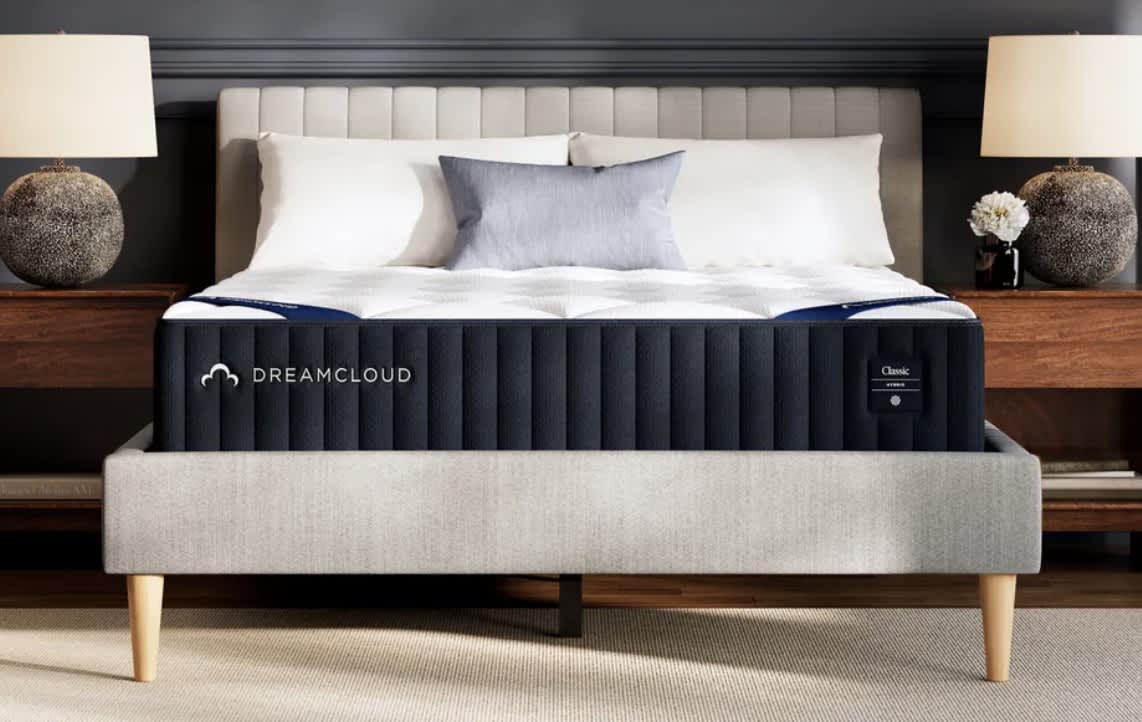
The DreamCloud Classic Hybrid’s balanced construction should appeal to anyone who needs close contouring for their sore spots and sturdy support to prevent excessive sinkage. We also recommend this mattress to shoppers with limited budgets — given the luxurious hybrid design, its sticker price is very accessible and the yearlong sleep trial is much longer than average.
Ideal forCombination Sleepers
FirmnessMedium Firm (6)
FeelCushioned, Supportive Surface
ValueGreat Value
Pros
Plush foam layers promote even alignment and cushion your sore spots
Robust pocketed coils provide pushback to keep your body on an even plane
Each order includes a 365-night trial and return period
Cons
Strong off-gassing smells may be present for the first 72 hours
Stomach sleepers over 230 pounds may sink too much
Side Sleepers
Under 130 lbs
7.0/10
130-230 lbs
8.0/10
Above 230 lbs
6.5/10
Back Sleepers
Under 130 lbs
7.5/10
130-230 lbs
7.0/10
Above 230 lbs
6.0/10
Stomach Sleepers
Under 130 lbs
7.0/10
130-230 lbs
6.0/10
Above 230 lbs
5.0/10
“From the breathable cover through the layered foams, I could feel the DreamCloud Classic Hybrid gently adapt to my body with a balanced feel that wasn’t too hard or too soft. Another major plus was that it didn’t retain heat, so I was able to keep snoozing without feeling too warm.” –Garen Glazier, Product Testing Team Member
One of the most popular hybrids among our testing team, the DreamCloud Classic contains thick foam layers to cushion your body. Thick coils provide sturdy reinforcement, but this is one of the most adaptive hybrids we’ve tested — expect close cradling and contouring from head to toe.
Why We Like It
The DreamCloud Classic Hybrid earned its highest ratings from side sleepers between 130 to 230 pounds, though most side and back sleepers on our team felt comfortable and adequately supported on the mattress. However, stomach sleepers over 230 pounds sank a bit too much during our tests. These sleepers generally need a firmer, sturdier mattress to ensure sufficient support.
Temperature control is one of the DreamCloud Classic Hybrid’s defining strengths. Air flows freely throughout the coil system to help maintain a comfortable interior temperature, while the cover — woven with moisture-wicking fibers — feels cool to the touch. Our tests also show the mattress alleviates pressure better and isolates more motion than most competing hybrids.
How Does It Feel?
The DreamCloud Classic Hybrid’s comfort system consists of three individual layers, beginning with plush polyfoam quilted to the cover. Memory foam and transitional polyfoam provide additional cushioning to give the mattress a medium firm (6) feel. Pocketed coils and dense base foam make up the support core, and the cover is made from stretch fabric woven with cooling fibers.
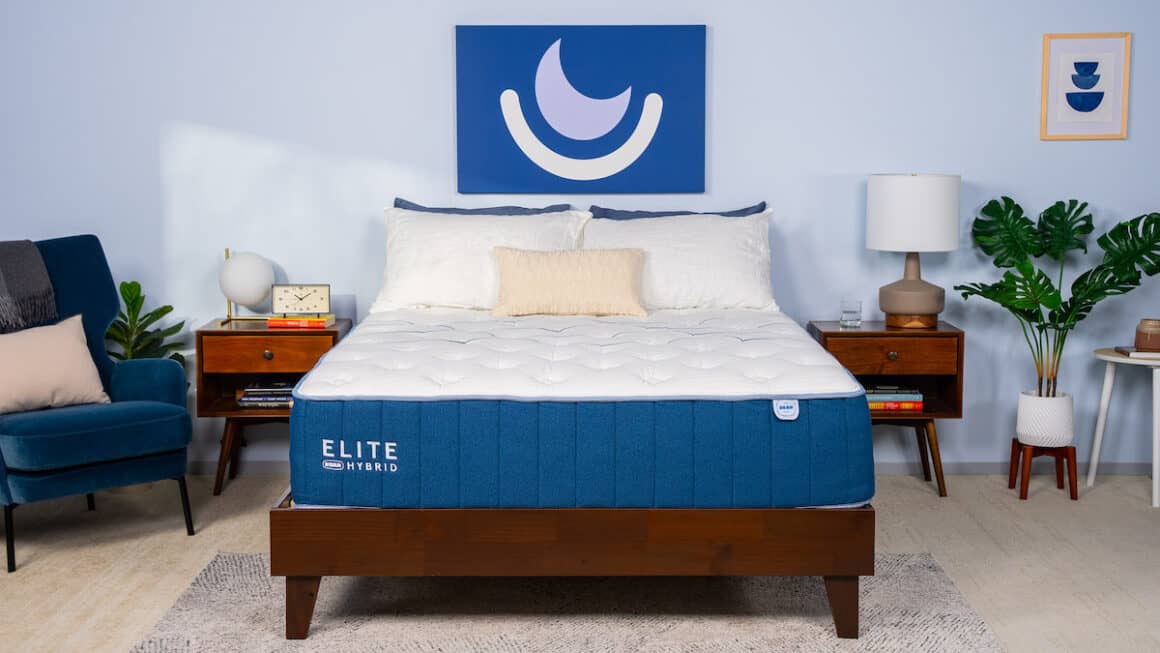
Hip pain and pressure buildup often go hand in hand, and we’ve found the Bear Elite Hybrid’s foam-over-coil design is effective at alleviating both. A plush surface reinforced with multi-zone support layers provides a nice balance of cushioning and stability, and you can choose from three firmness levels for optimal comfort no matter what you weigh or how you sleep.
Ideal forPeople With Back Pain
FirmnessMedium (5), Medium Firm (6), Firm (8)
FeelPlush, Supportive Surface
ValueGood Value
Pros
Adaptive foam layers cushion and cradle the body to alleviate sore spots
Multi-zone transitional foam and coils reinforce heavier areas of the body
Three firmness levels to accommodate different sleeper types
Cons
Off-gassing odor is fairly harsh for the first few nights
Limited options for people seeking an exceptionally soft mattress
Side Sleepers
Under 130 lbs
7.5/10
130-230 lbs
9.0/10
Above 230 lbs
7.5/10
Back Sleepers
Under 130 lbs
7.0/10
130-230 lbs
8.5/10
Above 230 lbs
7.0/10
Stomach Sleepers
Under 130 lbs
5.5/10
130-230 lbs
7.0/10
Above 230 lbs
5.5/10
“My favorite part of sleeping on the Bear Elite Hybrid was the sensation that each part of my body got exactly the support it needed. There was cushioning for my hips but no exaggerated sinking under my shoulders or lower back. As a result, my sleeping posture just felt better.” –David Rubin, Director of Product Testing
People with chronic or frequent hip pain are vulnerable to pressure buildup while they sleep, and a mattress that lacks proper support can worsen this discomfort. Bear’s Elite Hybrid offers targeted pain and pressure relief thanks to multi-zoned transitional and support layers, which gently push back against your midsection to keep your entire body on an even plane. The plush memory foam comfort layer also provides deep, adaptive cushioning to soothe problem areas.
Why We Like It
The Bear Elite Hybrid is available in firmness levels and our team tested all three. Side sleepers up to 230 pounds and back sleepers under 130 pounds were most impressed with the medium (5) design, which contours closely to distribute your weight and promote even alignment. Our tests show the medium firm (6) model is a good match for side sleepers between 130 and 230 pounds and back sleepers up to 230 pounds — we found this design to be the most balanced. If you’re a back or stomach sleeper who weighs more than 230 pounds, the firm (6) model should provide adequate support.
Each firmness level has its own pros and cons. The medium model isolates motion very well for a hybrid, and this design should provide the best pressure relief if you prefer soft, adaptive surfaces. Those who prioritize qualities like edge support and ease of movement should consider the medium firm or firm designs. Our tests show all three offer consistent cooling and breathability.
How Does It Feel?
The Elite Hybrid features a memory foam comfort layer infused with gel, which is meant to dissipate body heat and keep the surface cool. The transitional foam layer is divided into five firmness zones to ensure extra support for your torso and hips and a gentler feel for the head and legs. Pocketed coils and dense base foam make up the support core. The coils are also zoned to target your midsection with strong pushback, and the perimeter is reinforced to minimize sinkage when you get in and out of bed. A cover woven with cooling Celliant fibers encases the mattress.
Foam bed surfaces are great for pressure relief but are also known for trapping heat — which is why the Brooklyn Bedding Signature Hybrid is a strong pick if you want the cushioning of foam minus the heat retention. You get strong ventilation through a coil layer, and for an extra cost you can add a pillow-top with specialized cooling features.
Ideal forCouples
FirmnessMedium Soft (4), Medium Firm (6), Firm (8)
FeelVaries by Firmness
ValueGreat Value
Pros
Sturdy coils and polyfoam layers offer even balance of support and cradling
Optional pillow-top features a cover made with cooling fibers
Available in three firmness options
Cons
$99 fee for all returns
Foam may release off-gassing odors for a few days
Side Sleepers
Under 130 lbs
7.5/10
130-230 lbs
9.0/10
Above 230 lbs
7.5/10
Back Sleepers
Under 130 lbs
7.0/10
130-230 lbs
8.5/10
Above 230 lbs
7.0/10
Stomach Sleepers
Under 130 lbs
5.5/10
130-230 lbs
7.0/10
Above 230 lbs
5.5/10
“The Signature Hybrid contoured to match my body’s weight, which meant extra pressure relief around my hips and shoulders. But that didn’t cause any heat buildup. The mattress stayed at a neutral temperature throughout the night.” –Garen Glazier, Product Testing Team Member
The Brooklyn Bedding Signature Hybrid is a foam and coil mattress that’s available in three firmness levels. It’s a good option for sleepers who enjoy the deep cradling of foam but prefer a cooler option than all-foam mattresses, which are prone to excessive heat retention.
Why We Like It
The mattress comes in medium soft (4), medium firm (6), and firm (8) models. Regardless of the firmness you pick, you’re guaranteed gentle cushioning to ease pressure off your joints. Your ideal firmness depends largely on your sleep position and body type. We found the two softer options performed best with side sleepers, while back sleepers favored the medium firm. Stomach sleepers felt most comfortable on the firm model, since it offered the strongest support for the lower back.
How Does It Feel?
The mattress has a plush surface that we credit to the triple foam layers. Despite the cushioning, the bed offers plenty of support with a sturdy coil support core. Hot sleepers shouldn’t overheat too much, due in large part to strong ventilation through the coil system, but for extra assurance you can pay an additional fee for the cooling pillow-top. This 2-inch foam layer is sewn on for deeper cushioning, and it features a GlacioTex Cooling Cover made with specialized fibers intended to regulate temperature on the surface.
The Bryte Balance Signature delivers targeted support and cushioning for the hips and other places where pressure tends to build while you sleep. By automatically adjusting firmness based on your movements, the mattress is equipped to comfortably accommodate any sleep position.
Ideal forCouples
FirmnessAdjustable: Soft (3) to Firm (8)
FeelClose-Conforming Foam
ValueFair Value
Pros
Air chambers automatically adjust firmness based on your movements
Embedded sensors track sleep data for daily reports
All orders include free in-home setup
Cons
Expensive pricing can be a dealbreaker for budget shoppers
Only sold in larger sizes
Side Sleepers
Under 130 lbs
9.0/10
130-230 lbs
8.5/10
Above 230 lbs
8.0/10
Back Sleepers
Under 130 lbs
9.5/10
130-230 lbs
8.0/10
Above 230 lbs
7.0/10
Stomach Sleepers
Under 130 lbs
8.5/10
130-230 lbs
7.5/10
Above 230 lbs
6.5/10
"The Bryte Signature Balance is one of the most advanced mattresses we've tested. Not only is the firmness fully customizable from head to toe, but the air chambers automatically inflate or release air based on how your body is currently positioned." –David Rubin, Director of Product Testing
Pressure buildup can be a nightly nuisance, but the Bryte Balance Signature mitigates aches, pains, and sore spots with an advanced air chamber system that automatically adjusts firmness based on movement and weight distribution. With 100 individual firmness settings for each air chamber, you should always get the precise amount of cushioning and support you need for your head, shoulders, upper back, hips, and legs.
Why We Like It
Versatility is the Bryte Balance Signature's major selling point. With a vast range of firmness levels to choose from, and smart technology that senses when you move and adjusts the surface feel accordingly, the mattress can comfortably accommodate anyone regardless of their sleep position or body type. Our hands-on tests confirm the bed's advanced capabilities. Virtually every tester found a firmness configuration that aligned with their needs and preferences as a sleeper.
We were also impressed with the relaxation mode, which consists of head-to-toe vibrations corresponding with audio programs you can access via the Bryte companion app. Sleep tracking is another major plus. The sensors embedded in the mattress track your position changes and other movements to determine how well you slept and what you can do to improve sleep in the future.
How Does It Feel?
How soft or firm the Bryte Balance Signature feels depends on how the air chambers are programmed. That said, the mattress contains two comfort layers of adaptive polyfoam, so the surface always feels at least slightly cushy. These materials also absorb movement to cut down on sleep disruptions for couples. In the support core, more than 90 individual chambers deliver targeted support for both sides of the bed. A stretch-knit cover encases the Bryte Balance Signature.
Most of the time, hip pain is caused by an underlying health issue, like a bruise, a pinched nerve, or arthritis. However, an uncomfortable or unsupportive mattress can exacerbate hip pain.
Some signs that your mattress may be contributing to hip pain include:
Pain that is worse when you first get out of bed
Difficulty getting comfortable at bedtime
Waking up frequently during the night
Emergence of other aches and pains, which may arise from trying to compensate for hip pain in bed
How Does Sleeping Position Affect Hip Pain?
Sleeping position can affect hip pain because it influences the amount of pressure and impact placed on your hip joint. If you’re a side sleeper and experience hip pain on only one side, try sleeping exclusively on the other side. Experts also suggest sleeping on your unaffected side with a pillow between your legs.
Though back sleeping doesn’t put as much pressure on the hips, it’s important to use a mattress that provides sufficient support with enough cushioning to feel comfortable. Likewise, though stomach sleeping generally isn’t recommended, it’s essential to sleep on a supportive mattress that prevents the torso from sinking excessively.
When I’ve got a sore hip, I find that since I’m primarily a side sleeper, placing a pillow between my knees and switching the side I sleep on goes a long way to relieve the pressure on the affected hip. If the pain is especially troublesome, I prefer to switch to back sleeping with a bolster pillow under my knees.
Tips for Changing up Your Sleeping Position
If you need to change your sleeping position to decrease impact on your hips, try using pillows to bolster your body in your new position. Extra pillows can also make your adopted sleeping position more comfortable. Another approach is to sew a tennis ball to your pajamas to prevent you from reverting to your accustomed sleep position.
How to Choose a Mattress for Hip Pain
When choosing a mattress for hip pain, you can zero in on a high-performing model by thinking about things like mattress type, firmness, cushioning, pressure relief, and support.
Mattress Type
Materials and construction drive mattress performance and are the basis for categorizing mattresses into types. Foam mattresses have a base of dense polyfoam beneath one or more layers of memory foam or another softer foam. These mattresses generally contour to the body to relieve pressure and avoid excess impact around the hips.
Latex mattresses have multiple layers of latex, with a top layer that generally provides more pressure relief. The bounce and pushback of latex typically makes these mattresses excellent for people who want to avoid feeling stuck in place on their mattress.
In hybrid mattresses, a support core of individually wrapped coils rests beneath layers of memory foam, polyfoam, microcoils, latex, or other materials. The thick coils provide stability and responsiveness, while the comfort layers offer cushioning for pressure points.
Airbeds have inflatable air chambers that allow the firmness level to be modified via a remote control or smartphone app. Additional materials layered above the air chambers can enhance contouring or bounce.
In general, we recommend that people with hip pain avoid traditional innerspring mattresses. Unlike hybrids, innersprings have almost no material above the coils to cushion the body, making them more likely to exacerbate hip pain.
Firmness Level
Firmness, which is how hard or soft a mattress feels, is a key element of your comfort and sleeping experience. If a mattress is too firm, it can generate painful impact around the hips. If a mattress is too soft, the hips or lower back may sag out of alignment with the rest of the body, putting stress on the spine.
The ideal firmness level for hip pain depends on body weight, sleeping position, and individual preferences. Side sleepers normally need a softer mattress than stomach or back sleepers, and that’s especially true when the hips require more cushioning. Typically, people under 130 pounds benefit from a softer mattress, while people over 230 pounds need a firmer one.
Cushioning and Pressure Relief
Cushioning materials like foam and latex provide softness around the hips to prevent pain from worsening. Pressure relief refers to the ability of a mattress to soften impact in key areas while encouraging spinal alignment. For people with hip pain, this means that a mattress avoids strain or pressure at the hips but still supports the body’s overall posture.
Zoned support is a design feature that gives different levels of cushioning or pushback in different parts of the mattress. Many mattresses provide reinforced materials around the midsection, which can enhance spinal alignment and pressure relief for people with hip pain.
Tips for Relieving Hip Pain at Night
A handful of practical tips for people with hip pain may help make nightly sleep more comfortable and restorative.
Add a Mattress Topper
A mattress topper sits atop your existing mattress and can adjust firmness, pressure relief, or bounciness to make you more comfortable in bed. If you have hip pain and can’t afford an entirely new mattress, a topper with extra cushioning can be a cost-effective way to soften impact around your hips.
Practice Good Sleep Posture
Good sleep posture means that you aren’t contorting your body or placing excess strain on any specific area. No matter what sleeping position you prefer, first position your body evenly and naturally and then gradually adjust your posture to eliminate twisting or stress. An extra pillow may help you settle into a proper sleep posture.
Use Pillows Strategically
If you are a side sleeper, a pillow placed between your knees may reduce strain on your lower back. A larger body pillow can be used to maintain a comfortable position through the night.
When sleeping on your back, a pillow under your knees can lighten the load on your lumbar spine and midsection. On your stomach, you may benefit from a thin pillow under your midsection.
You should also pay careful attention to the pillow for your head. Finding the best pillow for your sleep position with the right height prevents excess bending that can cause your neck to be stiff or painful.
Consider Speaking With Your Doctor
Talk with your doctor if you have hip pain that is persistent, worsening, or severe. Because hip pain is usually linked to another health issue, a doctor can give the best advice for addressing hip pain and getting better sleep when dealing with hip pain.
Discover More Mattress Solutions
If a friend or family member needs a mattress to help with a different condition affecting their sleep, check out our curated mattress picks for specific needs.
Our recommendations are built on years of industry experience and an in-depth research and testing methodology. We determined the best mattresses for hip pain in our testing lab by personally assessing dozens of mattress types and models and analyzing how they affect pressure and support in the context of hip discomfort.
We put these mattresses through both objective and subjective testing. Our testing team includes sleepers with a variety of comfort preferences, sleeping positions, and body weights, which enables us to understand how a mattress will perform for various types of sleepers. We also read reviews and collect survey data from verified mattress owners to determine the best-selling mattresses for hip pain – this helps us confirm our team’s lab results are consistent with real-world experiences.
Frequently Asked Questions
Is a soft or firm mattress better for hip pain?
The best firmness level depends on the cause of hip pain as well as a person’s weight and sleeping position. A softer mattress can cushion a side sleeper’s hips and reduce pressure that can contribute to hip pain. However, if the mattress is too soft, the body can sink too far into the bed and misalign the spine.
A firm mattress can increase impact at the hips and worsen pain, but it may also encourage better overall sleep posture for back and stomach sleepers and people over 230 pounds.
What is the best mattress for hip pain?
The best mattress for hip pain has a balance of pressure relief and supportiveness. It should have enough cushioning to make sure there’s no uncomfortable impact against the hips. At the same time, it should accommodate the body across the mattress surface to keep the spine in a neutral position.
Is memory foam good for hip pain?
Memory foam is often good for addressing hip pain. This material is known for its contouring, which allows it to soften impact around the hips. However, for stomach and back sleepers with hip pain, softer memory foam mattresses may allow too much sinkage to keep the spine properly aligned.
Can a mattress cause hip pain?
If a mattress generates extreme pressure against a hip joint, it is possible for it to cause discomfort, but in most situations, hip pain begins with an underlying injury or medical condition like bruising, swelling, arthritis, or nerve damage.
What is the best sleeping position for hip pain?
The best sleeping position for hip pain depends on the nature and cause of the pain. Often, pain may be reduced by limiting the amount of weight and impact placed on the painful hip. In these situations, sleeping on your back or on the other side from the pain may help.
David is a Certified Sleep Science Coach with a lifelong passion for well-being and health optimization. His interest in sleep developed with the arrival of his son, when sleep suddenly became a precious commodity. Since then, David has researched everything from bedtime routines to mattress toppers in his quest for a great night’s sleep.