A bunk bed can be a convenient way to save space while accommodating multiple sleepers. Bunk beds are often popular among families with children or teenagers who share a room. While different configurations are available, most bunk beds have one mattress frame directly above the other. When looking for a mattress for a bunk bed, you should take into account several factors, including weight, profile, and safety, in addition to standard mattress selection criteria, such as mattress type and firmness.
To learn more about finding the right sleep surface, read our guide to the best mattress. If you’re shopping specifically for a model for your children, take a look at our guide to the best mattress for kids.
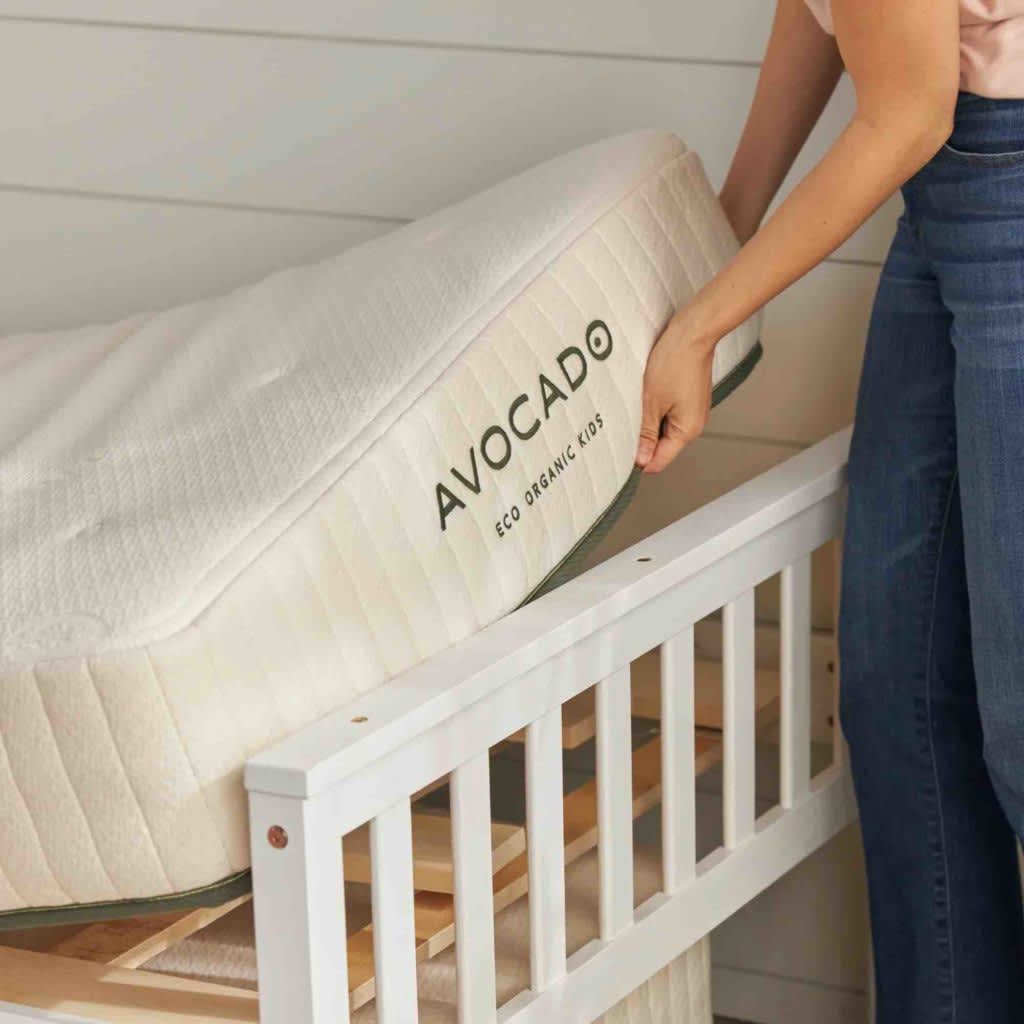
The Avocado Eco Organic Kids Mattress is a hybrid model made with high-quality materials like organic latex, wool, and cotton. The low profile, firm support, and responsive surface make this an excellent choice for kid’s bunk beds.
Ideal forChildren and Teens
FirmnessFirm (7)
FeelClassic Bouncy Feel
ValueGreat Value
Pros
Latex and coils balance pressure relief and support
Wool and cotton promote breathability
GOLS and GOTS organic certification
Cons
Latex produces some motion transfer
May be too firm for kids who enjoy feeling “hugged” by their bed
The Avocado Eco Organic Kids Mattress checks a lot of boxes when it comes to kid mattresses. In addition to high-quality materials and construction, a standout feature of this model is the eco-friendly design – with certifications to back up eco-conscious claims.
Why We Like It
All the materials in the Eco Organic Kids Mattress have natural cooling properties, so this bed is a great pick for children who sleep hot. Latex has an open-cell composition that retains minimal heat, especially compared to foam. Cotton and wool are highly breathable and air circulates freely through the coil interior.
The cotton and wool have organic certification from the Global Organic Textile Standard (GOTS) and the latex has organic certification from the Global Organic Latex Standard (GOLS). The mattress also has GREENGUARD Gold certification to show it has passed rigorous standards for chemical emissions.
How Does It Feel?
The mattress is a latex hybrid with a firm (7) feel and 7-inch profile, so it fits perfectly on bunk beds or trundle beds. The design begins with an organic cotton cover and a thin layer of organic wool, which acts as the bed’s flame retardant. Beneath is a 1-inch latex layer followed by a layer of 6-inch pocketed coils. The cotton and wool gently cushion your child’s body without too much sinkage, and the latex has a buoyant feel that gently contours but still offers ample support.
The BB Kids is well-made, relatively affordable, and compatible with the vast majority of bunk beds on the market today. You can choose from three child-friendly sizes, and the thin 6-inch profile ensures the utmost safety for little ones who sleep on the top bunk.
Ideal forSide and Back Sleepers
FirmnessFirm (7)
FeelFirm Breathable Support
ValueGood Value
Pros
All-foam design has a gentle surface and sturdy base
Cover is engineered to resist stains and liquid damage
Available in three sizes
Cons
Strong off-gassing smells for the first few nights
Some kids may find the mattress too firm
The BB Kids from Brooklyn Bedding is reasonably priced and ideal for any bunk bed arrangement. Consisting of two layers built onto a 6-inch profile, the mattress should rest at least 5 inches below the bed’s guard rails — this helps ensure a safe night’s sleep for kids who use the top bunk. Twin, twin XL, and full designs are available, allowing you to mix and match if your children’s top and bottom bunks are different sizes.
Why We Like It
The BB Kids is firm (7), but not overly stiff. A memory foam top layer gives the surface a cushy feel, but the base is reinforced with high-density polyfoam to prevent your child from sinking too deeply. This balance of softness and support is key for healthy growth and development.
The BB Kids’ thoughtful design also includes a cover treated with Nano Stain Terminator, a kid-safe agent that protects the fabric from stains and liquid damage. This can be especially useful if your child sometimes wets the bed.
How Does It Feel?
BB Kids utilizes the tried-and-true combo of a memory foam comfort layer and high-density polyfoam support core — this design is found in most adult foam mattresses, as well. Since the surface is on the firmer side, your child shouldn’t sink too deeply into the memory foam. A cooling gel infusion in the top layer also helps minimize heat retention, so the mattress should stay fairly cool.
The Helix Kids Mattress is a dual-sided model that offers a different firmness level on each side. Having two firmness options in one bed ensures the mattress will stay comfortable for your child throughout their growth.
Ideal forValue Shoppers
FirmnessMedium Soft (4), Medium Firm (6)
FeelPlush and Breathable Support
ValueGood Value
Pros
Dual-sided design offers two firmness options
Water-repellent surface
Breathable Tencel cover
Cons
May not be suitable for children over age 12
Children may notice temporary VOC odor
The Helix Kids Mattress is a hybrid model designed with children in mind. The dual-sided mattress has a medium soft (4) feel on one side and medium firm (6) feel on the other. The dual firmness options are meant to accommodate your child’s needs as they grow from toddlerhood into adolescence.
Why We Like It
While children can sleep on whichever side feels most comfortable, the medium firm side is meant for children roughly 3 to 7 years old. The softer side is aimed at children ages 8 to 12, since older children may gravitate toward beds with a softer feel. Simply flip the mattress to pick your child’s preferred firmness level.
How Does It Feel?
The bed measures 8 inches thick and features a 6-inch coil layer sandwiched between foam layers. The surface of the softer side is composed of plush memory foam while the firmer side features a denser polyfoam. The entire mattress is encased in a water-repellent cover made with breathable Tencel fabric. The water-repellent finish ensures protection for the mattress from nighttime bedwetting or accidental spills.
The Nolah Nurture 10 is a flippable hybrid mattress made with latex, wool, and organic cotton. We recommend this model for parents who prioritize beds made with non-toxic, premium materials.
Ideal forOrganic Shoppers
FirmnessSoft (3), Firm (7)
FeelAdaptable Luxury
ValueGood Value
Pros
Flippable with soft and firm sides
Made with natural materials
Zoned support core
Cons
Above-average price-point
Children who enjoy feeling “hugged” by mattress may find this too bouncy
The HDMax Tri-Zone support core consists of 6-inch pocketed coils that react independently to contour to the body and isolate motion. Our testers felt minimal vibrations when we dropped a kettlebell next to them. Three firmness zones also help support good posture by limiting midsection sinkage.
Why We Like It
The Nurture Mattress and its components hold several certifications pertaining to content and sourcing, including OEKO-TEX Standard 100, GOTS, eco-INSTITUT, and Rainforest Alliance.
This model is 10 inches high, making it versatile enough to work on either the top or bottom bunk of many frames. However, read the manufacturer’s guidelines to ensure the guardrails on the upper bunk are high enough and that the total weight does not surpass recommended limits.
With its kid-friendly design and high-quality materials, the Nolah Nurture is especially appropriate for families seeking natural luxury. The two built-in firmness options make the mattress adaptable to changing needs and preferences.
How Does It Feel?
Most of our testers preferred the extra support of the firm side, especially when lying on their stomachs. However, our team members under 130 pounds preferred the soft side for back and side sleeping.
What Is the Best Mattress Size for Bunk Beds?
The best mattress size for bunk beds depends on the size of the frame. Most bunk bed frames hold twin or twin XL mattresses. These sizes are most popular for kids and teens, but they can also accommodate solo adult sleepers.
Bunk beds designed for larger mattresses are also available. You may be interested in larger bunk beds if you’re looking to accommodate multiple adults, potentially including couples. For instance, larger bunk beds may be good to use in guest rooms. Twin-over-full or full-over-full bunk beds are fairly common options. While you can find larger sizes, such as king-over-king, these are not widely available.
Types of Bunk Beds
There are several types of bunk bed frames, each with different characteristics. Not all options take the same size mattress on each bunk, and some frames have three bunks while others have just one.
Bunk Bed Type
What It Is
What Sizes Fit
Standard
Two mattresses of the same size, one placed above the other
Usually twin
Loft
A bed above and an empty space below to accommodate a dresser, desk, etc.
Twin, twin XL, or full
Triple
Three beds stacked directly above each other
Usually twin
L-shaped
A bottom and a top bunk that are at right angles to one another, one atop the other
Twin, twin XL, or full on top, and twin, twin XL, full, queen, or king on bottom
Twin Over Full
A twin mattress directly above a full
Twin on top, full on bottom
Trundle
A bed that can be pulled out from under another bed frame
Usually twin
How to Shop for a Mattress for Bunk Beds
Shopping for any mattress requires careful consideration, but picking the right bunk bed mattress introduces unique concerns. We’ll break down what factors to consider.
Mattress Type and Durability
While each mattress model is unique, mattress type, materials, and construction impact performance and durability. Most mattresses last from 6 to 8 years, but their lifespan partially depends on how often you use the bunk bed and how you care for the mattresses. Bunk bed mattresses come in all the common mattress construction types, each of which carries unique implications for performance.
Mattress Type
Pros
Cons
Foam
Quiet
Absorbs motion, reducing frame noises
Contouring provides support and pressure relief
Limited edge support
Initial off-gassing odors
Potential heat retention
Hybrid
Balanced motion isolation and responsiveness
Breathable
Notable edge support
Often heavy
Coils may creak with age
Higher-than-average price-point
Innerspring
Easy to move around on
Tends to stay cool
Sturdy edge support
May produce noise
Motion transfer could reach the frame
May sag over time
Latex
Made from natural materials
Springy yet motion isolating
Supportive and conforming
Often heavy
More expensive
Initial rubbery or natural odor
Thickness
The recommended thickness for bunk bed mattresses varies depending on your frame. Most bunk bed frames require low-profile mattress models in order to meet Consumer Product Safety Commission standards. Bunk bed mattresses tend to be between 5 and 8 inches thick, but always refer to the documentation from your bed frame manufacturer to ensure you select compatible mattresses.
Weight Capacity
For safety reasons, bunk bed frames typically have specified weight limits. Before purchasing mattresses for bunk beds, consider the combined weights of the sleepers and their potential mattresses to ensure the total does not surpass the frame’s capacity.
Safety
Safety is of utmost importance when selecting a mattress for bunk beds. The Consumer Product Safety Commission requires that upper bunks have guardrails, and you should make sure that the top of the guardrail is at least 5 inches higher than the top of the sleep surface to reduce the risk of the sleeper rolling off. For this reason, mattress thickness or profile is a top criterion to consider before making your purchase.
Pricing
The average twin size mattress costs around $600 to $800. Size, materials, construction, and quality affect the overall cost. Keep in mind that most bunk beds use two mattresses, thereby increasing the expense.
Sleep Trial and Warranty
A sleep trial allows you to try a mattress at home and return it if it’s not a good match, while a warranty provides recourse if your mattress is defective. Both types of policies often require that the mattress be clean and free from stains or physical damage, so you might consider using a mattress protector, especially if an accident-prone child sleeps on the surface.
Video: How to Choose the Best Mattress for You
Watch our video to learn more about what all you should consider when shopping for a new mattress.
Discover More Mattress Solutions
Take a look at our other buying guides to explore more options.
Our in-house testing team uses a refined methodology and years of sleep product expertise to carefully assess mattress models. Testers of different body types and position preferences tried dozens of mattresses that might be appropriate for bunk beds to get a thorough overview of how they might perform for different sleepers. To select our top picks, we paid particular attention to the traits that traditionally matter most for children and teens sleeping on bunk beds, such as edge support, noise, and motion isolation.
Frequently Asked Questions
What mattress is best for bunk beds?
The best mattress for bunk beds combines safety, comfort, and convenience. From a safety perspective, the mattress should have a low enough profile for the upper bunk’s guardrail to be at least 5 inches higher than the sleep surface. The weight should also be low enough that the combined weight of the mattress and sleeper does not surpass your frame’s capacity.
Quietness, edge support, and breathability frequently top the list of comfort concerns, though it’s also critical to select the right firmness for the sleeper. Meanwhile, affordability, versatility, and durability impact the convenience and value.
How thick should a mattress be for a bunk bed?
A bunk bed mattress should be within the thickness range specified by the frame’s manufacturer. For safety reasons, the mattress surface needs to sit at least 5 inches below the top of the upper bunk guardrail, so the ideal mattress profile depends on the height of that guardrail. Most bunk bed mattresses are 5 to 8 inches thick to fit safety criteria.
The lower bunk has a bit more flexibility with regard to mattress thickness, though you’ll still want to look for a model that leaves enough headspace for the sleeper to sit up comfortably in bed.
Can any mattress fit on a bunk bed?
No, not all mattresses will fit on a bunk bed. Bunk bed frames are designed to support specific mattress sizes and profiles. Refer to the bunk bed manufacturer’s specifications to determine what mattresses might work on your frame.
That said, you can find bunk bed frames outside of the traditional twin-over-twin configuration. If you’re looking to use a larger or thicker mattress model, take that into account when purchasing your bunk bed frame.
Do bunk beds require a box spring?
Because bunk beds traditionally use a platform construction in which the frame includes a foundation, you do not generally need a box spring. Unless your bunk bed frame specifically suggests using a box spring, adding that additional height to the sleep surface is likely to be a safety risk. Read the manufacturer’s instructions carefully to ensure you follow the best practices for your bunk bed.
How much should you spend on a bunk bed mattress?
You can anticipate spending about $600 to $800 per bunk bed mattress. Taking into account that you might purchase two mattresses if you’re setting up a bunk bed from scratch, that totals around $1,200 to $1,600 for the sleep surfaces. Don’t forget to also budget for any other components you need, such as the bunk bed frame, pillows, and bedding.
Alison is a health writer with ample experience reading and interpreting academic, peer-reviewed research. Based in San Diego, she is published in the journal PLOS Genetics and the Journal of Biological Chemistry and has been a copywriter for SmartBug media. With a master’s degree in biochemistry from the University of California, Davis, she has nearly a decade of academic research experience in life sciences. She enjoys helping people cut through the noise to understand the bigger picture about sleep and health. Alison likes to stay active with rock climbing, hiking, and walking her dog.