Innerspring mattresses have come a long way from the traditional construction of just coils and a thin layer of padding. Today, many beds marketed as innersprings are closer in spirit to their hybrid mattress cousins, featuring thick comfort layers and individually wrapped coils that cut down on surface vibrations.
Our picks for the best innerspring mattresses include models with comfortable cushioning, supportive bounce, solid edge support, and strong temperature control. We’ll break down how they performed in our test lab, then give tips on how to find the right fit.
The Saatva Classic delivers the support and bounce sleepers expect from a traditional innerspring, but you'll also notice some gentle contouring from the memory foam lumbar pad. Three firmness options are available, allowing you to choose the most comfortable feel based on your body type and sleep position.
Ideal forBack Sleepers
FirmnessSoft (3), Medium Firm (6), Firm (8)
FeelBouncy, Supportive Surface
ValueFair Value
Pros
Coil-on-coil design is exceptionally sturdy and responsive to movement
Available in three firmness levels
All orders include free White Glove delivery and a 365-night trial
Cons
Limited motion isolation for couples
Expensive sticker price and $99 return fee
Side Sleepers
Under 130 lbs
7.0/10
130-230 lbs
9.0/10
Above 230 lbs
9.0/10
Back Sleepers
Under 130 lbs
7.0/10
130-230 lbs
9.0/10
Above 230 lbs
9.0/10
Stomach Sleepers
Under 130 lbs
6.5/10
130-230 lbs
8.5/10
Above 230 lbs
8.5/10
The Saatva Classic combines the strong support of a traditional innerspring with the plush cushioning of a contemporary hybrid. A strip of dense memory foam rests beneath your lumbar region to cushion and alleviate pressure in the lower back and hips, while zoned coils provide targeted support for your midsection and keep your body on an even plane.
Why We Like It
You can choose from three firmness levels for your Saatva Classic. During our hands-on tests, the soft (3) model was popular among our team's side sleepers who weigh less than 130 pounds – they appreciated the close contouring and deep cushioning. Back and stomach sleepers over 230 pounds preferred the firm (8) design for its ultra-supportive build. If you're looking for a balanced mattress, we recommend the medium firm (6) Saatva Classic. This model earned stellar ratings from testers between 130 and 230 pounds across different sleep positions.
Temperature control is a major strength of the Saatva Classic. Both coil layers promote ample air circulation to maintain a comfortable interior temperature for the mattress, while the cover is made of breathable organic cotton to minimize heat buildup on the surface. We also gave the mattress high marks for edge support, which can be attributed to the reinforced perimeter coils. Most of our testers noticed little to no compression when getting on and off the mattress.
How Does It Feel?
The Saatva Classic feels quite supportive and responsive, though the level of bounce and pushback you'll receive depends on which firmness level you choose. The soft design contours quite closely, and may sink excessively if you weigh 130 pounds or more. Likewise, couples and co-sleepers will likely notice more motion transfer – and minimal cushioning – on the firm model.
Since the mattress contains two coil layers, it responds to movement with a strong bounce. This is true of all three firmness options. This makes the mattress fairly easy to move on, even if you opt for the soft model. You'll also notice considerable pushback when sitting along the edges to get on and off the mattress.
The Brooklyn Bedding Signature Hybrid is versatile, affordable, and a strong performer in several key testing areas such as temperature control and pressure relief. You can choose from three firmness levels based on your body type and primary sleep position.
Ideal forCouples
FirmnessMedium Soft (4), Medium Firm (6), Firm (8)
FeelVaries by Firmness
ValueGreat Value
Pros
Contouring comfort system relieves pressure while coils maintain responsiveness
Available in three firmness levels
Budget-friendly without sacrificing durability
Cons
Motion transfers easily on the firm model
$99 fee deducted from mattress returns
Side Sleepers
Under 130 lbs
7.5/10
130-230 lbs
9.0/10
Above 230 lbs
7.5/10
Back Sleepers
Under 130 lbs
7.0/10
130-230 lbs
8.5/10
Above 230 lbs
7.0/10
Stomach Sleepers
Under 130 lbs
5.5/10
130-230 lbs
7.0/10
Above 230 lbs
5.5/10
The Brooklyn Signature Hybrid comes in three firmness levels: medium soft (4), medium firm (6), and firm (8). We found that these options meet the needs of most sleep positions and body types, and the accessible price-point gives the mattress broad appeal.
Why We Like It
Its comfort system starts with a layer of highly responsive gel-infused TitanFlex polyfoam that hugs your body without taking away from the springy feel. Our testers felt that it provided good cushioning without the sometimes overly plush feel of memory foam. We also noted that the VariFlex polyfoam transition layer underneath provided additional support, distributing weight evenly across the bed’s surface to limit sinking.
In the core, 8 inches of Ascension pocketed coils supported by a base layer of high-density polyfoam offer responsive support. Pocketed coils move independently of each other, which makes for better contouring and motion isolation. In our tests, we found that these coils responded well to movement without transferring it across the mattress. The high-caliber coils reinforcing the perimeter of the mattress also allowed most of our testers to easily get into and out of bed.
How Does It Feel?
Overall, our testers reported that all three firmness levels of the Brooklyn Signature Hybrid provided good pressure relief without causing them to sink too far into the bed. They were able to change positions easily, indicating that this mattress would work well for active sleepers. We also found that the combination of relatively breathable foam and coils encourages airflow, making this mattress a good option for hot sleepers.
The side sleepers on our team preferred the medium soft and medium firm options for their pressure relief and motion isolation. Back and stomach sleepers liked the medium firm and firm options best. After reviewing all the feedback, we determined that the medium firm option offers nearly universal support to different sleep styles and works especially well for couples.
Thick foam layers set the Helix Midnight Luxe apart from traditional innersprings in terms of contouring and pressure relief. These qualities make the mattress particularly well suited to side sleepers who need extra cushioning for their shoulders and hips.
Ideal forCombination Sleepers
FirmnessMedium Firm (6)
FeelClose-Conforming Foam
ValueGood Value
Pros
Thick foam layers contour evenly to align the spine and reduce pressure buildup
Zoned coils push back against extra weight in the torso and hips
Two cooling cover options
Cons
May lack sufficient support for back and stomach sleepers over 230 pounds
Foam layers emit strong off-gassing odor for the first few nights
Side Sleepers
Under 130 lbs
8.5/10
130-230 lbs
10.0/10
Above 230 lbs
8.5/10
Back Sleepers
Under 130 lbs
8.0/10
130-230 lbs
9.5/10
Above 230 lbs
8.0/10
Stomach Sleepers
Under 130 lbs
6.5/10
130-230 lbs
8.0/10
Above 230 lbs
6.5/10
Helix Sleep originally designed the Midnight Luxe for side sleepers between 130 and 230 pounds. Our hands-on tests show the mattress is a great match for this target demographic, as well as back and stomach sleepers under 130 pounds. While the Midnight Luxe is medium firm (6), deep foam layers make the surface feel quite plush and adaptive.
Why We Like It
Pressure relief is a key strength of the mattress. In addition to cushy foam layers, the support core’s multi-zone coils help reduce pressure by reinforcing the midsection and keeping the entire body on an even plane. You’ll notice more pushback beneath your chest, lower back, and hips as a result. Reinforced perimeter coils also give the Midnight Luxe a very stable perimeter.
The standard-issue Tencel cover is highly breathable, and the fabric has moisture-wicking properties, but people who run warm in bed may still notice some heat retention in the foam layers. We recommend the GlacioTex cover upgrade for these individuals, as the fabric is designed to feel cool at all times.
How Does It Feel?
The Midnight Luxe’s Euro-top surface is cushioned with two layers of memory foam. This material softens when it comes into contact with body heat, creating a deep cradle that adapts to your body’s unique curves, which in turn promotes even alignment and minimizes pressure along the spine. Dense transitional foam adds an extra layer of cushioning while providing a buffer between you and the support core.
The Midnight Luxe’s pocketed coils are divided into three zones with thicker springs placed beneath your torso and hips. This helps ensure strong reinforcement where most people carry the bulk of their weight, and gentler cradling for lighter areas of the body. Stronger coils along the edges are intended to prevent sinkage when you get in and out of bed.
The Midnight Luxe’s standard cover is composed of Tencel, a eucalyptus-derived fabric known for excellent breathability and moisture control. For an added fee, you can upgrade to a cover made of GlacioTex phase change material. This fabric dissipates body heat on contact and feels cool to the touch.
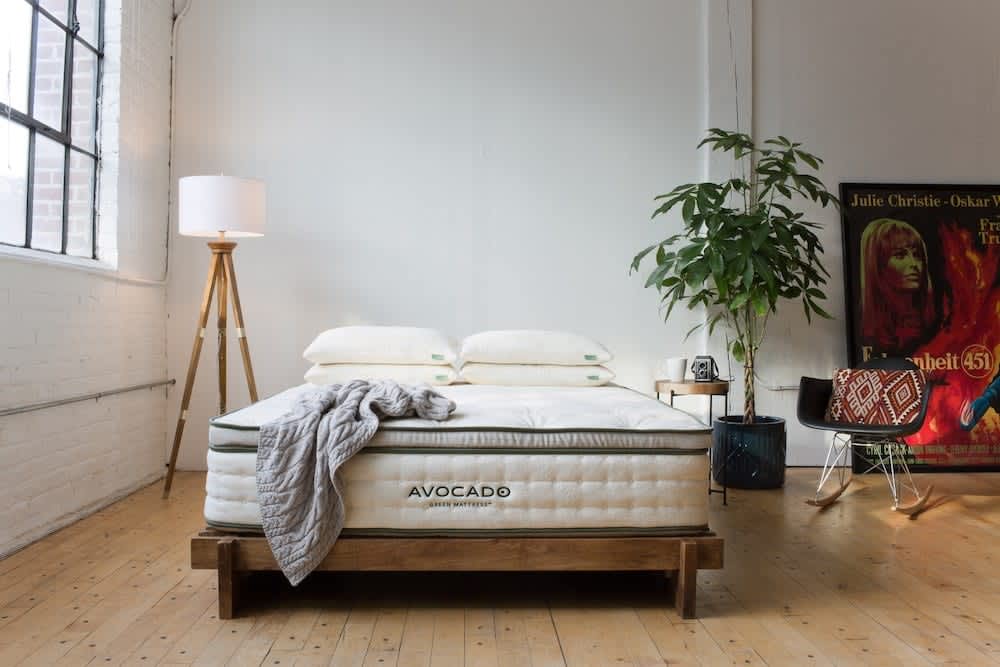
Available as a firmer standard model or a gentler Euro-top design, the Avocado Green maintains even support for most sleepers thanks to its responsive latex comfort layer and zoned coil system. All U.S. orders include a generous 365-night sleep trial.
Ideal forCouples
FirmnessMedium (5), Medium Firm (6), Firm (7)
FeelBouncy, responsive Latex
ValueGood Value
Pros
Features certified organic materials
Zoned coils offer targeted support with notable bounce
Virtually no off-gassing or smell after unboxing
Cons
Side sleepers under 130 pounds may not receive enough cushioning
Bounce from coils and latex may allow some motion transfer
Side Sleepers
Under 130 lbs
6.0/10
130-230 lbs
8.0/10
Above 230 lbs
8.0/10
Back Sleepers
Under 130 lbs
6.5/10
130-230 lbs
8.5/10
Above 230 lbs
8.5/10
Stomach Sleepers
Under 130 lbs
6.5/10
130-230 lbs
8.5/10
Above 230 lbs
8.5/10
The Avocado Green Mattress is the mainstay of Avocado’s mattress line, which is known for using primarily sustainable products. It includes GOTS-certified organic wool and cotton and GOLS-certified organic Dunlop latex in its comfortably supportive design. Nearly all of our testers across body types and sleep styles reported that the Avocado Green Mattress provided a good balance of conforming pressure relief and solid support.
Why We Like It
Underneath the breathable organic cotton cover, the comfort system includes a combination of organic wool and Dunlop latex that we found reduces pressure without hugging the body too closely. The moisture-wicking wool is designed to keep you cool and dry, and our temperature tests confirmed that the mattress surface doesn’t retain significant heat.
Coils are another important part of a hybrid mattress’ comfort system. The number, type, and arrangement can determine how well a mattress supports your body and regulates temperature. Sporting a support core that features up to 1,414 tempered steel coils, the Avocado Green impressed our testers with its stability and efficient airflow. The coils are arranged in five ergonomic zones with narrower coils in the edges and center of the bed for extra support. A final base layer of Dunlop latex supports the coils as they compress.
How Does It Feel?
Between the medium firm (6) pillow-top version and the standard firm (7) option, we found that the Avocado Green Mattress can support virtually any sleep position and body type. The pillow-top version particularly appealed to our side sleepers, while stomach sleepers preferred the firm option. Back sleepers generally enjoyed both versions equally.
Our motion isolation tests indicated that the springy surface would be excellent for both sex and frequent changes in sleep position while still isolating motion relatively well. Additionally, we found that the mattress produces minimal off-gassing odors, making it a good choice if you’re sensitive to the “new bed smell.”
The Avocado Green Mattress is GREENGUARD Gold certified for emission standards. Many of its materials also hold OEKO-TEX Standard 100 certification, verifying that they have been independently tested for a variety of harmful substances.
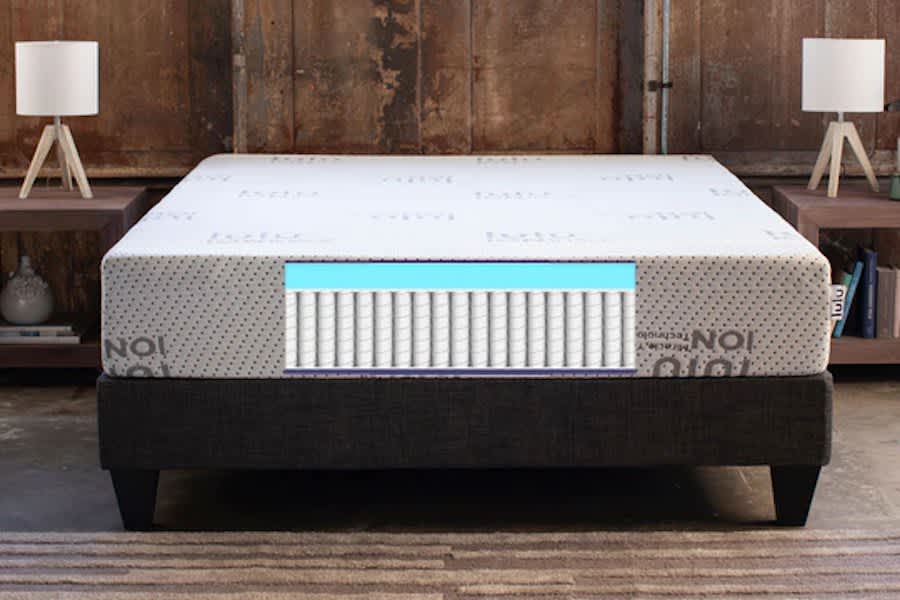
The Lulu Hybrid has a balanced medium firm (6) feel, sturdy perimeter, and a thick foam comfort layer to absorb motion — all important attributes for co-sleepers. Our team also enjoyed the hybrid’s cooling cover that captures and releases heat on contact, resulting in a surface that feels cool at all times.
Ideal forCouples
SizeBouncy, Supportive Surface
FeelBouncy, Supportive Surface
ValueFair Value
Pros
Memory foam hybrid design offers even contouring and sturdy support
Proprietary ION cover is engineered to dissipate heat and promote physical recovery
Pocketed coils have a reinforced perimeter to boost edge support
Cons
Lacks the thick cushioning typically preferred by side sleepers under 130 pounds
The hug of memory foam may restrict some movement on the mattress
Side Sleepers
Under 130 lbs
7.0/10
130-230 lbs
7.5/10
Above 230 lbs
6.0/10
Back Sleepers
Under 130 lbs
7.5/10
130-230 lbs
6.5/10
Above 230 lbs
5.5/10
Stomach Sleepers
Under 130 lbs
7.0/10
130-230 lbs
6.0/10
Above 230 lbs
5.0/10
If you and your partner are in the market for a new mattress, the Lulu Hybrid checks a lot of boxes for couples. The comfort layer is composed of memory foam that absorbs movement well, significantly reducing the amount of transfer you feel when your sleep partner moves in bed, and vice versa.
Why We Like It
Sturdy pocketed coils make up the support core. The coils are reinforced along the perimeter to stabilize the edges. This allows both of you to use the entire bed for sleep or sex, rather than feeling confined to the middle. A base layer of high-density polyfoam provides additional reinforcement.
How Does It Feel
A notable feature of the Lulu Hybrid is its cover made of proprietary ION fabric. This innovative material is designed to promote circulation and muscle recovery, allowing you to wake up each morning feeling well-rested. ION fabric also has heat-dissipating properties to maintain a cool, comfortable surface.
The Lulu Hybrid is considered medium firm (6). After testing the mattress, we’ve determined its supportive, moderately contouring design is best suited to side sleepers weighing more than 230 pounds, and back and stomach sleepers weighing at least 130 pounds.
One thing you can count on with innerspring mattresses is support. The amount of support will vary depending on the materials and thickness of the comfort layers, but innersprings are a good place to start if you need a certain amount of sturdiness and responsiveness from your mattress.
What Is an Innerspring Mattress?
An innerspring mattress is powered by a thick layer of metal coils that gives this bed type its characteristic bounce and sturdiness. The number of coils and their thickness impacts the feel, durability, and bounce of the mattress.
Modern innersprings typically use pocketed coils that are individually wrapped with fabric. This gives each coil an enhanced ability to compress independently of the ones around it. In some mattresses, the coils are arranged into zones with thicker coils around the perimeter or under heavier parts of the body like the midsection.
Above the coils, modern innerspring mattresses may have additional layers that influence the firmness level and performance, known as the comfort system. The materials in these layers can include polyfoam, memory foam, cotton, wool, or latex.
Types of Innerspring Coils
Innerspring mattresses can be constructed with different types of coils, which influences the bed’s performance and feel.
Coil Type
Description
Bonnell Coils
These hourglass-shaped coils have been used for decades in innerspring mattresses and are often found in lower-cost models. Spiral wires connect the coils, which can increase the likelihood of motion transfer and noise from the coils.
Offset Coils
At first glance, these coils can look like Bonnell coils, but they are squared on the top and bottom, giving them increased hinging action. Their structure can increase pressure relief and reduce motion transfer, but this usually comes at a higher cost.
Continuous Wire Coils
These coil systems are built from one metal wire that is shaped into rows of coils. With their straightforward design, continuous wire coils are sturdy and typically have a lower price-point. However, they generally cause more motion transfer and provide less tailored spinal support.
Pocketed Coils
In a pocketed coil system, each spring is wrapped in fabric, giving them more independent range of motion. This boosts their ability to adapt to the body and isolate motion. Their performance and durability make them popular in modern innerspring and hybrid mattresses, but they are usually more expensive than other types of coils.
Innersprings vs. Other Mattress Types
Compared to other mattress types, innerspring mattresses tend to provide more bounce, edge support, and temperature neutrality. Their contouring and pressure relief can vary based on their top layers, but innersprings typically do not provide the deep hug offered by many foam mattresses.
Like innersprings, hybrid mattresses are also built with a coil support core, so it can be hard to tell the difference between the two. Confusing matters, some hybrids are marketed as innersprings, and vice versa. What sets them apart is that hybrids generally have a more robust comfort system involving thicker layers above the coils, which often results in increased pressure relief and motion isolation.
Video: How Do the Big Mattress Types Compare?
Watch our video to learn more about which type of mattress is best for you.
Is an Innerspring Mattress Right for You?
Because they usually have a firmer feel with less contouring, innerspring mattresses often provide the right level of spinal support for back and stomach sleepers. The metal coils typically create a robust feel with significant responsiveness, while airflow through the coils helps keep the mattress from overheating, making innersprings a solid option for hot sleepers.
You should generally avoid an innerspring mattress if you want a soft feel or a mattress with deep contouring. An innerspring may not be a good fit if you prefer a bed with less bounce and minimal motion transfer.
Advantages
Drawbacks
Notable bounce that makes it easy to move on the mattress
Sturdy feel and solid edge support
Coils resist heat buildup
Often available at budget-friendly prices
Often lacks contouring needed for pressure relief
May not accommodate sharp pressure points for side sleepers
Bounce can cause motion transfer that bothers sleep partners
Some types of coils have limited durability
How to Choose an Innerspring Mattress
When choosing an innerspring mattress, it can be helpful to look at details like the type, number, and thickness of the coils. Other important considerations include pressure relief, overall comfort, and pricing.
Coil Gauge and Count
The coil count, or total number of coils, increases with the size of the mattress. While the total count can be informative, it is often more helpful to know about the type of coils and their gauge, or thickness.
Lower-gauge coils are thicker, generally more durable, and provide a firmer feel. Some innerspring mattresses combine coils of different gauges, such as lower-gauge coils around the perimeter or underneath the midsection.
Pressure Relief
Innerspring mattresses can deliver pressure relief, but they typically provide less contouring than memory foam or hybrid models. Among innerspring models, those with pocketed coils are best able to cushion and adapt to the body’s main pressure zones.
If you experience body pain or need deeper contouring, you may want to consider another type of mattress or look for an innerspring with a soft top layer made with a conforming material.
Comfort
What feels most comfortable is subjective, so you’ll want to make sure an innerspring mattress aligns with your preferences. For example, you’re most likely to feel comfortable on an innerspring if you prefer a firmer feel and some bounce, or if you sleep hot and need a bed with minimal heat retention.
Pricing
Innerspring mattresses can cost anywhere from less than $200 to more than $2,000 depending on the brand, size, materials, and features.
Traditional models with a basic, thinner coil system are often available at budget prices, while more robust and durable models with pocketed coils tend to cost more. Adding premium materials and luxury features has a corresponding boost to the sticker price.
Discover More Mattress Solutions
Take a look at some of our other mattress buying guides, where we offer more expert guidance to ensure you find the perfect fit for your sleep needs.
To find the best innerspring mattresses, our team researched and tested dozens of models using our detailed product testing methodology. We include input from team members who have varying comfort preferences, body weights, and preferred sleep positions. Our goal is to provide well-rounded and dependable recommendations for mattress shoppers with diverse needs and preferences.
Frequently Asked Questions
What is the best innerspring mattress?
The best innerspring mattress should have key characteristics like responsiveness, durability, edge support, and temperature neutrality. Most often, you’ll find these elements in an innerspring with pocketed coils. Depending on your sleep needs, the best innerspring mattress for you may have additional layers designed to enhance pressure relief and overall comfort.
Who should buy an innerspring mattress?
Innersprings are best for people who want a bouncy mattress with less contouring and sink, such as many stomach and back sleepers and people who sleep hot or need reliable edge support. People who prefer deep contouring and strong pressure relief generally should avoid innerspring mattresses.
How long does an innerspring mattress last?
The average innerspring mattress lasts about five to seven years. Lower-quality models with thin or cheaply made coils may not last as long. Sturdier models with thick pocketed coils may hold up for longer than seven years. The total lifespan also depends on how much pressure you put on your mattress and how well you maintain it.
Are innerspring mattresses good for side sleepers?
Innerspring mattresses can work for some side sleepers, but they usually aren’t the best option for this sleeping position. Many innersprings don’t provide the cushioning that side sleepers need for their shoulders and hips. That said, some innersprings with pocketed coils and contouring comfort layers can deliver sufficient pressure relief to side sleepers.
Are innerspring mattresses good for back pain?
Innerspring mattresses can be beneficial in minimizing back pain for some people, such as back and stomach sleepers. People who sleep in these positions can develop lower back pain if their midsection sinks too deeply into the bed. The firmness and support of an innerspring can prevent this sinkage and help maintain healthy spinal posture that limits back pain.
Do innerspring mattresses need a box spring?
Traditional innerspring mattresses are designed to be placed on a box spring, but using a box spring is either optional or not recommended for modern models with pocketed coils. If the mattress is compatible, a box spring can add stability, height, and firmness. It may also contribute to greater long-term durability.
We suggest checking with the manufacturer of your innerspring mattress to see whether a box spring is recommended. The mattress warranty will typically specify which types of bed bases are acceptable.
David is a Certified Sleep Science Coach with a lifelong passion for well-being and health optimization. His interest in sleep developed with the arrival of his son, when sleep suddenly became a precious commodity. Since then, David has researched everything from bedtime routines to mattress toppers in his quest for a great night’s sleep.