There are many factors to consider when shopping for the best bedding. Fabric type, color, performance, and comfort each play an important role in determining what kind of bedding to purchase. Many manufacturers offer bundled options to provide shoppers with products that perform well together, and some bundles also offer considerable savings.
We’ll highlight our team’s top picks and cover some of the most important factors when purchasing new bedding — from cost to washing instructions and warranties. We’ll also go over different types of bedding and answer some of the most frequently asked questions so that you can determine the best type of bedding for your needs.
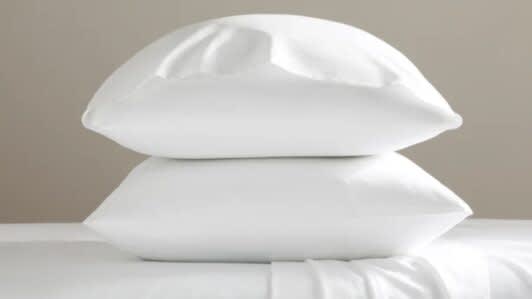
The Brooklinen Classic Move-In Bundle includes all the pieces you need for a full bedroom setup. Each bundle includes a fitted sheet, flat sheet, four pillowcases, a duvet cover, a comforter, and two pillows. All pieces are made from high-quality materials.
Material100% long-staple cotton
Size OptionsTwin, Twin XL, Full, Queen, King, California King
Three comforter weights and two fills to choose between
Long-staple cotton feels crisp and breathable
Pillows available in three fill and loft options
Cons
Expensive pricing compared to other bedding bundles
Not ideal for those who want smooth, silky bedding
The included sheets are Brooklinen’s Classic Percale sheets, which are made from 100% long-staple cotton. The long staple length gives the fabric a smooth, soft feel that we found holds up well to use and abrasion. Air flows easily through the sheets, making this set an excellent option for hot sleepers and people who prefer crisp-feeling sheets.
The duvet cover is made from the same breathable fabric as the sheets, and it has large buttons for easy fastening around your comforter or duvet insert. The sheet set and duvet cover are available in five classic colors and patterns that have a matte finish.
Shoppers can further customize their bundle when choosing pillows and a comforter. You can opt for pillows with down, down alternative, or memory foam fills. The memory foam pillow has a mid-range firmness, while the down and down alternative models are available in three different firmness levels. The comforter comes in three weights and two fills. The down or down alternative comforter comes in lightweight, all-season, and ultra-warm options. Brooklinen backs this bundle with a 365-day sleep trial and a one-year warranty. Shipping is free for shoppers in the U.S.
Our testing team found the Brooklinen Classic Move-In Bundle was an excellent choice for sleepers who prefer breathable and customizable bedding. The material is easy to wash at home and holds up well to wear and tear without sacrificing performance or style.
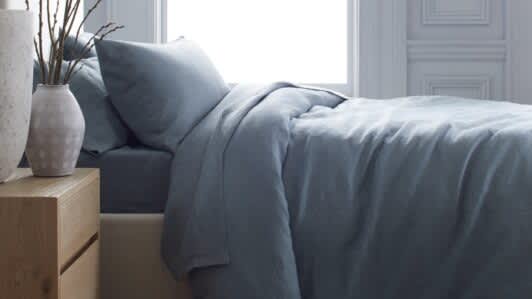
Linen fabric is well known for its breathable and durable nature, though both features are typically accompanied by a hefty price tag. The Quince European Linen Duvet Deluxe Bundle offers shoppers high-quality linen bedding at an affordable price-point.
Material100% European linen
Size OptionsTwin, Full, Queen, King, California King
Bundle IncludesDuvet cover, fitted sheet, flat sheet, pillowcases, and shams
Pros
Breathable European linen fabric
Available in 12 colors
Priced competitively
Cons
Some sleepers find linen too rough on the skin
Patterned prints cost more than solid colors
This bundle’s linen fabric is crafted from 100% Belgian flax. The fabric has a weight of 150 grams per square meter (GSM), giving the sheets a mid-range density that makes it suitable for all seasons. The duvet cover has inner corner ties and a button closure to keep your insert securely attached. Shoppers can choose between 11 different colors.
Our testing team gave this set high marks across the board and found that the sheets and cover performed especially well during durability and comfort testing. Linen bedding can be tricky to wash, but you can launder this set in your home machine using low-temperature settings. The fabric is designed to get softer with each wash while holding up to wear and tear.
Quince offers free shipping and 365-day returns and exchanges to shoppers in the U.S.
Finding bedding that’s both durable and soft can be a challenge, but we noticed the Quince European Linen Duvet Deluxe Bundle checks both boxes. This set offers sleepers the luxe, lived-in look that linen is known for at a below-average cost.
The Bestsellers Bedding Bundle showcases some of Saatva's most luxurious offerings, including the Organic Sateen Sheet Set and Saatva Latex Pillow. An extensive size selection, easy care instructions, and a generous pocket depth for the fitted sheet add to the appeal of this crowd-pleasing collection.
Organic, sateen-woven cotton is light, breathable, and silky-smooth
Set includes two durable, adjustable latex pillows
16-inch pocket depth should accommodate most mattresses made today
Cons
Limited color selection
Expensive sticker price may be a deal-breaker for budget shoppers
Saatva's reputation for luxurious sleep products extends far beyond its mattress line. The Bestsellers Bedding Bundle delivers some of the brand's most popular sleep accessories in a single collection. Although the price-point may be too steep for some, each item in this set is crafted with the utmost quality and should hold up well for years to come.
The Saatva Organic Sateen Sheet Set consists of a flat sheet, fitted sheet, and one to two pillowcases depending on which size you choose. Each component is made from long-staple cotton, a material prized for its natural softness and longevity. A certification from the Global Organic Textile Standard also ensures the cotton is sustainably grown and harvested. With a pocket depth of 16 inches, the fitted sheet is compatible with the vast majority of mattresses sold today.
Your bundle also includes two Saatva Latex Pillows. These pillows are adjustable, allowing you to remove the insert to change the firmness and loft. We also like this pillow for its gentle contour and excellent neck and head support. A breathable organic cotton cover adds to the pillow's superior temperature control.
Lastly, the Saatva Signature Mattress Pad contains down alternative fibers to add extra cushioning to your sleep surface. The shell is made from crisp cotton percale, and a food-grade polyurethane moisture barrier protects your mattress from sweat and other liquids. The elastic skirt will fit any mattress up to 17 inches tall.
Saatva provides free ground shipping for all orders. Your purchase includes a 45-night sleep trial and a 1-year warranty.
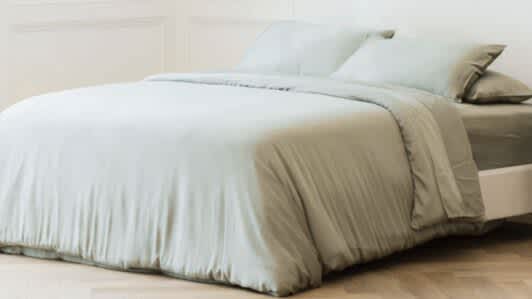
Cozy Earth’s Classic Bedding Bundle consists of viscose from bamboo fabric that’s designed to feel cooler than traditional bedding. The bundle includes a fitted sheet, flat sheet, duvet cover, and four pillow cases. Each piece is made from the same silk-like material.
Material100% viscose derived from bamboo
Size OptionsTwin, Twin XL, Full, Queen, King, Cal King, Split King
10-year warranty that covers pilling and discoloration
Cons
Not optimal if you prefer bedding with a crisp hand-feel
Some patterns cost more than others
Each piece consists of a sateen weave that gives the fabric a subtle sheen and elegant drape. You can choose between five different neutral colors. The set is available in six sizes, including split king. Those who opt for split king receive two twin XL fitted sheets to accommodate both mattresses.
During our product testing, this bundle scored particularly well with hot sleepers. The fabric has a cool-to-the-touch feel and allows air to flow freely through it, making it exceptionally breathable.
This bedding is also highly durable and easy to wash at home. Though our testers found that the fabric holds up well to regular use, Cozy Earth also offers a 10-year warranty against pilling, shredding, and discoloration for each piece.
Sleepers have up to 100 nights to see if the bedding is a good fit for them. Those in the U.S. qualify for free shipping and returns.
Hot sleepers will benefit from the bedding’s cool feel and moisture-wicking qualities. Each piece of the bundle feels as luxe as it looks, and Cozy Earth’s 10-year warranty ensures shoppers that they can enjoy the bedding for many years.
The SlumberCloud Performance Cotton Sheet Set is ideal if you're seeking exceptionally soft bedding. A blend of cotton and bamboo-derived viscose in a silky sateen weave gives each item a gentle, skin-soothing feel.
MaterialCotton and viscose derived from bamboo
Size OptionsTwin, Twin XL, Full, Queen, King, California King
Bundle Includes1 flat sheet, 1 fitted sheet, 2 pillowcases (optional duvet cover and 2 extra pillowcases)
Pros
Cotton-viscose blend excels at breathability and moisture control
Silky-smooth fabric is gentle on the skin
Available in 4-piece and 7-piece bundles
Cons
Limited pocket depth, especially for smaller sizes
Expensive pricing may be a dealbreaker for budget shoppers
Most bedding is advertised as "soft" to some degree, but SlumberCloud's Performance Cotton Sheet Set feels luxuriously gentle and silky compared to much of the competition. Natural cotton and viscose derived from bamboo combine to create a fabric blend that's easy on the skin, and a sateen weave gives each item a buttery-smooth finish. Four neutral colors are available, all of which accentuate the material's attractive sheen.
You can also choose from two bundle options. The standard set includes a flat sheet, fitted sheet, and one to two pillowcases depending on the size. Upgrade to a seven-piece set and you'll receive two additional pillowcases and a matching duvet cover. The fitted sheet's pocket depth ranges from 12 inches for smaller sizes to 16 inches for larger sizes, so keep this in mind when choosing your set and measure your mattress height beforehand to ensure a proper fit.
All of the components are fully machine-washable for quick and easy care. Sateen-woven fabric is wrinkle-resistant, so the sheets and pillowcases should look smooth and presentable fresh out of the dryer. Some pilling may occur over time with continuous use and care, but we expect this sheet set to perform for at least three years.
Although the sticker price is on the expensive side, this set checks all the boxes if soft bedding is your top priority. Order through Sleep Doctor and you'll receive free ground delivery with your purchase, along with a 60-night trial and return period.
How We Test
We use a combination of in-lab testing trials and user data to decide what bedding is worth your money. In our Seattle sleep lab, we examine sheets for their fabric, thread count, and weave, feeling each one in person and researching fabric production to learn how it was made. We also try out every option, lying in bed with a full sheet set to determine comfort, breathability, and overall quality. We also look to survey results and verified reviews to learn how bedding holds up over time.
How Do You Pick the Best Bedding?
Picking the best bedding starts with identifying your personal needs. Once you know what you’re looking for, it’s much easier to narrow your options. We’ll explore different types of bedding as well as how to find the best options that suit your preferences.
What Is Bedding?
Bedding is a broad category that includes multiple sleep products. These include sheets, comforters, pillows, duvet covers, and other accessories that complement your bed or mattress.
What to Look for in Quality Bedding
When comparing bedding options, several indicators of a product’s overall quality include materials, durability, warranties, and third-party certifications.
Is Quality Bedding Expensive?
Quality bedding doesn’t have to be expensive, though top-notch materials and excellent craftsmanship often cost more to manufacture than options made from lesser-quality materials.
Types of Bedding
We’ll discuss the different types of bedding available so that you know exactly what to look for when shopping for your own needs. We’ll also cover what each product is used for as well as commonly found materials.
Sheets
Sheets cover your mattress to provide a comfortable barrier between your body and the mattress’ top layer. Most sheet sets include a fitted sheet that attaches to your mattress with elastic at the corners. The corner pockets have different depths to accommodate multiple mattress profiles. A correctly placed fitted sheet wraps your mattress securely and stays in place even when sleepers switch positions.
Most sleepers use a flat sheet, or top sheet, above a fitted sheet that acts as a barrier between their skin and comforter. A top sheet can increase comfort and decrease how often you have to wash your comforter. Some people forgo a top sheet in favor of a duvet cover, which also protects your comforter.
Sheets are made from many different types of fabric, though cotton still remains the most popular choice. Cotton varies widely in cost depending on the type, thread count, and weave. Shoppers can opt for affordable fabrics like microfiber or high-end options like silk. Linen, cotton, and lyocell are plant-based fabrics that feel soft and breathable.
Your style, ideal temperature, and budget are all important factors to consider when choosing sheets.
As a hot sleeper, I look for natural fibers like cotton, bamboo, or linen because they’re inherently breathable. I also check to see if the fabric’s weave is designed for airflow or heat retention.
Pillows
High-quality pillows enhance comfort and support. Pillows come in a variety of shapes and fill options. It’s important to find a pillow with a loft, or height, designed to support your neck and keep the cervical spine in alignment while you sleep. The best pillow for you largely depends on your primary sleep position.
Some of the most popular fill options include down and down alternatives like polyfill. Foam and latex pillows are also widely used, and they work especially well for people with sensitive pressure points. In addition to traditional pillows, you also can find models designed specifically for pregnancy, CPAP masks, and supporting particular parts of the body.
Comforters
A comforter is a lofty blanket that has a shell and insulating fill. Comforters are intended to be used without a protective cover. As a result, they’re typically easier to wash than duvet inserts. Comforters come in a range of weight options. Some are meant to be used in warmer weather, while others retain heat for colder climates.
Comforter shells often consist of cotton, polyester, linen, lyocell, or microfiber. A comforter’s fill is generally airy and plush, and the actual fill material usually consists of down, down alternatives, or wool.
Since they’re most often used without a duvet cover, you can often find comforters in decorative designs and bold colors. When deciding between a comforter or duvet, consider whether you prefer using a top sheet or cover when sleeping.
Duvets
Unlike comforters, duvets are generally used in tandem with a cover. Duvet covers protect the insert and extend time between washes. Duvet inserts have a fabric shell that is typically made from a material like cotton, linen, or polyester.
Since they’re meant to be washed less often than comforters, duvet inserts may have fills made from down, wool, or silk, which typically require special care when washing. Duvet inserts aren’t usually available in patterns or designs because the shell is placed inside the duvet cover. However, duvet covers come in many different materials and colors, allowing you to change looks easily.
Quilts and Coverlets
Quilts and coverlets provide extra warmth during colder months when used as additional layers. They also provide light insulation when used as a sole blanket. Sleepers can use both options as decorative or functional pieces.
Coverlets most often consist of a single layer, while quilts have three. Quilts feature a cover, batting, and backing. These blankets get their name from the quilted stitches that keep the batting in place. Both coverlets and quilts come in trendy and classic designs that can easily enhance your bedroom’s look.
Blankets
Blanket is a general term for insulating bedding covers that add warmth, protection, and style to your bedroom. Comforters, duvets, coverlets, throw blankets, and quilts are all different types of blankets. You can also find specialty blankets, like weighted and heated options. Shoppers can purchase blankets with virtually any style or function imaginable.
Weighted and Heated Blankets
Weighted blankets have an outer shell and a fill that adds weight to the blanket. Most often, that weight comes from small beads made from glass or plastic. Some people find the hugging sensation weighted blankets provide help reduce anxiety. Generally, sleepers should use a weighted blanket that’s about 10% of their overall body weight.
Heated blankets have an electrical component that warms up to provide increased insulation. Some are meant for use between your sheets and mattress, while others are used like a traditional blanket. Heating mechanisms vary, though most have settings that let you adjust the temperature as needed.
Mattress Accessories
Mattress accessories like toppers, protectors, and skirts are also types of bedding. Mattress toppers are often made from foam, wool, or latex. They are placed on top of a mattress to increase comfort and support and extend the bed’s lifespan. You can purchase mattress toppers in firmness levels ranging from soft (3) to firm (7).
Mattress protectors either secure around your mattress like a fitted sheet or encase it completely. Both styles offer protection against wear and tear as well as dust and moisture. Bed skirts are decorative pieces of fabric that hide your box spring or bed frame. Many companies offer skirts that match their other bedding.
There are lots of organic and sustainable claims out there in the bedding world, but they’re not all trustworthy. If you want eco-friendly sheets, look for third-party certifications and choose brands with transparent sourcing and manufacturing policies.
How to Find the Best Bedding
To find the best bedding, consider a product’s fabric, construction, comfort, and durability. Next, decide whether the style of the piece you’ve chosen matches your own. There is no one-size-fits-all answer to buying the best bedding. Your individual tastes and sleep preferences will determine which products are best for your needs. We’ll provide detailed information on what to consider when deciding on what bedding to purchase.
Type of Fabric and Material
Fabric is one the most important factors to consider when purchasing bedding. Examine your own needs, then find a material to match. Those who want airy, breathable bedding should opt for plant fibers like cotton, linen, lyocell, or viscose from bamboo. Cooling-specific fibers and technology like phase change material can also help keep sleepers comfortable.
Those seeking warmer options should look to wool, brushed flannel, or plant-based fibers with dense weaves. All fabrics range in quality. Details like thread count, material origins, sustainability efforts, and manufacturer locations can all offer insight about a product’s quality.
Construction and Feel
Once you’ve settled on a type of material, you can choose the construction style you prefer. Cotton, for example, can be woven into several different kinds of fabrics. Percale sheets use a one-over-one-under weave that feels crisp and airy, while sateen sheets use one thread under and several over, which results in a silky fabric with lots of drape.
Other materials like linen and wool can also be made into fabrics with different characteristics and appearances. The density of a fabric can change its overall feel. Threads woven closely together create a tough, durable material that may not feel as soft. Conversely, loosely woven fabrics are prone to holes and pilling.
Comfort and Breathability
Plant-based fibers like linen, cotton, and lyocell tend to be highly breathable, especially when woven to allow for plenty of airflow. People who sleep hot and those in warm climates tend to favor cool bedding that doesn’t trap moisture.
Those looking for warmer options can choose brushed cotton, flannel, or microfiber, which have a soft feel. Personal preference is important when determining comfort, and shoppers should remember that their wants and needs may change throughout the seasons. Having multiple options can allow sleepers to switch bedding as needed.
Durability and Care
Bedding lifespans vary depending on how you care for the fabric as well as how durable it is. When choosing your bedding, make sure that you can adhere to the ideal care instructions and consider how often you should wash your sheets.
Washing your bedding incorrectly may ruin or damage the material. If you know you need an option that’s simple to wash, look for bedding made of material like cotton or down alternatives. Long-staple cotton and tight, durable weaves can also ensure that you’re able to use your bedding for many years. Some manufacturers provide warranties that cover pilling or defects.
Does It Fit Your Style?
Your personal style doesn’t have to be an afterthought when it comes to choosing bedding. There are a variety of options available that allow most shoppers to find bedding that suits their tastes, even if they have specific fabric or construction requirements.
In addition to physical appearance, check to see if a brand’s goals align with your own. For example, sustainably minded shoppers and those who support ethical manufacturing standards can opt to purchase bedding from a company that incorporates ethically sourced as well as organic and natural materials in their products.
How Much Does the Best Bedding Cost?
Bedding price-points vary widely depending on fabric, fiber, construction, and production practices. Typically, the longer it takes to grow, harvest, manufacture, and ship a product, the more expensive it will be. Labor regulations are different across the world and can also affect overall cost.
With so many choices on the market today, most sleepers should be able to find a complete bedding setup within their price range. Shopping sales or purchasing from direct-to-consumer brands can also help you find extra savings.
Garen is a health and lifestyle content creator. She realized the importance of sleep when her children made getting a good night's rest more challenging. Garen is always learning something new about the wide world of sleep and sleep products. Married with two girls, ages 7 and 11, she is a book nerd and a lover of pop music, travel, and the Pacific Northwest.