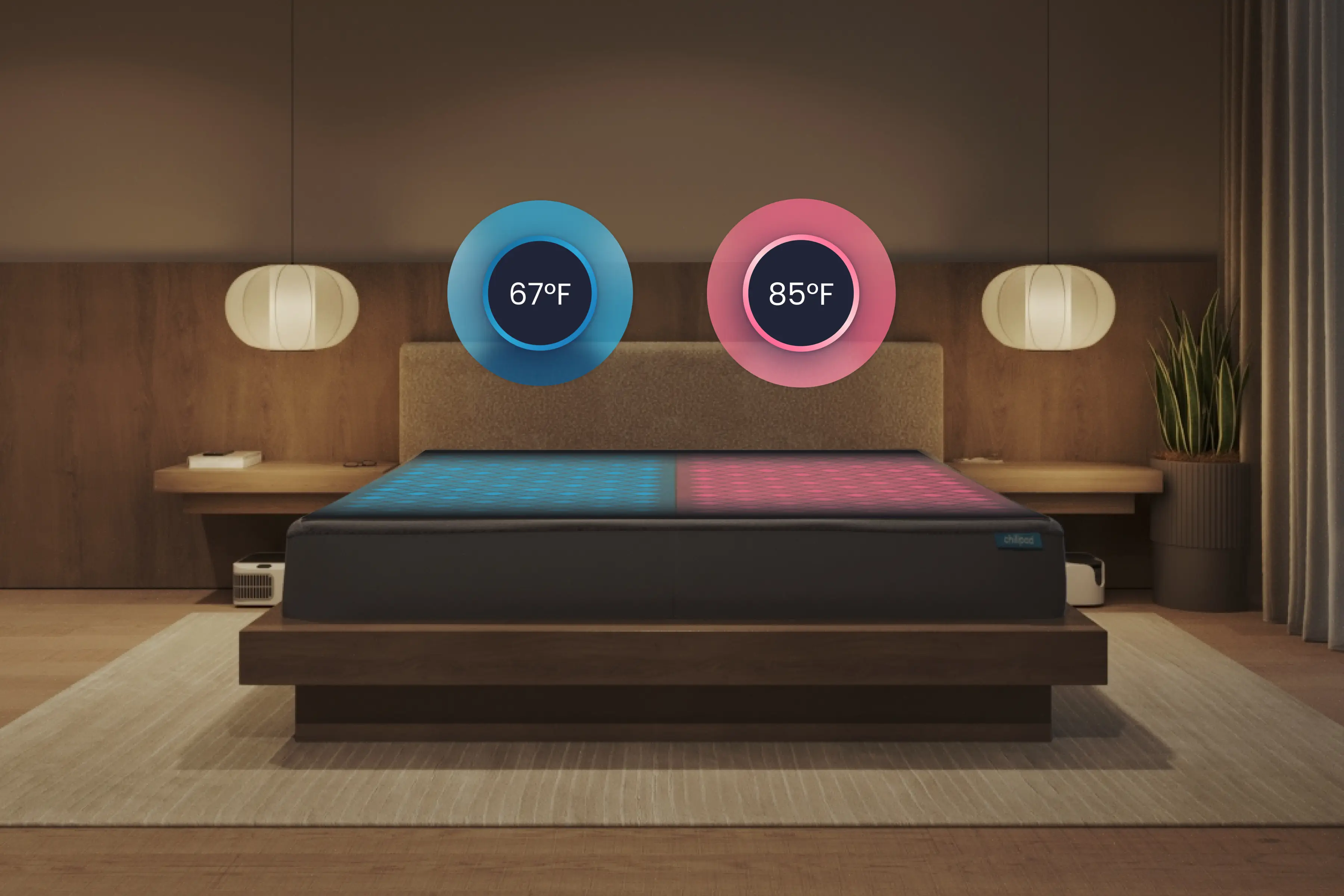
Types of Bed Cooling Systems
There are several types of bed cooling systems, differentiated by the method of cooling. These are the four most common options on the market.
Water-Based Bed Cooling Systems
Water-based bed cooling systems typically heat or cool water in a hub unit, then pump it through tubing in a mattress cover, allowing for precise temperature control and a wide range of cooling and heating.
Air-Based Bed Cooling Systems
Air-based cooling systems combine fans and hosing to force air toward the sleep surface to adjust the temperature. They can improve airflow and evaporative cooling, but they generally provide less dramatic temperature changes than water-based systems.
Thermoelectric Systems
Thermoelectric cooling uses electricity to move heat away from a surface. One side becomes cool and the other side warm, depending on the direction of the electrical current, allowing for both cooling and heating options.
Hybrid Systems
As the name suggests, hybrid bed cooling systems pair thermoelectric or other active cooling components with heat-dissipating or phase change materials designed to enhance cooling.
How to Choose the Best Bed Cooling System
To choose the best bed cooling system for you, there are several key traits about each system to match your needs and preferences.
Budget
Bed cooling systems range in price from a few hundred to several thousand dollars. Those at a higher price point often come with additional features, like sleep tracking. If you’re on a tight budget and just looking for cooling, lower priced options often suffice, but if you’re prepared to splurge, higher priced options may offer more advanced capabilities.
System Type
Water-based, air-based, thermoelectric, and hybrid cooling systems each offer distinct pros and cons that might shape your choice, particularly in terms of cooling power, noise, upkeep, and cost. (See above for more details on each.)
Temperature Control
Cooling systems vary in their temperature ranges, and many also offer heating options. However, if you tend to sleep exceptionally hot or cold, you might prefer a model with a wider temperature spectrum.
Some models are also programmable or capable of adjusting automatically based on your body temperature, which might be helpful if you’re prone to uncomfortable overnight temperature fluctuations.
Features
Some bed cooling systems have added features that may appeal to shoppers, such as warming you awake instead of a traditional alarm, sleep and health data, controls via app or remote, and more. These can add value, but they also frequently increase the price.
Noise Level
Many bed cooling systems are whisper quiet, but some produce a slight noise. Sleepers especially sensitive to sounds may favor the quietest options, but those who prefer a little white noise may appreciate more audible options.
Other Tips to Help You Sleep Cooler
For hot sleepers, maintaining a more neutral temperature is often critical to improving sleep. Temperature can affect sleep stages and duration. Skin temperature, in particular, is linked with sleep and vigilance regulation. Additionally, on hotter days, people tend to get less sleep.
When you’re too hot to sleep, these tips can help.
-
Consider a new mattress or mattress topper: A cooling mattress or cooling mattress topper may help limit heat retention close to your body.
-
Look into cooling bedding: Some types of fabric retain more warmth than others. Cooling sheets or a cooling comforter can increase airflow, enhance moisture wicking, and feel cool to the touch.
-
Get a fan: Using a cooling fan overnight can aid sweat evaporation.
-
Keep your bedroom cool: If possible, lower your thermostat at night. While one study found that 68 to 77 degrees Fahrenheit (20 to 25 degrees Celsius) is optimal for sleep, you may try a lower temperature if this range still feels too warm.
-
Limit heavy meals, alcohol, and caffeine before bed: Consuming heavy meals, alcohol, or caffeine before bed can increase your body or skin temperature. If you frequently overheat at night, try to avoid these in the hours before sleep.
-
Seek treatment if experiencing menopause symptoms: If you overheat as a result of menopause-related hot flashes, therapeutic approaches can help improve sleep quality. Talk to your doctor about the best options for you.
References
- https://www.sciencedirect.com/science/article/abs/pii/S0378778819314100
- https://pubmed.ncbi.nlm.nih.gov/15575798/
- https://pubmed.ncbi.nlm.nih.gov/22048563/
- https://pubmed.ncbi.nlm.nih.gov/38795699/
- https://pubmed.ncbi.nlm.nih.gov/38501515/
- https://pubmed.ncbi.nlm.nih.gov/38580427/
- https://pubmed.ncbi.nlm.nih.gov/37474050/
- https://pubmed.ncbi.nlm.nih.gov/10627057/
- https://pubmed.ncbi.nlm.nih.gov/11404278/
-
https://pubmed.ncbi.nlm.nih.gov/24682207/