On This Page
Best CPAP Wipes of 2026
Our Top Picks
-
Best Overall
Purdoux CPAP Mask Wipes -
Best for Travel
Jayour Travel CPAP Mask Wipe Towelettes -
Best for Sensitive Skin
Purdoux Cotton CPAP Mask Wet Wipes
Best Overall

Purdoux CPAP Scented Wipes are pre-moistened, cotton-based cleaning wipes that are free of alcohol and solvents and have a light grapefruit and lemon scent.
Pros & Cons
Pros
- Alcohol- and solvent-free formula
- Light, fresh scent
- Stored in a canister for quick, convenient cleaning
Cons
- Single-use only
- Scent may be strong for some users
- Not a substitute for deep cleaning
Full Details
Best for Travel
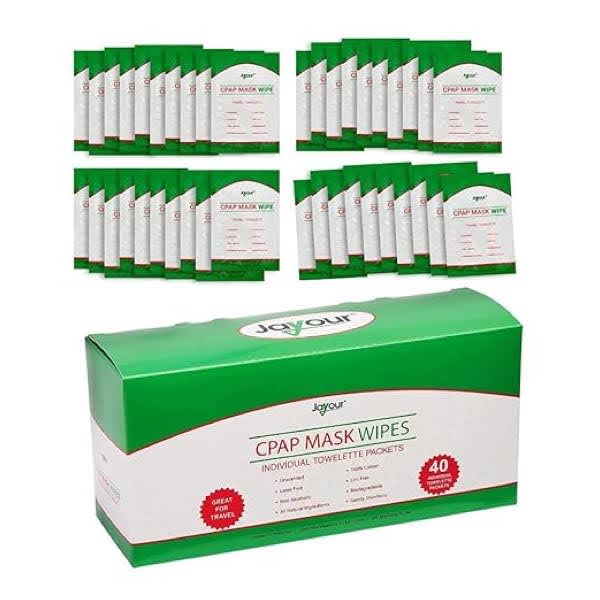
Jayour Travel CPAP Mask Wipe Towelettes are made with 100% lint-free cotton and feature natural ingredients. They come conveniently wrapped in individual packages, making them ideal for overnight stays or short vacations.
Pros & Cons
Pros
- Made with biodegradable cotton and natural ingredients
- Individual wrappers help wipes stay fresh
- Convenient format for traveling
Cons
- Some users find the wrappers difficult to open
- Sustainable shoppers may object to single-use packaging
- Price point is slightly above average
Full Details
Best for Sensitive Skin
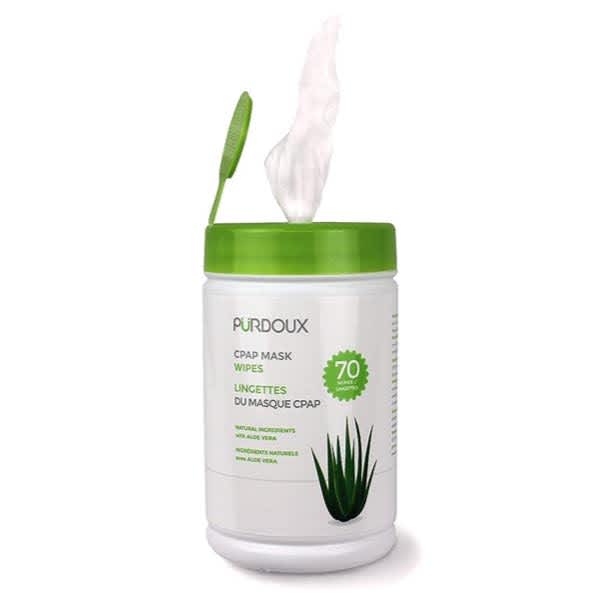
If have sensitive skin are are looking for a go-to wipe for everyday use, Purdoux Cotton CPAP Mask Wet Wipes are a strong choice. These unscented wipes are infused with aloe vera, which is often touted for its moisturizing properties.
Pros & Cons
Pros
- Made with 100% cotton
- Economical price point
- Minimalist packaging
Cons
- Not individually packaged
- Towels may dry out if the lid isn’t closed properly
- Natural cleansers may not sanitize as thoroughly
Full Details
How We Make Our Picks
Choosing a wipe for your CPAP machine isn't as easy as you might think. Certain cleaning enzymes can break down mask materials and others may irritate your skin. Our team considers fabrics and cleaning agents when making recommendations. We also study verified reviews to learn how well specific CPAP wipes work in real-life settings.
Are CPAP Wipes Worth It?
Many people find that CPAP wipes are a convenient way to keep their CPAP mask clean during the week in addition to weekly washings with soap and water.
Unlike baby wipes or general-purpose wipes, CPAP wipes are designed to not leave behind any residue that could harm the mask or your skin, or pose safety issues if inhaled. Certain CPAP wipes may also have additional features, such as moisturizing ingredients, that are specially formulated for use around the facial area.
CPAP wipes are helpful for everyday cleaning but they’re not a substitute for washing your mask and accessories on a weekly basis. Use wipes as an addition to your cleaning routine rather than a substitution for a deep clean.
Are There Different Types of CPAP Wipes?
CPAP wipes fall into several broad categories, including unscented wipes, scented wipes, alcohol-free wipes, and sanitizing wipes. Some wipes may combine multiple features, such as being unscented and alcohol-free.
| Unscented Wipes | Unscented wipes are designed to leave masks free of odors after cleaning. If you have allergies or if you’re sensitive to smells, this may be an important selling point. |
| Scented Wipes | Scented wipes impart a pleasant odor, such as a citrus-based scent, that is purposely mild and designed to not interfere with breathing. The scent may come from natural or artificial ingredients. |
| Alcohol-Free Wipes | Alcohol is an efficient sanitizer. However, alcohol is also known to dry out skin, and it may degrade materials in the mask or mask cushion. CPAP wipe manufacturers often avoid using alcohol for these reasons. |
| Sanitizing Wipes | Sanitizing wipes contain chemicals formulated to eliminate bacteria. While the terms sanitizing and disinfecting are sometimes conflated, harsher disinfectants like bleach and alcohol can irritate skin and airways, and repeated use may damage plastic. Instead, CPAP wipes generally use milder agents, such as plant-based substances, that are better suited for skin contact. Sanitizing wipes do not replace the need for regularly washing CPAP accessories with soap and water. |
Since CPAP wipes clean the mask cushion that touches your skin, you’ll want to make sure that there aren’t any ingredients that may cause you irritation, especially if you’re prone to outbreaks or have sensitive skin.
What Should You Consider When Buying CPAP Cleaning Wipes?
There are several important factors to keep in mind when selecting CPAP cleaning wipes. Depending on your individual priorities, you may value certain factors over others.
| Residue | To prevent damaging the delicate materials of a CPAP mask and cushions, it’s important that wipes don't leave residue behind. Be sure to check whether the wipes’ ingredients are compatible with your mask and cushion material, and stop using the wipes if they create residue that irritates your skin. |
| Scent | While some find them pleasant, scented wipes can leave residual scent on the mask, which may be a drawback for people with allergies or those with smell sensitivities. |
| Price | Though the cost per wipe is small, it can add up for people who use CPAP wipes every day. Companies may offer bulk or subscription options that can lower the cost per wipe. You’ll also need to decide if you’re willing to pay more for additional features, such as plant-based ingredients or individual wrapping. |
| Disposal | While some wipes claim to be flushable, we don’t recommend flushing wipes down the toilet, particularly if you have a sensitive plumbing system, a septic system, or if you need to dispose of multiple wipes at a time. Wipes that aren’t compostable should go in the garbage, preferably a sealed garbage can to contain any potential germs. |
| Eco-Friendliness | Since CPAP wipes are designed to be used once and thrown away, sustainably minded shoppers may prefer to just use soap and water, or opt for biodegradable wipes made with natural materials that won’t contribute to landfill waste. Packaging is also something to consider, as individually wrapped wipes inevitably produce more waste than those that come in larger tubs. |
How Often Should CPAP Masks Be Cleaned?
To keep your device running smoothly and ensure a sanitary environment, you should wipe down your CPAP mask and cushions every day. At least once a week, you should also disassemble the mask and thoroughly clean all the parts with soap and water or a diluted vinegar solution.
Some masks, such as those containing memory foam cushions, have specific cleaning requirements, so refer to your mask’s manual for instructions specific to your model.
Other CPAP components, such as tubing and humidifier water chambers, also need to be cleaned regularly. You may wish to remove visible grime using a CPAP wipe and then finish washing with soap and water.
Frequently Asked Questions
Do CPAP wipes kill bacteria?
How much do CPAP wipes cost?
What are CPAP wipes made of?
Can you use baby wipes to clean a CPAP mask?
References
- https://pubmed.ncbi.nlm.nih.gov/32239970/
- https://www.merckmanuals.com/home/infections/biology-of-infectious-disease/prevention-of-infection
- https://pubmed.ncbi.nlm.nih.gov/32403261/
- https://pubmed.ncbi.nlm.nih.gov/31452873/
- https://www.epa.gov/coronavirus-and-disinfectants/whats-difference-between-products-disinfect-sanitize-and-clean