On This Page
ResMed AirSense 10 vs. 11

Our editorial process includes extensive measures to verify accuracy, provide clarity on complex topics, and present factual information. Read more
At a Glance
| AirSense 10 | AirSense 11 | |
| Best For |
Budget-conscious shoppers who don’t necessarily need the latest tech |
CPAP users who want a sleek design and the latest tech, including a touch screen and voice-guided set-up help |
| Price |
$960 |
$1,044 |
| Available From |
Why CPAP? And How to Choose One
CPAP therapy is the most effective treatment for sleep apnea, reducing related symptoms like snoring and daytime tiredness, as well as lowering a person's risk of a variety of health conditions and even car crashes. To choose the best CPAP machine for you, consider your budget, sleep apnea severity, familiarity with technology, and travel frequency. Your doctor or sleep specialist should also weigh in on the features you most need.
Don’t Just Test Your Sleep. Understand It.
Measure key sleep metrics and review your results with a licensed sleep-care provider. Discuss sleep issues and options to make restless nights a thing of the past.


Overview: ResMed AirSense 10 vs. 11
ResMed released the AirSense 10 in August of 2014, and it's been a popular CPAP device ever since. While the AirSense 10 Elite is a fixed CPAP model, the AirSense 10 AutoSet offers auto-CPAP capabilities, which means it can automatically adjust the air pressure released to fit a sleeper's needs throughout the night.
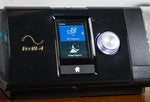
Also, the AirSense 10 AutoSet for Her was the first PAP device to offer specialized therapy settings designed to treat sleep apnea in women, based on known, sex-related breathing patterns. All AirSense 10 devices feature LCD screens with dial-operated controls.
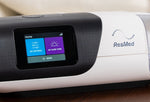
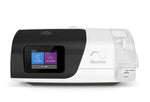
In August 2021, ResMed announced the AirSense 11, the newest models in the AirSense CPAP line. Like the AirSense 10, the AirSense 11 is available in both fixed and auto-CPAP versions. The AirSense 11 looks very different from the AirSense 10, featuring a sleeker design that’s both smaller and lighter weight. A touch screen allows for easy control of the device.
Other new features include step-by-step set-up instructions in the myAir companion app, as well as periodic check-ins in the app and on the touch screen to help ensure treatment goes smoothly.
Product Specs
| AirSense 10 | AirSense 11 | |
| Therapy Modes Options | Fixed, AutoSet, AutoSet for Her |
Fixed, AutoSet, AutoSet for Her |
| Dimensions (HxWxD) |
4.57" x 10.04" x 5.91" |
3.72" x 10.21" x 5.45" |
| Weight |
2.75 lbs. (44 oz.) |
2.5 lbs. (40 oz.) |
| Sound Level |
23 to 37 dBA (average 27 dBA) |
23 to 37 dBA (average 27 dBA) |
| Pressure Range |
4 to 20 cm H2O |
4 to 20 cm H2O |
| User Controls | Dial | Touch Screen |
| Power Supply | 90W | 65W |
| Voltage Requirements | 100-240V AC, 24V DC | 100-240V AC, 24V DC |
| Max Altitude | 8,500 feet | 9,870 feet |
| Connectivity | Cellular |
Bluetooth, Cellular |
| App Integration | myAir (limited features) | myAir (full features) |
Key Differences Between ResMed AirSense 10 and 11
The biggest ResMed AirSense 10 vs. 11 difference relates to design. The AirSense 10 is a taller, deeper, and heavier model that comes in black, while the AirSense 11 is more compact and mostly off-white with charcoal detailing. You can view settings and data on the AirSense 10's LCD screen, but must control the machine by turning a dial, whereas the AirSense 11 is operated by a touch screen.
Pressure delivery is the same across both devices, with each being able to deliver air pressure ranging from 4 to 20 cm H2O. Both AirSense 10 and 11 devices have a ramp option that gradually increases pressure when the machine is first turned on, and expiratory pressure relief (EPR), which reduces air pressure at the start of each exhale.
The AirSense 10 can be purchased in an AutoSet for Her model, while the AirSense 11 AutoSet model has the AutoSet for Her algorithm built in.
The devices are both known for being whisper quiet, averaging a volume level of about 27 dBA. Using either machine at higher air pressure or power levels may increase its volume, however. Both machines are compatible with heated tubing and come equipped with humidification.
The AirSense 10 and 11 machines both connect with ResMed's myAir app, which tracks data related to sleep apnea treatment and device usage. Both models can use cellular connectivity, but only the AirSense 11 has the option to connect via Bluetooth.
The AirSense 11 allows for full usage of all myApp features, including care check-ins, voice-guided set-up instructional videos, and a test drive mode, while the AirSense 10 isn't compatible with these features. The AirSense 11 also allows users to connect via certain smart watches, too.
Features
| AirSense 10 | AirSense 11 | |
| Humidifier |
Built-in HumidAir |
Built-in HumidAir |
| Ramp Feature |
Time-based and AutoRamp options |
Time-based and AutoRamp options |
| Expiratory Pressure Relief |
EPR of 1, 2, or 3 cm H2O |
EPR of 1, 2, or 3 cm H2O |
| Auto Start/Stop |
SmartStart option |
SmartStart and SmartStop options |
| Therapy Data |
Viewable in myAir, saved to SD card, and (optionally) transmitted to care provider |
Viewable in myAir, saved to SD card, and (optionally) transmitted to care provider |
Full CPAP Comparison: ResMed AirSense 10 vs. 11
We break down how the ResMed AirSense 10 and AirSense 11 differ across several key areas.
Design and Ease of Use
The AirSense 10 and 11 sport different designs, but which model feels easier to use depends on your preferences. Travelers tend to prefer the AirSense 11, since it’s slightly smaller and lighter. Many sleepers like the AirSense 11's accessible touch screen, but some prefer using the old-fashioned dial on the AirSense 10 to navigate the menu and settings.
Both models feature a straightforward Start/Stop button on top of the device, which is virtually unanimously praised as easy to use. With both models, simple comfort settings like humidification level and tube temperature can be changed using the myAir app or directly through the device settings.
Therapy Modes and Pressure Features
The AirSense 10 and 11 have nearly identical therapy modes and pressure features. Both can be purchased in fixed and auto air pressure models. One major difference between the two device lines is that the AirSense 10 AutoSet for Her is a separate machine, whereas the AirSense 11 AutoSet has an AutoSet for Her option within it.
Both AirSense 10 and 11 machines have similar comfort features that impact therapy and air pressure settings. Both offer a time-based ramp option and an AutoRamp option, which involve air pressure gradually increasing when the device is first turned on. Both also offer expiratory pressure relief (EPR), or a reduction in air pressure as a sleeper begins to exhale.
Comfort and Noise
The AirSense 10 and 11 operate at nearly identical volumes, which are quieter than a whisper. They also both offer comfort features, like heated humidification. The humidification is built-in, but the humidity level must be turned on and adjusted in settings. Heated tubing must be purchased separately in many cases and generally costs more than unheated tubing.
Smart Features and Data Tracking
Both AirSense models integrate with the myAir app, transmitting detailed data about therapy progress and device usage to your phone. Both models also save data to an SD card and can transmit data to healthcare providers. That said, the AirSense 11 has more advanced technology and allows for the use of more features in myAir than the AirSense 10 does.
The AirSense 11 can connect with smartphones using Bluetooth technology, while the AirSense 10 can only connect using cellular technology. The AirSense 11 can also connect with select smart watches, like the Apple Watch and Samsung Watches.
With the AirSense 11, people can access step-by-step, voice-guided instructions related to setting up the device. The AirSense 11 also conducts care check-ins, asking questions both on the device screen and in the myAir app to make sure therapy is going well.
Price and Insurance Considerations
Because of its updated design and additional tech features, the AirSense 11 generally costs about $100 more than the AirSense 10. Some retailers offer packages that include comfort features like heated tubing, which may increase the total cost of either device. When comparison shopping, be sure to check what comes with each model, to make sure you're doing a fair comparison.
For both the AirSense 10 and 11, the Elite model costs less than the AutoSet model. This lower cost stems from the Elite model only offering fixed air pressure, while the AutoSet models release air at an auto-adjusting rate of pressure.
Bottom Line: Which CPAP Machine Is Better for You?
Before settling on either the AirSense 10 or 11, be sure to ask your doctor for their input. If you plan on using insurance to purchase a CPAP machine, check with your insurance company to make sure your preferred model is covered.
Choose the AirSense 10 if you:
- Prefer using a physical dial to navigate the menu and control settings
- Want to opt for the lower cost PAP therapy device
- Are satisfied with core features and wouldn't use extra technological bells and whistles
Choose the AirSense 11 if you:
- Prefer a lighter, smaller CPAP machine
- Enjoy using the latest, most up-to-date model
- Would use additional myAir app features like voice-guided instructions and care check-ins
References

The Sleep Doctor Forum
Real Experiences, Real Connections
Continue the discussion on the Sleep Doctor Forum. Connect with experts and fellow forum members on CPAP, sleep apnea, and all things sleep. A priceless resource that’s free to join.