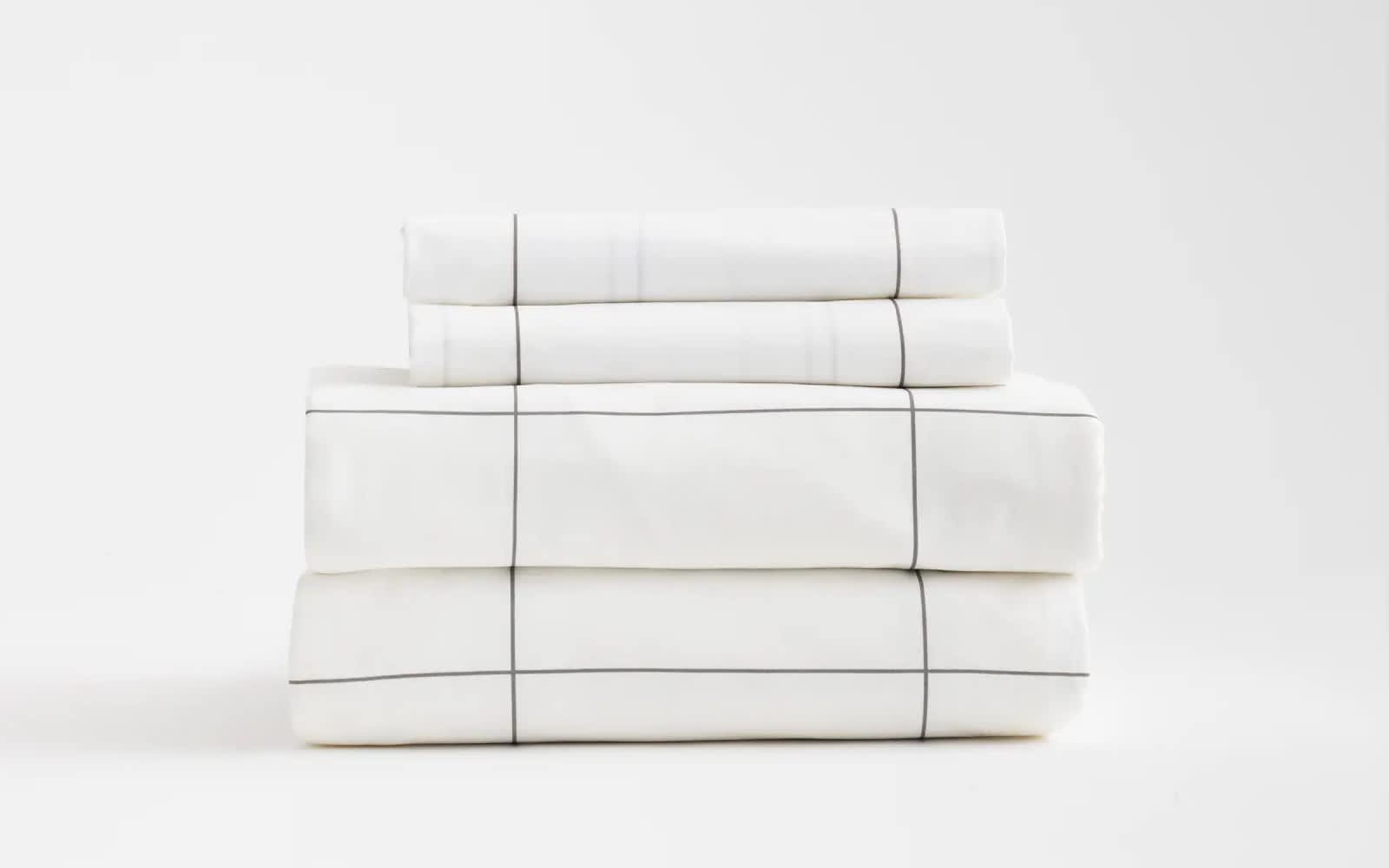
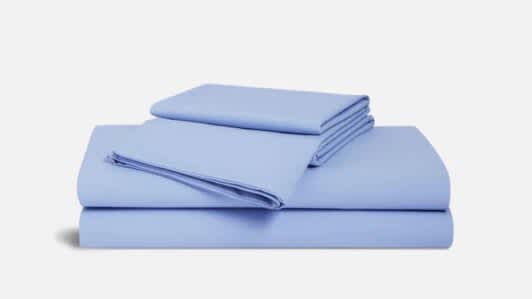
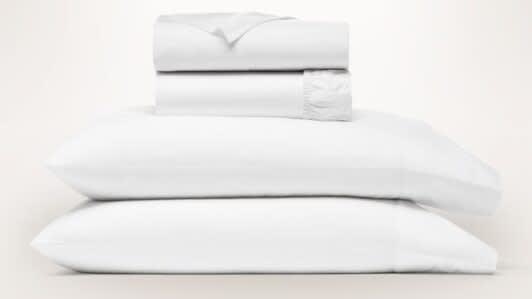
What Are Percale Sheets?
Percale sheets use a simple yet tight criss-cross weave pattern that creates a soft, smooth texture often compared to a dress shirt. The resulting fabric has a crisp, cool feel ideal for hot climates and often associated with luxury hotel bedding.
The term percale refers to the sheet’s weave rather than a material itself. This plain weave uses a one-over-one-under pattern.
Many manufacturers refer to percale sheets as cotton percale because cotton is the most common material used with the weave. However, some manufacturers use other materials, such as polyester, microfiber, or rayon from bamboo.
Percale sheets are widely available with options at virtually every price point.
Percale vs. Sateen Sheets: What’s the Difference?
The two most common types of weaves used in sheets are percale and sateen. Although both can use the same material, the differences between the weaves result in distinct looks and feels. A percale weave uses a one-over, one-under pattern. In contrast, a sateen weave follows a one-under, three- to four-over pattern.
Percale
The percale weave results in sheets with a matte finish, a lightweight and crisp feel, and greater breathability. This makes percale sheets optimal for hot sleepers and summer months. Percale sheets typically get softer with each wash.
Sateen
Sateen sheets have a luminous look with a silk-like texture. A sateen weave is thicker and more tightly woven than a percale weave, resulting in heavier and warmer sheets fit for cool sleepers and winter months. While sateen sheets resist wrinkles and drape well, they may also pill or snag over time.
There’s not much that compares to slipping under cool percale sheets when it’s hot out. They’re classic for a reason and as a hot sleeper, I really appreciate how light and airy they feel.
Why Buy Percale Sheets?
Sleepers may prefer percale sheets due to their temperature regulation, wide availability, and notable durability. The weave’s breathability and lightweight feel appeal to hot sleepers and those who live in warm climates.
They're also a reasonable option for people with sensitive skin, as many percale sets use natural cotton fibers with minimal synthetic additives. Look for OEKO-TEX or GOTS certification if avoiding chemical residues matters to you.
Percale sheets are easy to find in virtually any store that sells bedding, and they range in price from budget-friendly to high-end. Additionally, percale sheets are not prone to pilling. In fact, they typically get softer with increased usage and laundering, making them a durable option.
Pros and Cons of Percale Sheets
Every sleeper has different needs and preferences when it comes to sheets. You should consider the potential pros and cons of percale sheets when choosing the best sheets for your needs.
Pros
-
Cooling airflow: The tight criss-cross weave lets air move freely through the fabric, helping you stay cool through the night.
-
Crisp, clean feel: Percale has a smooth, firm texture that gets softer with each wash without losing its signature freshness.
-
Durable construction: The tight stitching makes percale sheets hold up well over time.
-
Versatile materials: Percale sheets can be made from cotton, rayon, or blended fibers, so there are options at every price point.
Cons
- Prone to wrinkling
- Don't provide much insulation for cold sleepers
- Not as soft as sateen sheets
Percale may not be the best fit if you sleep cold or prefer a silky, draped feel. In those cases, a sateen weave or a heavier material like flannel may suit you better.
What to Expect From Percale Sheets
When deciding if percale sheets are right for you, it can be helpful to consider the characteristics typically associated with the weave.
Staple length might be just as important as thread count when it comes to getting soft, high-quality sheets. Look for sets with long-staple or extra-long staple fibers to make sure you’re getting durable sheets that will wear and wash beautifully.
How Are Percale Sheets Made?
Manufacturers make percale sheets by weaving threads in a one-over, one-under pattern. Most manufacturers make percale sheets using cotton threads. However, the cotton itself comes in many varieties, including Egyptian cotton, Supima cotton, and American Upland cotton. Options differ in staple lengths, quality, and origins. Less frequently used materials include rayon, polyester, and other semi-synthetic or synthetic fibers.
Cotton Percale
Many manufacturers use cotton in their percale sheets because its breathability complements the lightweight weave. The combination also creates a smooth yet strong fabric.
Manufacturing processes and types of fibers vary. For instance, some manufacturers use brushed cotton, lifting the fibers to soften the sheets. Others use combed cotton, removing short fibers that jeopardize the feel and durability.
Staple length, or the length of the individual cotton fibers, also affects the texture and lifespan of sheets. Longer staples usually equate to higher quality.
-
Standard cotton: The staple length of standard cotton is 1.125 inches or less, exposing more fiber ends. Because of this, standard cotton is traditionally less smooth and more inclined to wear and tear. However, it is also more affordable.
-
Long-staple cotton: Long-staple cotton is approximately 1.125 to 1.25 inches. Fewer fiber ends are exposed, thereby increasing the softness and durability of the resulting sheets.
-
Extra-long staple cotton: Measuring up to 2 inches, extra-long staple cotton (ELS) varieties are typically the softest and most durable options on the market. Varieties of extra-long staple cotton include Egyptian and Pima.
Which Percale Cotton Sheets are Best?
The best cotton sheets generally come from the three types of high-end, extra-long staple cotton: Egyptian, Pima, and Supima.
-
Egyptian cotton: Egyptian cotton grows along the Nile River and is picked by hand, which gives it a premium price point. Many manufacturers blend Egyptian cotton with lower-priced materials for a more affordable product. Accreditation from the Cotton Egypt Association verifies that the material is true Egyptian cotton.
-
Pima cotton: Pima cotton is a slightly more cost-effective extra-long staple variety. While it originated in Peru, it’s now more widely cultivated. Like Egyptian cotton, manufacturers often combine Pima cotton with other varieties to cut costs.
-
Supima cotton: Supima cotton is a brand of Pima cotton grown exclusively in the U.S. under strict quality standards. Because of the additional requirements for growers, Supima cotton is usually more expensive than Pima cotton, though it’s slightly more budget-friendly than authentic Egyptian cotton.
Organic Cotton Percale
When cotton percale sheets are labeled organic, the term often refers to the individual materials rather than the final product. Sheets may contain organic cotton but use chemicals in the manufacturing process, thereby yielding non-organic sheets.
To verify that your organic cotton percale sheets are truly organic, check for certifications. Global Organic Textile Standard (GOTS) certification indicates a product meets social and environmental standards for the cultivation and manufacturing processes. USDA organic certification has a narrower focus, indicating that the cotton was cultivated using organic crop production standards.
Additional Percale Fabrics and Blends
Some percale sheets include fabrics or blends other than cotton. Common cotton alternatives include rayon from bamboo, cotton and polyester blends, lyocell, or microfiber. In many cases, such materials lead to lower price points. However, the performance and quality vary. Percale sheets that use lyocell or rayon from bamboo often feel especially cool and smooth. Polyester and microfiber options also frequently feel soft and lightweight, but they tend to trap more heat.
Last Tips for Buying Percale Sheets
When looking for the best sheets for you, there are several things to keep in mind about your percale options.
-
Choosing your thread count: Although percale sheets should have a minimum thread count of 180, the optimal range is 200 to 300. Some brands advertise sheets with thread counts of 400 or higher. While this can be an indication of quality, it’s also frequently a marketing ploy. Overly high thread counts may mean that the manufacturer uses multi-ply threads to increase the thread count without improving the quality. If the listed thread count is over 600, proceed with caution.
-
Selecting quality materials: Consider certifications, materials, and origins when choosing percale sheets. Certifications such as GOTS or USDA indicate that a third party has verified that the sheets meet rigorous standards. Sheets made from longer-staple varieties of cotton also usually boast higher quality and durability. One type of extra-long staple cotton, Supima, is grown in the U.S. according to rigorous guidelines, ensuring its quality. However, it’s worth noting that any product marketed and sold in the U.S. is required to meet these guidelines.
-
Making percale sheets softer: New percale sheets may feel too crisp or scratchy at first. While they do tend to soften over time, it’s possible to speed up the process by washing your sheets several times, line drying them, or using a reusable wool dryer ball.
-
Avoiding wrinkles in percale sheets: Most percale sheets are made of cotton, which can wrinkle easily. To minimize this tendency, remove your sheets from the washer as soon as possible and line dry them if you can. Otherwise, tumble dry them on a low setting and remove them promptly from the dryer. You can also iron cotton percale sheets to remove any lingering wrinkles.
-
Caring for percale sheets: Most percale sheets do best when washed in cold or warm water on a gentle cycle. Hot water can weaken cotton fibers and cause shrinkage over time. Use a mild detergent and avoid fabric softeners, which can coat fibers and reduce breathability. Wash your sheets every 1 to 2 weeks. With consistent care, a quality percale set made from long-staple cotton can last 5 years or more.