An OSA diagnosis gives us useful insight into how your body sleeps. The good news is that sleep apnea is very treatable — and many patients feel significant improvement once treatment begins.

Everything you need to understand your results and what to do next — with expert, hands-on guidance toward better sleep.
An OSA diagnosis gives us useful insight into how your body sleeps. The good news is that sleep apnea is very treatable — and many patients feel significant improvement once treatment begins.

An AHI of 15 to 30 means your breathing is interrupted every 2 to 4 minutes. Your body is essentially in a state of "fight or flight" throughout the night as it struggles to get air.
RDI includes everything in AHI plus additional, subtler events that may not fully block your airway or drop oxygen levels, but still activate your brain and pull you out of deep sleep. RDI doesn’t have formal severity categories, but higher values mean your sleep is being disrupted more often.
AHI defines severity; RDI shows your total sleep disruption from breathing. Both matter, but if you’re feeling tired, RDI often explains why.
At this level, we typically see more frequent and deeper oxygen desaturations. This puts a significant, repetitive load on your heart and vascular system, as your brain signals your heart to pump faster to move what little oxygen you have left.
Moderate OSA rarely improves on its own. At this stage, lifestyle changes (like weight loss) are helpful but usually insufficient as a standalone treatment. Clinical intervention is necessary to protect your heart.
For moderate sleep apnea, it is best to focus on more robust airway support. To make your path to better sleep easier, your sleep care team selected the below options to for your treatment.
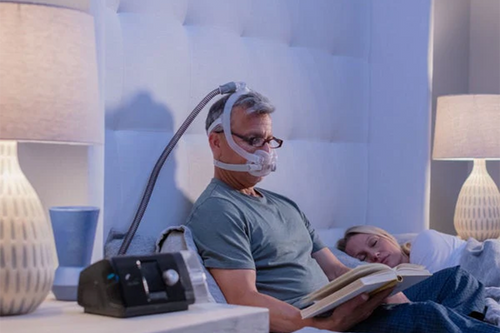
This is the gold standard for a reason. It creates a "pneumatic splint" for your throat, ensuring your airway never collapses. Modern machines are silent and heated for maximum comfort.

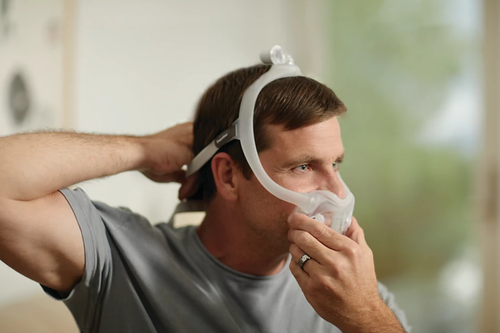
A CPAP machine is only as good as the seal of your mask. When choosing, consider your breathing style (nose vs. mouth), your typical sleep position, and how much "gear" you’re comfortable having on your face.


The last thing you want when you're finally sleeping well is to run out of supplies. Stock up now on everything you need to keep your therapy running smoothly, shipped together in one bundle.


Patients who have ongoing support are significantly more likely to stay consistent with therapy. Choose a plan that keeps your care team in your corner.


Keeping your CPAP clean doesn't have to be complicated. The right cleaning kit makes it a two-minute routine, so there's no excuse to skip it.


Behind every sleep struggle is a team dedicated to helping you rest better. Your team follows your progress and is here when you need them.

Diane S.
Registered Respiratory Therapist
Diane is a Registered Respiratory Therapist and Registered Sleep Disorders Specialist with 28 years' experience. For the past 23 years, she's focused on sleep medicine. She's dedicated to helping people get the treatment they need

Dr. Michael J. Breus
Clinical Psychologist, Sleep Expert
Michael J. Breus, Ph.D., is a double-boarded Clinical Psychologist and Clinical Sleep Specialist, a Diplomate of the American Board of Sleep Medicine, and a Fellow of The American Academy of Sleep Medicine. He was named the Top Sleep Specialist in California by Reader's Digest, and one of the 10 most influential people in sleep. With nearly 25 years in private practice as a sleep doctor, Dr. Breus lectures globally for organizations from YPO (Young Presidents Organization) to AT&T to Tony Robbins events.

Dr. Meena Mehta, MD
Sleep Doctor Medical Director
Dr. Mehta graduated from Indira Gandhi Medical College in Shimla, India prior to relocating to the United States to complete her education. She did her internship at St. Peter's Medical Center in New Brunswick, New Jersey, then
Getting used to CPAP is a marathon, not a sprint. Use these steps to make the transition seamless.
Don't wait until you're tired to try your mask for the first time. Wear it while watching TV or reading for 20 minutes during the day to get your brain used to the sensation of the air.
Even if you can only tolerate the mask for 3 or 4 hours at first, wear it every single night. Your brain needs repetitive "data points" to realize the mask is a helper, not a hindrance.
If the air pressure feels too strong when you first turn it on, use the Ramp button. It starts the pressure very low and slowly increases it over 20–45 minutes as you fall asleep
If you wake up with a dry nose or throat, we can adjust your heated tubing and humidifier settings. CPAP air should feel comfortable and moisturizing, not like a gust of wind.
Your mask should be snug, but not tight enough to leave marks. If you’re experiencing leaks or discomfort, tell your RT—there are dozens of mask styles, and we will find your "perfect fit."
A clean machine is a quiet, effective machine. A simple routine of mild soap and water once a week keeps the silicone soft and the air fresh.
It can, in both directions. Sleep apnea is often positional. Your AHI may be significantly higher when sleeping on your back versus your side. Weight changes and drinking alcohol before bed can also shift a mild diagnosis toward moderate. On the positive side, effective treatment and lifestyle adjustments can meaningfully reduce your AHI.
Moderate OSA is not a "watch and wait" diagnosis. At this level, the health risks associated with untreated sleep apnea become significantly more pronounced.
Many patients with moderate OSA have adapted to feeling tired and don't realize how much their baseline has shifted. The deeper concern is what's happening while you sleep: repeated oxygen drops force your heart to work harder throughout the night, which over time contributes to high blood pressure, irregular heart rhythms, and increased cardiovascular risk. Treatment is the most reliable way to interrupt that cycle.
Untreated moderate OSA is associated with a significantly elevated risk of high blood pressure, which is one of the most common complications. Over time, the nightly cardiovascular strain can also contribute to irregular heart rhythms (atrial fibrillation), increased risk of stroke, metabolic disruption that makes weight management harder, and worsening mental health. Because many of these effects develop gradually, it's easy to underestimate the cumulative impact — but the research is consistent: treating OSA earlier leads to meaningfully better long-term health outcomes.
CPAP is the most effective treatment for moderate OSA and is considered the clinical standard at this severity level. Unlike mild OSA — where oral appliances are sometimes a comparable alternative — moderate OSA typically requires the consistent airway pressure that only CPAP reliably delivers. Oral appliances may still be appropriate in certain cases (your care team can advise based on your specific results), but CPAP gives you the best chance of bringing your AHI down to a healthy level and eliminating the symptoms that go with it.
Many patients with moderate OSA notice a meaningful improvement in energy and alertness within the first one to two weeks. Because your AHI is higher, the contrast between untreated and treated sleep can feel quite significant once your body starts completing full sleep cycles again. That said, it takes time to adjust to wearing a mask, and the first week or two may feel disruptive. Sticking with it through that adjustment period is the most important thing you can do.
Lifestyle changes, including weight loss, avoiding alcohol before bed, and adjusting sleep position, can reduce your AHI and are always worth pursuing alongside treatment. However, at a moderate severity level, they are very unlikely to eliminate OSA on their own. Think of them as complementary to CPAP, not a substitute for it. Some patients do see their diagnosis shift from moderate toward mild with significant lifestyle changes, but CPAP remains the most reliable way to protect your health in the meantime.
This is more common than you might think, and it's rarely a reason to give up on CPAP altogether. Most tolerance issues come down to mask fit, pressure settings, or humidity, all of which are adjustable. Mask technology has also improved substantially in recent years, with far more low-profile, comfortable options than were available even five years ago. Tell your Respiratory Therapist exactly what made it difficult before, and they'll work through the specifics with you. Most patients who struggled initially find a setup that works with the right support. Reach out to our team to get set up.
The clinical benchmark for effective therapy is four or more hours per night on at least 70% of nights. That said, patients who use CPAP for six or more hours per night consistently see the greatest improvements in symptoms and health outcomes. If you're only managing three or four hours right now, that's still progress. Work with your care team to gradually extend your usage as you get more comfortable.
The best mask depends on three things: whether you breathe through your nose, your mouth, or both; your typical sleep position; and your personal comfort preferences. Full face masks cover the nose and mouth and work well for mouth-breathers or back-sleepers. Nasal masks and nasal pillow styles are lighter and suit side-sleepers who breathe through their nose. There are dozens of options and if your first mask doesn't feel right, tell your Respiratory Therapist and they'll help you find a better fit.
We want you to be completely satisfied with your purchase, so we offer a 60-night return option from the date of delivery for most of our products. Please note that exceptions apply to some items (listed below). To be eligible for a return, the product must be in new and unopened condition, unless stated otherwise. Read more details here.
Once your order ships, you'll receive an email with tracking information. You can also track your order by logging into your account on our website.